Why the world should fear “real” nuclear tests


Editor's note: Editor’s note: Vladimir Bekish is a Russian military-political analyst and an expert in strategic security, with a focus on the Middle East and Africa. The article reflects the author’s personal views and may not represent the position of News.Az.
Sometimes an event captures the world’s attention so completely that everyone is talking about the same thing. It might be a disaster, an election, a Moon mission, or a volcanic eruption. Right now the conversation that has the planet holding its breath is about nuclear tests — the tests President Trump has announced for U.S. nuclear weapons, and the near-simultaneous tests Russia says it will conduct.
What we are seeing from Washington and Moscow is not a clear, sober public discussion. It is a fog of contradictory statements, evasive technicalities and mutual accusations. Nobody is explaining plainly what will be tested: a non‑nuclear component of a warhead? an actual live warhead? a delivery vehicle without its payload? And crucially, where and when — underground in a remote Nevada shaft, or in the open atmosphere? How long will preparations take — months, years?
The official story insists on technicalities and signalling: “they are doing it, so we will too.” But I don’t believe that’s the full picture. I think the real outcome the White House seeks is different, and far more consequential.
Here’s the uncomfortable argument I want to make: a genuine, live nuclear detonation used as a public demonstration — a real strike against a real target — would deliver in one blow what testing programmes and public statements cannot. It would prove, beyond any doubt, that American weapons work. It would deliver unambiguous data about effect and efficiency. It would lay bare, for the eyes of the world, what a nuclear strike looks like in 2025: the blast, the fallout, the environmental and humanitarian consequences. Most of all, it would send a political signal — to adversaries and allies alike — that the United States, and its president, are prepared to act with utter determination.
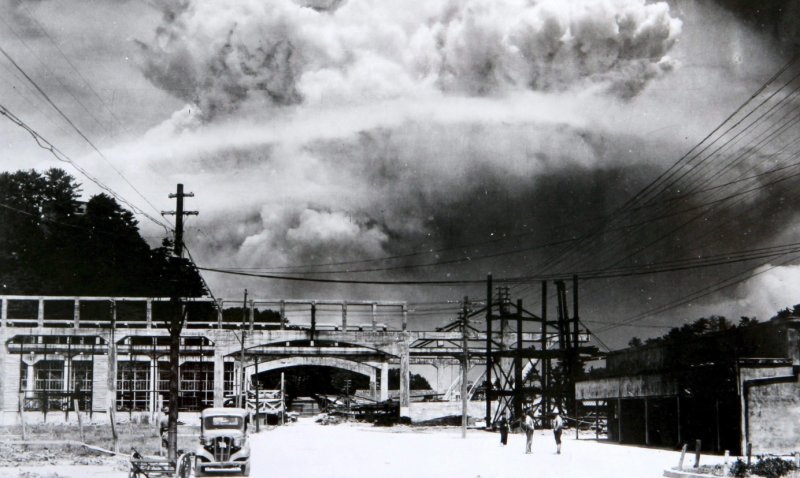
To many, that sounds monstrous. It is. But that is precisely why the idea has traction in certain strategic imaginations. A “test” in the field — even if modest in yield, 10–20 kilotons like Hiroshima — would accomplish several goals in a way that an underground detonation cannot. It would settle doubts about weapon reliability and delivery. It would provide hard data on environmental impact and collateral damage. And it would, for better or worse, be a theatre of deterrence: a taboo broken that forces the world to recalibrate its assumptions.
If you are wondering where such a strike could conceivably be directed, the calculus is obvious. It cannot be aimed at another nuclear power — Russia or China — because the risk of catastrophic retaliation is immediate and unacceptable. North Korea is too unpredictable and too entangled. That rules out the great strategic rivals. The selection then narrows to states that are distant from the U.S. mainland, lack nuclear arsenals, and either harbour groups deemed hostile to American interests or are portrayed as rogue regimes: Yemen, with its Houthi movement, or Afghanistan under Taliban control are the two scenarios that, in cold operational logic, check the necessary boxes.
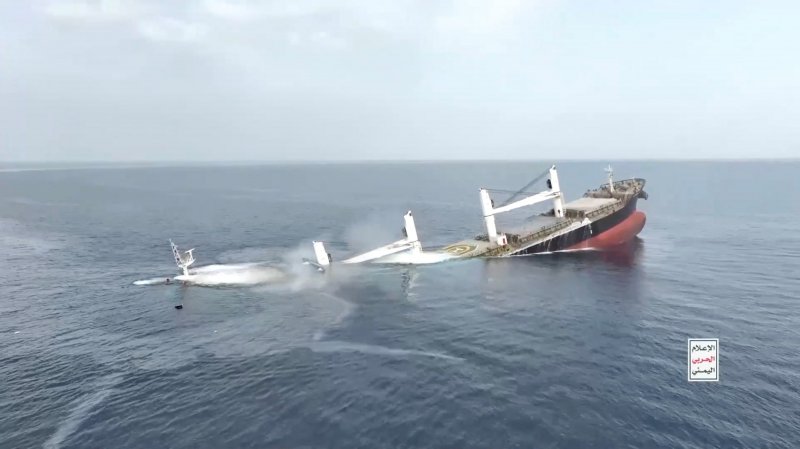
Yemen appears tempting on paper. The Houthis have attacked international shipping in the Red Sea, struck at Israel, and are backed by Iran. A strike there could be framed as punishment for terrorism and as protection for international commerce. Fallout risk for the United States would be minimal given the geographical distance. Iran’s proxy ties complicate the picture, but Tehran would face a horrendous choice: avenge its allies and invite a direct American strike on Iranian territory, or hold back and suffer the humiliation.
Afghanistan, too, fits a grim rationale. It is distant; it is governed by a movement many nations consider terrorist; and it is politically convenient as a target that can be portrayed as retribution — for 9/11, for the chaotic U.S. withdrawal, even for refusals to grant basing rights. The Taliban lack the capacity to strike back across oceans, and they do not have allied states that could credibly threaten the United States. In that terrible light, Afghanistan reads like an “ideal” laboratory for demonstrating the effect of a nuclear weapon without immediate global blowback.
There is an irony worth noting. Critics say Trump does not understand the mechanics of nuclear testing — that he directed the Defense Department rather than the Department of Energy, which traditionally handles the nuclear stockpile. But if his intent were to test strategic resolve rather than to run technical diagnostics, then the Defense Department is indeed the right conduit. A battlefield demonstration is a military act, not a scientific experiment.
All this raises the fundamental moral and strategic questions we have been trying desperately to avoid since 1945. The nuclear taboo — that human beings would not or cannot use such weapons again — has been the thin thread that kept the world from sliding into nuclear catastrophe. If a state breaks that taboo, the consequences will not be limited to the immediate target. The political, humanitarian and environmental fallout would ripple for generations. A single “test” would alter deterrence theory, erode norms, trigger arms races, and rewrite the rules of conflict.
And yet, from a purely instrumental perspective, a live demonstration would accomplish the signals certain policymakers crave: proof of capability, demonstration of resolve, and a shock that compels recalculation in capitals worldwide. That is what makes the temptation so dangerous — and so real.
As citizens and as a global community, we must ask ourselves what kind of world we want to live in. Do we want a world where nuclear weapons are instruments of policy theatre, deployed when domestic politics or strategic posturing demand an undeniable spectacle? Or do we want to preserve the fragile barrier that has kept human civilisation from repeating its worst chapter?
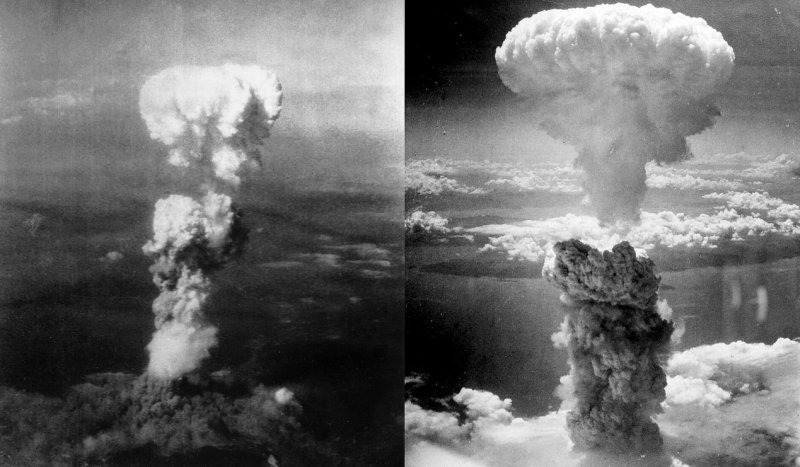
We do not need hypothetical arguments to understand the stakes. The data from the past — Hiroshima, Nagasaki, and the Cold War’s near misses — show that once the barrier is breached, everything changes. The question is not merely academic. The rhetoric and posturing we see today could become decisions tomorrow.
Whatever the calculus behind current pronouncements, the lesson is stark: the conversation about nuclear policy cannot remain a fog of threats and technicalities. It must be public, accountable and wise. If leaders are contemplating anything resembling a live demonstration, the world deserves, at the very least, debates as forceful as the choice itself.
Because the alternative is a future where the unthinkable becomes ordinary, and where the rest of humanity pays the price for a demonstration of power.
(If you possess specialized knowledge and wish to contribute, please reach out to us at opinions@news.az).


Similar news