Why U.S.-Mexico relations remain perpetually strained


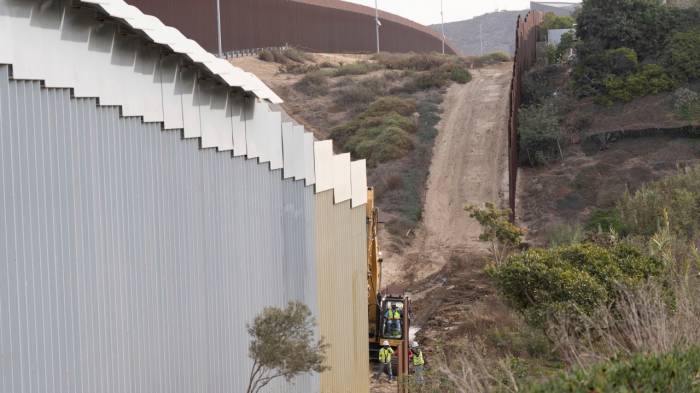
Spanning over 3,000 kilometers, the border between the United States and Mexico stands as both a defining geographic landmark and a political flashpoint. This border, often portrayed as a dividing line, symbolizes more than just physical separation—it encapsulates centuries of tension, cooperation, and conflict between two nations with deeply intertwined histories. In recent years, this dynamic has been epitomized by the contentious debate over border security, particularly during President Donald Trump’s administration. His revival of the idea to construct a "great wall" aimed to curb illegal immigration and was emblematic of broader historical patterns in U.S.-Mexico relations.
The notion of a fortified border, however, is far from novel. Efforts to enforce strict border controls date back decades, demonstrating a long-standing focus on regulating the flow of people and goods between the two nations. In 1993, the U.S. launched Operation Hold the Line, a pivotal step toward militarizing the border. The Border Patrol intensified its presence along a 30-kilometer stretch near El Paso, Texas, deploying green SUVs, helicopters, and conducting 24/7 patrols. In addition to repairing a 16-kilometer section of damaged fencing, this operation resulted in a rapid and noticeable decline in illegal crossings. This success set the stage for future efforts to secure the border.Throughout the 1990s and early 2000s, successive U.S. administrations continued constructing fences and barriers where necessary. Notably, President George W. Bush signed The Secure Fence Act in 2006, mandating the construction of approximately 1,100 kilometers of fencing along the border. By 2009, nearly 900 kilometers of these barriers had been completed. Yet, despite incremental progress in fortifying the border, Trump’s campaign promise to build an expansive “Great Wall” brought the issue to the forefront of political debate, making it one of the most polarizing symbols of his presidency. For Trump, the wall became a centerpiece of his hardline immigration policies, though it faced numerous logistical, financial, and political hurdles.
To understand the often-strained relationship between the U.S. and Mexico, one must consider the historical context that underpins their interactions. While modern relations feature significant economic cooperation, including trade agreements like the USMCA (United States-Mexico-Canada Agreement), the scars of past conflicts remain visible. Mexico, a nation with a rich cultural heritage dating back to ancient civilizations such as the Aztecs and Mayans, has endured centuries of territorial disputes and political upheaval that have shaped its relationship with the United States.
One of the most pivotal moments in U.S.-Mexico relations occurred in 1845, when the United States annexed Texas. Previously a Mexican territory, Texas had declared its independence in 1836 and functioned as an independent republic for nearly a decade before joining the U.S. as its 28th state. This annexation, under President James K. Polk, ignited tensions between the two nations and set the stage for the U.S.-Mexico War (1846–1848).
The war was driven largely by U.S. territorial ambitions, with the United States aiming to expand its borders under the banner of “Manifest Destiny.” In 1846, U.S. troops crossed the Rio Grande into Mexican territory, occupying towns without a formal declaration of war. Mexico resisted fiercely, but internal political strife and a lack of resources hindered its ability to mount an effective defense. The conflict culminated in the capture of Mexico City in September 1847 and the subsequent signing of the Treaty of Guadalupe Hidalgo in 1848.
The treaty was a devastating blow to Mexico. It forced the nation to cede over half of its territory—including present-day California, Arizona, Nevada, Utah, and parts of several other states—in exchange for a mere $15 million. By the war’s end, Mexico had lost 55% of its land, leaving a legacy of distrust and resentment that continues to influence bilateral relations. This loss of territory remains a point of national trauma for Mexico and serves as a historical backdrop to modern tensions.
In many ways, Trump’s border wall proposal can be seen as a continuation of the U.S.’s historical approach to border security and territorial control. While his rhetoric suggested a dramatic departure from past policies, it was, in essence, an extension of strategies that had been evolving for decades. The wall, however, was more than just a physical barrier—it became a symbol of the broader ideological and political divides surrounding immigration, security, and national identity.
Beyond the physical border, Trump’s tenure also highlighted an enduring American fascination with territorial expansion and control. His proposal to purchase Greenland from Denmark in 2019, for instance, drew widespread attention and criticism, underscoring his administration’s unconventional approach to geopolitical issues. Some critics even speculated about a renewed U.S. interest in reclaiming the Panama Canal, which was handed over to Panama in 1999. These ambitions, while seemingly unrelated, reflect a historical pattern of U.S. territorial aspirations that have shaped its foreign policy.
As debates over immigration and border security continue to dominate U.S. domestic politics, the legacy of Trump’s wall remains a contentious topic. For many, the border is more than just a line on a map—it represents a deeply complex relationship between two nations shaped by conflict, cooperation, and an enduring quest for security. It is a space where historical grievances intersect with modern challenges, from economic inequality to the movement of people and goods.
The U.S.-Mexico border is also a microcosm of broader global debates on migration, sovereignty, and security. The lessons of history suggest that while physical barriers may temporarily address specific challenges, they cannot resolve the underlying economic and social dynamics that drive migration. As the two nations continue to navigate their shared history and interconnected futures, the border will remain a potent symbol of the complexities that define U.S.-Mexico relations.
(If you possess specialized knowledge and wish to contribute, please reach out to us at opinions@news.az).


Similar news