- News
- 29 January 2025
29 January 2025
-
-
-
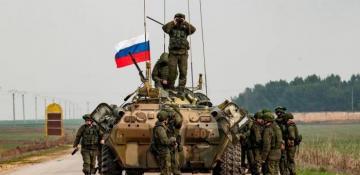
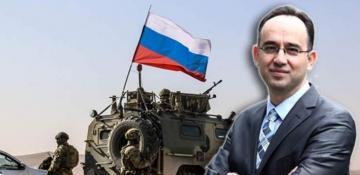
The Middle East is one of the key hotspots in the world today, attracting attention, demanding action, and influencing the fate of the world. And within the Middle East itself, one of the most important and critical points is Syria. Syria has long been a volatile state, influencing regional dynamics even before. However, after the change of the ruling regime as a result of the precipitous fall of the Al-Assad dynasty and President Bashar al-Assad’s departure and flight to Russia, the situation has become highly complex, multifactorial, and in many ways unpredictable.
-
-
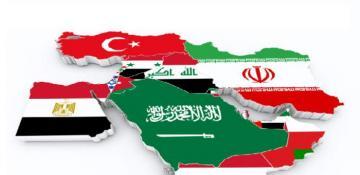
The Middle East is undergoing rapid geopolitical shifts, reshaping the interests and strategies of key regional and global players. At the heart of these transformations are Türkiye, Iran , Israel, and Russia, whose policies intersect in Syria and beyond. How will the balance of power in the region evolve after the potential collapse of the Assad regime? Can Iran maintain its influence in Syria and Lebanon ? What will be the fate of Russia’s military bases? These pressing questions are gaining importance amid the escalating tensions between Israel and Iran, as well as Moscow’s diminishing presence in Syria.To provide insight into these complex dynamics, News.az turned to Professor Dr. Selçuk Çolakoğlu, the founder and director of the Turkish Center for Asia-Pacific Studies in Ankara . In this exclusive interview, he analyzes potential scenarios for the region’s future, assesses the positions of key players, and explains the broader geopolitical implications for the Middle East.
-
-
From 1517 to 1917, nearly all modern Arab countries were under the rule of the Ottoman Empire, whose sultan also held the title of caliph. Following its defeat in World War I, the Republic of Türkiye was established in 1923. Meanwhile, in 1932, after a series of successful wars on former Ottoman lands, the Kingdom of Saudi Arabia (KSA) emerged. Spanning approximately 2.15 million square kilometers and home to nearly 35 million people, its capital is Riyadh. However, what truly elevates its standing in the Islamic world is its stewardship of Islam’s two holiest sites, Mecca and Medina. In 1938, vast oil reserves were discovered in the kingdom, cementing its economic power.
-
-
Barcelona secured second place in the inaugural League Phase of the UEFA Champions League, following a 2-2 draw against Atalanta at the Montjuïc Olympic Stadium on Wednesday night.
-
-
Chile’s government has announced a substantial budget cut for its armed forces in 2025, with the Chilean Army and Navy facing a combined reduction of $32.8 million in their budgets, News.az reports citing foreign media.
-
-
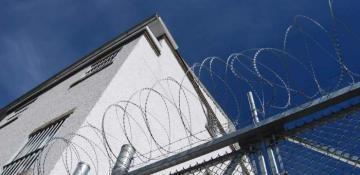
The Swedish government announced on Wednesday that it is considering the possibility of sending some inmates to serve their sentences in prisons abroad, due to anticipated pressure on its own prison system in the coming years, News.az reports citing foreign media.
-
-
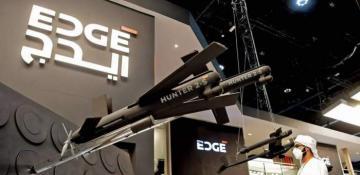
The UAE-based advanced defense technology firm, EDGE, has revealed plans to invest $10 million for a 30 percent stake in Israel’s Thirdeye Systems, a company specializing in AI-driven electro-optical solutions for detecting drones and unmanned aerial vehicles, News.az reports citing The Times of Israel.
-
-
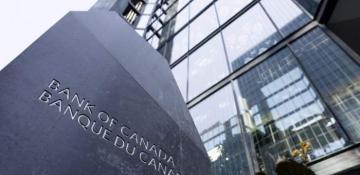
The Bank of Canada (BOC) has reduced its key policy rate by 25 basis points to 3 percent, lowered growth forecasts, and cautioned Canadians that a tariff war initiated by the United States could lead to significant economic damage, News.az reports citing foreign media.
-
-
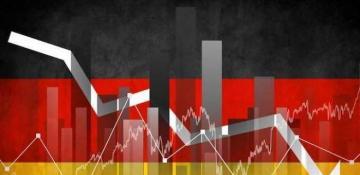
The German government announced on Wednesday an economic growth forecast of 0.3% for 2025, a significant decrease from the 1.1% projection made last October, News.az reports citing Deutsche Welle.
-