Will a nuclear flashpoint between Iran and Israel ignite World War III?


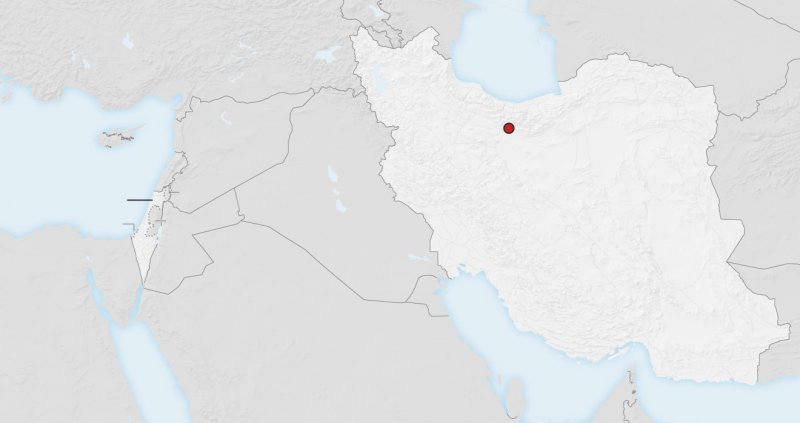
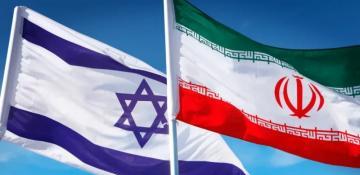
It is clear that the ongoing war between Iran and Israel dominates global headlines and is at the center of discussions in virtually every government, international organization, and society around the world.
Everything is being analyzed — the causes, the motives of both sides, the current state of affairs, and, most importantly, the potential next steps. These steps are not only those that may be taken by Iran and Israel, but also by the United States, Russia, the United Kingdom, France — and even by the Houthis in Yemen. The United Arab Emirates, Saudi Arabia, Türkiye, and China are also deeply involved, either directly or indirectly.
Naturally, everyone is trying to predict the consequences of what is currently happening — and what is yet to come in the coming days and weeks. This process of “prediction” is arguably the most crucial, as it can help mitigate the tragic outcomes of both the present and the near future. So let us try to forecast, assess, and even anticipate what lies ahead.
One thing is certain: the world — not only the Middle East — will never be the same after June 13, 2025. This conflict does not concern only Iran and Israel or their immediate neighbors. It is of global significance because it carries the real risk of nuclear escalation. And not just by Israel, which already possesses nuclear weapons, but also potentially by Iran, which has the capacity to develop them. The key factor here lies in the motivations and objectives behind the possible use of nuclear arms.
Some might argue that just weeks ago, a military conflict occurred between two nuclear powers — India and Pakistan — and that the situation has since calmed down, with the consequences remaining within reasonable bounds. That is true, and we can agree on that. However, there is one critical difference between the India–Pakistan standoff and the Iran–Israel conflict. Even though Iran does not yet possess a nuclear weapon, the fundamental distinction lies in the fact that, unlike the territorial disputes between India and Pakistan, the roots of the Iran–Israel conflict are ideological. For decades, Iran has refused to recognize Israel as a legitimate state and has repeatedly expressed intentions to wipe it off the map.
I do not intend to accuse Iran of terrorism or aggression here. Relations between most Middle Eastern countries — both among themselves and with Israel — have always been difficult, to say the least. This is the geopolitical fate of the region. Nor do I intend to discuss Israel's history or its actions regarding its survival and its dealings with neighboring countries and peoples.
But as we can clearly see today, Israel is determined to take whatever actions it deems necessary to defend its interests — even up to and including the use of nuclear weapons.
As for Iran, one thing is now certain. If Iran had previously been willing to cooperate with the IAEA and the UN regarding its nuclear program, today, after suffering an unprecedented strike on its territory and key facilities, Iran will also do everything in its power to acquire the most effective and dangerous weapon possible — a nuclear one.
Of course, this will only be possible if Iran survives the current conflict as a functioning state. It will also require that Iran retains sovereignty over its nuclear program and that it possesses the resources, infrastructure, and technology necessary for development.
Israel understands this perfectly. Therefore, Israel will now do everything it can to prevent Iran from achieving these capabilities.
However, both Iran and Israel have allies, partners, and friends — and these allies cannot afford to remain indifferent to what is happening. It is no secret that the United States is a close friend and strategic ally of Israel. So are the United Kingdom and some other European nations. They will continue to provide Israel with weapons, resources, and political support.
On the other hand, Iran also has allies. But this is where the situation becomes more complex. Some of Iran’s allies would prefer not to antagonize Israel’s friends. Chief among Iran’s partners is Russia. There is ample evidence of this strategic partnership — including a defense and military cooperation agreement signed between the two countries this year.
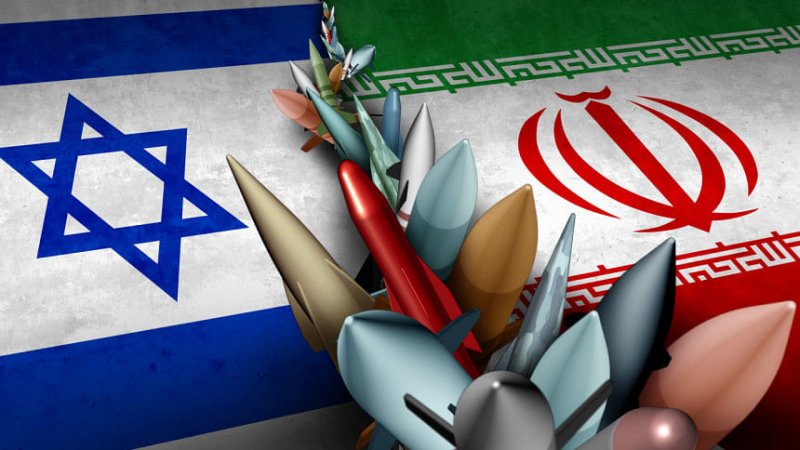 Photo: The Daily Star
And here I would like to offer a hypothesis. It may sound far-fetched, but in today’s world, it is not beyond the realm of possibility.
Israel possesses nuclear weapons and, in an effort to protect its people and eliminate future threats, may very well use them — likely against Iran.
Iran, likewise, seeks to defend its sovereignty and eliminate existential threats to its population. And the most effective way to do so may also involve nuclear weapons — weapons it does not currently possess. So how could Iran acquire such weapons?
The first option is to develop them domestically. But that would now take a long time, especially considering the destruction caused by recent Israeli strikes and the pressure from its allies.
So what’s the alternative? There is one: North Korea.
North Korea possesses nuclear weapons and has a well-documented history of nuclear cooperation with Iran. Furthermore, Pyongyang enjoys increasingly close ties with Moscow. North Korean soldiers have even fought openly alongside Russian forces in the war against Ukraine. And Russia, as we’ve mentioned, is Iran’s strategic partner.
It is not inconceivable that, if Iran were to request a small number of tactical nuclear warheads from North Korea, Kim Jong-un might agree — perhaps after giving Moscow a heads-up. And Russia may simply remain silent — or at least not condemn the transfer.
If this were to happen, the entire geopolitical equation would change — and in the worst way possible. Worst not only for Israel, but for the entire Middle East and, indeed, the world.
For Iran and its allies, however, it would be seen as a strategic gain. If a nuclear device were to detonate over Israeli territory, it would be extremely difficult — if not impossible — to prove that the weapon was not of Iranian origin. And even if that were proven, it would be too late. The damage inflicted would be irreparable.
As unlikely as it may sound, there is even a scenario in which Iran could use a Russian-made nuclear device. There are reasons to consider this. Iran is allied with Russia, and relations between Russia and Israel are far from ideal — especially after Moscow's failure to keep Assad in power in Syria despite massive support. Russia might even be interested in observing the practical effects of limited nuclear strikes — their effectiveness, their consequences — without bearing the blame itself. And if Iran were the one to act, Russia could always say, “How should we know?”
It’s worth noting that Iranian lawmakers have already begun calling for Iran’s withdrawal from the Treaty on the Non-Proliferation of Nuclear Weapons (NPT). If those statements become policy, everything I’ve just described could become reality.
In conclusion, let’s summarize the situation and offer a glimpse into the near future.
It is likely that at least one state — Iran or Israel — or possibly both, will cease to exist in the form they exist today. This may apply to their territory, infrastructure, political systems, or governing authorities.
We will also likely witness an unprecedented global arms race among the world’s leading military and economic powers. Many other countries will rush to acquire new weapons and military technologies to keep pace.
And sadly, we can also expect an increase in brutal armed conflicts around the world. Because, as history continues to demonstrate, if one wants to force a neighboring nation into submission and seize its resources or territory, the sword remains the most effective tool. A bigger, sharper sword still wins the battle — while the others either fall silent or perish.
(If you possess specialized knowledge and wish to contribute, please reach out to us at opinions@news.az).


Similar news