Zangezur Corridor is delayed. Iran benefits


By Tural Heybatov
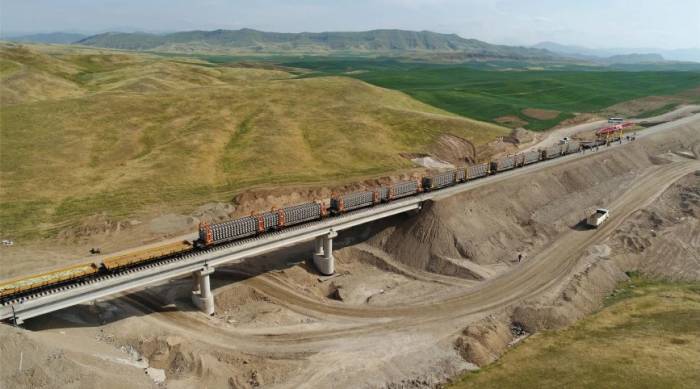
At the beginning of January, in an interview with Azerbaijani TV channels, President Ilham Aliyev touched on the topic of the Zangezur Corridor among many other issues—a transport route running from the western borders of Azerbaijan through Armenian territory to the Nakhchivan Autonomous Republic. The head of state unequivocally made it clear that insinuations on this issue are unacceptable and that Azerbaijan will pursue its goal.
"If the route I mentioned (the Zangezur Corridor) is not opened, we do not intend to open the border with Armenia in any other place. Thus, they will suffer more harm than benefit from this," Ilham Aliyev said.This clear warning was heard in Yerevan, but the correct conclusions were not drawn. Instead, the Armenian side began seeking external support against the Azerbaijani project and proposing alternatives. However, all alternative routes proposed by Prime Minister Nikol Pashinyan proved unsuitable for logistics and international transit. The only way for Armenia to integrate into the Middle Corridor is through the Meghri road, which existed during Soviet times and was dismantled by the Armenians during the occupation period.
The Armenian side managed to involve the Americans in the discourse, who, through Assistant Secretary of State O'Brien, began threatening Azerbaijan without understanding the essence of the issue. Once they understood, the rhetoric changed. Now State Department representatives and other officials are lobbying for the opening of communications, not excluding the Zangezur Corridor from the list, although they try not to mention this name.
Currently, only Tehran supports Yerevan's unreasonable position. From the very beginning, Iran has opposed the Zangezur Corridor even louder than the Armenian side. Although this project does not concern Iran at all, does not affect its territory, and does not infringe on it in any way. Complaints from Yerevan were taken too close to heart in Iran, leading to statements that Iran supposedly will not allow the violation of Armenia's territorial integrity or deprive it of its borders with the IR Iran, and so on. How a transport artery can threaten Armenia's integrity or cut it off from the Iranian border is not very clear. Azerbaijan has never set such a goal. All it needed was direct and unobstructed communication with NAR. Armenia could have derived enormous benefits from this simple desire, but instead, it took a stance and hid behind Iran, which repeatedly confirms its unclear protest against the road through Western Zangezur.
As is known, Nikol Pashinyan honored the inauguration of Iran's new president with his presence. While in Tehran, he met with the Supreme Leader of the IR Iran, Ayatollah Ali Khamenei. They talked about various topics, and of course, the Armenian guest tried to steer the Supreme Leader towards demonstrating a negative attitude towards the Zangezur Corridor. Khamenei stated that "Iran considers the Zangezur road harmful to Armenia and is firm in its position." He also emphasized that "cooperation between the two countries will continue consistently, based on established interests and regardless of the policies of others."
By "others," it is understood to mean Azerbaijan, which is not overly joyful about the news of Iran selling modern weapons to Armenia. Although the latest news on this matter turned out to be fake, there are no guarantees that such cooperation will not materialize in the future. There is no smoke without fire, as they say.
What makes the Zangezur Corridor so "harmful" to Armenia and why does this issue concern Iran at all? In short, the answers to these two questions are "nothing" and "in no way." That is if we put it briefly.
On July 30, the Special Representative of the President of the Republic of Azerbaijan, Elchin Amirbekov, speaking at an online seminar at the Hudson Institute in Washington, noted that "if we talk about long-term, sustainable, and irreversible peace, the opening of the Zangezur transport communication is one of those immediate results of peace that can benefit not only Azerbaijan but even more so Armenia. Because, as you know, due to the occupation of Azerbaijani lands for almost three decades, Armenia was completely isolated in the region. It was deprived of participation in any economic projects in the South Caucasus." The Zangezur Corridor, Amirbekov believes, "can be a game-changer for the entire region. It is a win-win project."
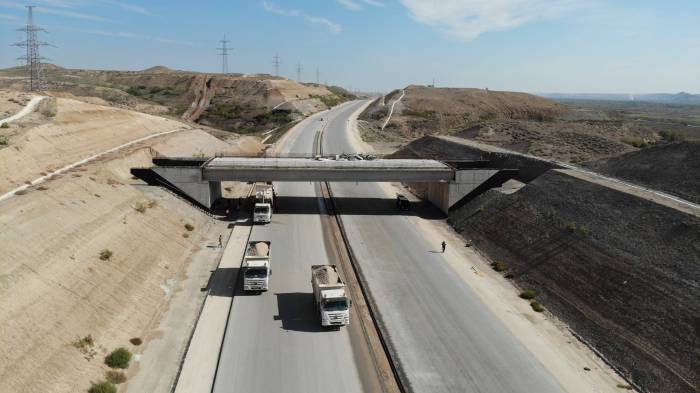
It seems there is nothing more to add. Armenia, due to its aggressive policy, remained outside regional projects. And it will remain outside them until it starts thinking about the future. The Zangezur Corridor would be a salvation for the Armenian state. All other attempts to connect it to international logistics, made by foreign guardians, have led to nothing. The only chance is to restore communications through Meghri and become part of the Middle Corridor. Therefore, the project proposed by Baku is indeed much more necessary for Armenia than for Azerbaijan. Azerbaijan already has established routes, and it does not intend, as they thought in Yerevan, to go all out for the road to Nakhchivan. This road is not needed by any means.
It is hard to believe that this is not realized in Armenia. Yerevan is simply speculating on the interests of its neighbor and hoping to get something in return for its consent. But, as we have already noted, Azerbaijan is not going to sacrifice anything for the Zangezur Corridor, and the Armenian side is simply wasting its energy.
The position of Iran is much more interesting. It is precisely this that has prevented the Zangezur Corridor from being built so far. Armenia was already ready to agree and began developing the feasibility study. But Tehran suddenly raised its voice, and everything stopped.
In Tehran, they like to talk about external interference in the affairs of regional countries, issuing stern warnings and pounding the table. But Iran itself somehow considers itself entitled to interfere in issues that are the subject of bilateral relations between other states. The Zangezur Corridor is a project concerning only Azerbaijan and Armenia. Tehran should not and has no right to take a position on either side in this matter, which does not affect its interests in any way. How can this transport line harm Iran's interests? Even with the most sophisticated imagination, it is impossible to come up with a logical formula. The inevitable conclusion is that Iran does not want a reduction in tension in the region and the opening of communications.
But that is only at first glance. The true reason for Iran's tough stance is not Armenia's integrity at all. Logic suggests that by supporting Yerevan's shortsighted stubbornness, Tehran is pursuing its own interests. The Zangezur Corridor deprives Iran of the opportunity to become part of the East-West transit. Iran itself needs transit communications from Azerbaijan to NAR, and from there through Turkey to the West. The alternative to the Zangezur Corridor is the South-Aras Communication Corridor, which starts from Agbend and passes through the territory of the IR Iran. This is a project that Tehran does not want to let slip out of its hands. This project began to be implemented as an alternative to the Zangezur Corridor, which Armenia refused. But the road through Iran will become meaningless if the Zangezur one opens. This is understood in Iran, and efforts are made to keep the Armenian side in a state of unreasonable denial.
Everyone pursues their own interests. And everyone should realize their own benefits, rather than allowing someone else to think for them. Yerevan's shortsightedness regarding the Zangezur Corridor harms only Armenia itself. Azerbaijan loses nothing, and Iran even gains benefits. This is a simple arrangement, but Armenia continues to live by someone else's rules.
Thus, Tehran's position aimed at hindering the implementation of the Zangezur Corridor is driven not so much by concern for Armenia's integrity as by the desire to advance its own interests in the region. Iran clearly understands that the opening of the Zangezur Corridor will reduce its influence and opportunities as a key transit route.
Azerbaijan, for its part, remains committed to its goal and does not intend to abandon the project, which, according to Baku, will bring significant economic and geopolitical benefits not only to Azerbaijan itself but also to the entire region, including Armenia. However, as long as Yerevan continues to persist and prioritize its interests over regional cooperation, the situation remains at an impasse.
The only reasonable way out for Armenia is to reconsider its position and agree to participate in the project, which could become a catalyst for economic growth and stability in the region. Only through cooperation and constructive dialogue can long-term peace and prosperity be achieved for all the countries of the South Caucasus.
For now, the Zangezur Corridor remains an unrealized project that is still awaiting its time. The question of when and how it will be opened depends on the political will and pragmatism of all the involved parties.


Similar news