40 key takeaways from King Charles’s address to Congress


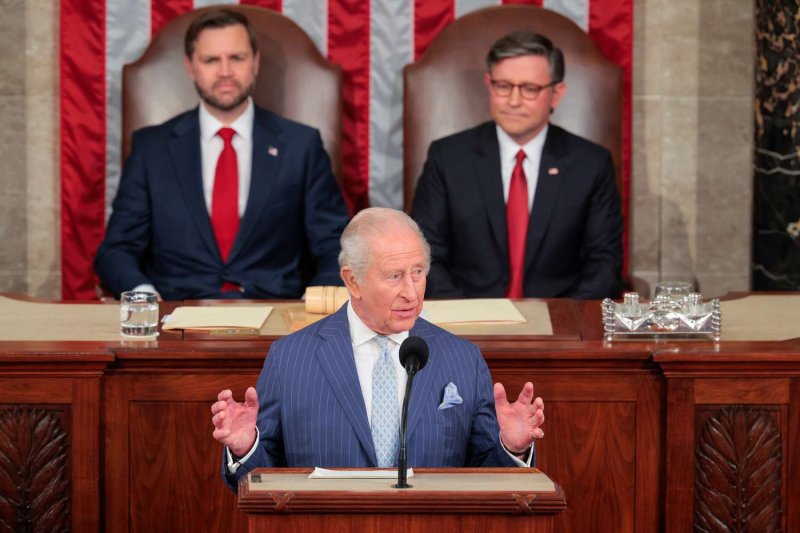
King Charles III’s address to the Joint Meeting of Congress in Washington was more than a ceremonial speech marking America’s 250th anniversary. It was a broad strategic message about the future of the US-UK alliance at a time of global uncertainty, war, technological transformation and growing threats to democratic institutions.
Speaking before American lawmakers, the King reflected on the deep historical roots of the relationship between the two nations, from the legacy of Magna Carta and the American Founding Fathers to the modern defence, intelligence and economic partnership linking London and Washington today. He placed particular emphasis on the need to renew the transatlantic alliance, support Ukraine, strengthen NATO, expand cooperation in defence and advanced technologies, protect the rule of law, and safeguard nature as a foundation of prosperity and national security.
Below are the key substantive takeaways from King Charles III’s address to the Joint Meeting of Congress in Washington.
1. King Charles said the United States and the United Kingdom are marking America’s 250th anniversary as two nations whose destinies have been linked not only for 250 years, but for more than four centuries.
2. He stressed that the world is facing a period of deep uncertainty, with conflicts from Europe to the Middle East creating major challenges whose consequences are felt in both British and American communities.
3. The King condemned political violence, saying that attempts to spread fear, division and disorder will never succeed. Despite political differences, he said, the US and the UK remain united in defending democracy and protecting their people.
4. Charles recalled that the modern relationship between London and Washington did not grow out of perfect agreement, but out of historical dispute. In his words, the partnership was “born out of dispute,” yet became stronger because of it.
5. He noted that the principle of “no taxation without representation” was both a fundamental disagreement between Britain and the American colonies and a shared democratic value inherited from British political tradition.
6. The King said the United States and the United Kingdom remain instinctively like-minded nations because their systems of governance are rooted in common democratic, legal and social traditions.
7. Charles quoted President Donald Trump, who during his State Visit to Britain described the bond between America and the United Kingdom as “priceless and eternal,” “irreplaceable and unbreakable.”
8. He underlined the influence of the British Enlightenment, English Common Law, Magna Carta and the 1689 Bill of Rights on the formation of America’s political and legal system.
9. The King noted that Magna Carta has been cited in at least 160 US Supreme Court cases since 1789, including as a foundation for the principle that executive power must be subject to checks and balances.
10. Charles said the strength of both countries lies in their free, diverse and open societies, where decisions are made not by the will of one person, but through the deliberation and representation of many.
11. He emphasized the importance of faith, compassion and interfaith respect, saying that in turbulent times both nations must promote peace, mutual understanding and respect for people of all faiths and of none.
12. The King described the Atlantic Partnership between Europe and America as more important today than ever before, calling it one of the key pillars of global stability.
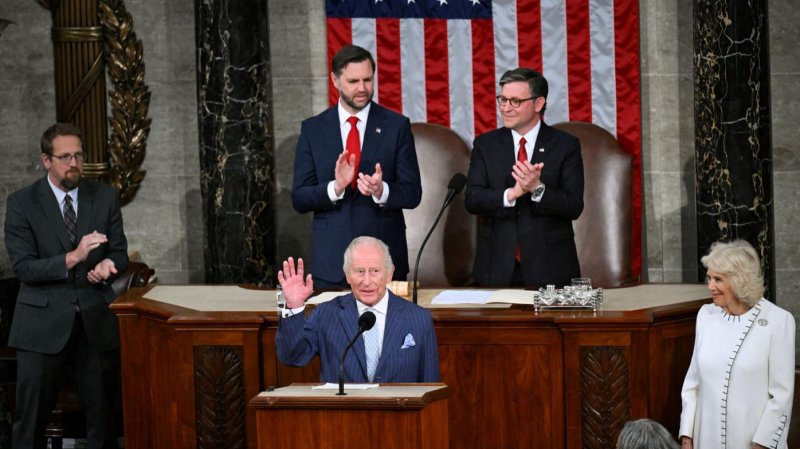
13. He said the current era is more volatile and more dangerous than the world in which Queen Elizabeth II addressed the US Congress in 1991.
 Source: Getty Images
14. Charles stressed that today’s challenges are too great for any one nation to bear alone, making cooperation between the US, the UK and their partners essential.
15. The King warned that the US-UK alliance cannot rely only on past achievements. Foundational principles, he said, do not endure automatically — they must be renewed and defended.
16. He said the renewal of the alliance begins with security. For that reason, the United Kingdom is transforming its defence posture and has committed to the biggest sustained increase in defence spending since the Cold War.
17. Charles linked this decision to the changing nature of modern threats, saying British defence must be made fit for the future.
18. The King recalled the 25th anniversary of the September 11 attacks, saying Britain stood with the United States then and continues to stand with America today.
19. He noted that after 9/11, NATO invoked Article 5 for the first time, and the US and UK answered the call together — just as they had stood shoulder to shoulder through two World Wars, the Cold War and Afghanistan.
20. One of the central foreign-policy messages of the speech concerned Ukraine: Charles said the same unyielding resolve is needed today for the defence of Ukraine and “her most courageous people.”
21. He stressed that support for Ukraine is necessary not only for Ukraine’s defence, but also to secure a “truly just and lasting peace.”
22. The King effectively presented the defence of Ukraine as part of the wider security architecture of Europe and North America, linking it to NATO, US leadership and allied deterrence against common adversaries.
23. Charles said the commitment and expertise of the US Armed Forces and allied forces lie at the heart of NATO, protecting citizens and interests from the Atlantic to the Arctic.
24. He said US-UK defence, intelligence and security ties are “hardwired together” through relationships measured not in years, but in decades.
25. The King gave concrete examples of military cooperation: thousands of US service personnel, defence officials and their families are stationed in the UK, while British personnel serve with pride across 30 American states.
26. He highlighted the joint work of the US and UK on the F-35 programme as an example of deep defence-industrial cooperation.
27. Charles described AUKUS — the partnership between the US, the UK and Australia — as the most ambitious submarine programme in history.
28. According to the King, these projects are not undertaken out of sentiment, but because they strengthen shared resilience and make citizens safer for generations to come.
29. Charles linked the prosperity of both countries to the rule of law, stable and accessible rules, an independent judiciary and impartial justice.
30. He said these principles created the conditions for centuries of unmatched economic growth in both countries.
31. The King said the governments of the US and UK are concluding new economic and technology agreements designed to write the next chapter of their joint prosperity.
32. He identified several key areas of technological partnership: nuclear fusion, quantum computing, artificial intelligence and drug discovery — fields that, he said, hold the promise of saving countless lives.
33. Charles highlighted the scale of economic ties between the two countries: $430 billion in annual trade and $1.7 trillion in mutual investment.
34. He stressed that millions of jobs on both sides of the Atlantic are supported by US-UK economic cooperation.
35. The King also pointed to the role of education, research and cultural exchange, mentioning the Marshall Scholarship, through which more than 2,300 Americans have studied at leading universities in the United Kingdom.
36. Looking toward the next 250 years, Charles called on both nations to accept their shared responsibility to protect nature, which he described as their “most precious and irreplaceable asset.”
37. He used the image of the mountains of Scotland and Appalachia, which were once part of a single mountain range, as a symbol of the deep natural and historical connection between the two countries.
38. Charles praised generations of Americans — Indigenous peoples, political and civic leaders, rural communities and cities — for helping protect America’s natural heritage.
39. The King warned that the collapse of critical natural systems threatens not only the harmony and diversity of nature, but also prosperity and national security. He described these systems as “Nature’s own economy.”
40. In his concluding message, Charles said the story of the United Kingdom and the United States is one of reconciliation, renewal and remarkable partnership — a friendship that grew from the bitter divisions of 250 years ago into one of the most consequential alliances in human history.


Similar news