A timeless concept of power and advantage - Trump Card


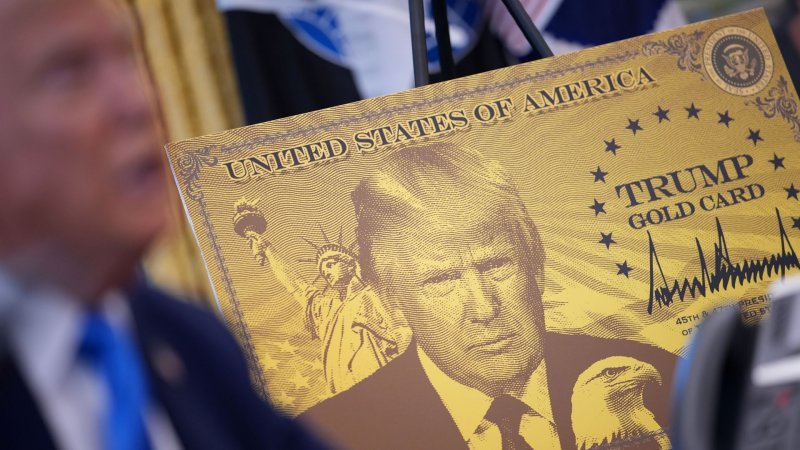
The term “Trump card” is frequently used in news coverage, political commentary, business analysis and everyday speech. Despite its familiarity, the phrase is often misunderstood or mistakenly linked only to contemporary politics. In reality, the concept of a Trump card is centuries old and refers to a broader idea of decisive advantage, leverage and strategic dominance. As global affairs become more competitive and unpredictable, the relevance of this term has only grown, making it an enduring and evergreen concept in modern discourse.
Origins of the Trump card concept
The idea of a Trump card originates from traditional card games, particularly trick-taking games popular in Europe. In these games, one suit is designated as the “trump” suit, meaning cards of that suit outrank all others. Even the weakest trump card can defeat the strongest card from a non-trump suit. This rule-based dominance is what gave the trump card its symbolic power.
The word “trump” itself is derived from “triumph,” reflecting victory and success. Over time, the shortened term became common in English, retaining its association with winning and superiority within a defined system.
How the term evolved beyond card games
As card games became embedded in social culture, the logic of the trump card moved beyond the gaming table. People began using the phrase metaphorically to describe any decisive advantage that could alter an outcome. This shift transformed the Trump card from a literal rule into a figurative expression used across many fields.
Today, a Trump card can refer to political leverage, economic power, legal authority, military strength, technological superiority or even personal influence. The unifying idea is that a Trump card operates within existing rules but overrides other options when played at the right moment.
Trump card in modern politics
In politics, a Trump card usually refers to a strategic asset that can shift negotiations, elections or power balances. Governments and political leaders rely on Trump cards such as control over legislation, public opinion, security forces or economic instruments.
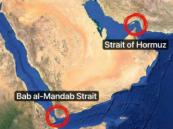
In international politics, sanctions, alliances, energy resources and strategic geography often function as Trump cards. A country that controls key transit routes or natural resources may hold decisive leverage over others, even without using force.
The term has gained particular visibility in recent years due to frequent wordplay in political media, especially in relation to high-profile leaders. However, its political meaning remains rooted in strategy rather than personality.
Trump card in business and the global economy
In the business world, a Trump card refers to a competitive advantage that can determine success or failure. This might include exclusive technology, intellectual property, access to capital, dominant market share or strong brand recognition.
Companies often protect their Trump cards carefully, revealing them only when necessary. In negotiations, mergers or market competition, the timing of using such an advantage can be as important as the advantage itself.
At the state level, economic Trump cards include control over currency systems, trade regulations, tariffs and financial institutions. These tools allow governments to influence markets and international behavior without direct confrontation.
Geopolitics and strategic leverage
In geopolitics, the Trump card concept is central to diplomacy and security strategy. Military capabilities, defense alliances and deterrence mechanisms all function as Trump cards. Often, their power lies not in actual use but in the credibility of their existence.
For example, nuclear deterrence is one of the most powerful Trump cards in international relations. Its value is based on prevention rather than action, highlighting how Trump cards can shape outcomes even when unused.
Energy resources, particularly oil and gas, also serve as geopolitical Trump cards, influencing alliances, conflicts and economic stability.
The importance of timing and restraint
A defining feature of a Trump card is timing. Using it too early can reduce its effectiveness, while using it too late can make it irrelevant. Strategic patience is therefore essential.
In many situations, simply signaling the existence of a Trump card is enough to achieve the desired outcome. This reinforces the idea that a Trump card is not about constant use, but about controlled leverage.
Ethical and legal dimensions
Not all Trump cards are ethically neutral. While legal authority, innovation and diplomacy are widely accepted forms of leverage, other Trump cards may involve coercion, legal gray zones or moral controversy.
In politics and business, overreliance on aggressive Trump cards can generate backlash, damage credibility or provoke resistance. As a result, responsible use of leverage is often seen as a sign of mature leadership.
Trump card in everyday life
Beyond global affairs, the concept of a Trump card applies to daily interactions. Skills, experience, education or alternative options can serve as personal Trump cards in negotiations or decision-making.
For example, the ability to walk away from a deal is often considered a powerful Trump card. However, personal Trump cards lose value if overused or misused, particularly in relationships built on trust.
Why the Trump card remains relevant
The enduring popularity of the term reflects a universal truth about human systems: rules create hierarchies, and within those hierarchies, certain elements carry decisive weight. The Trump card captures this dynamic in a simple and flexible metaphor.
In an era defined by competition, uncertainty and strategic calculation, the idea of holding or playing a Trump card resonates strongly with audiences across cultures and professions.
Trump card versus similar concepts
While often compared to expressions like “ace up one’s sleeve” or “silver bullet,” a Trump card is distinct. It does not imply secrecy alone or an easy solution. Instead, it emphasizes dominance granted by the structure of the system itself.
This structural aspect is what makes a Trump card particularly powerful and widely applicable, from law and diplomacy to economics and personal strategy.
Bottom line
A Trump card is a decisive advantage that outweighs all others within a given set of rules. Originating from card games and rooted in the idea of triumph, it has evolved into a universal metaphor for leverage, power and strategic timing. Its continued use in politics, business and everyday life underscores its evergreen relevance in understanding how outcomes are shaped in competitive environments.


Similar news