ACG agreement, EaP summit and anti-Azerbaijan amendment to European Parliament resolution - the link is obvious


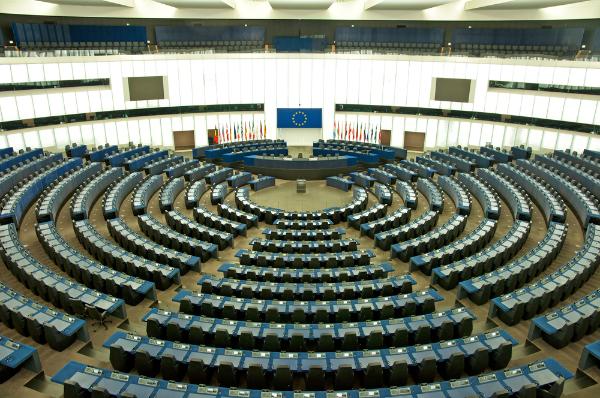
The resolution mentions only one country - Azerbaijan, which serves as a clear proof of the selective anti-Azerbaijan approach.
The day before, the European Parliament deputies approved a resolution containing an anti-Azerbaijani amendment calling for the investigation of the recent allegations in several media outlets against Azerbaijan. The amendment hastily introduced into the resolution on human rights in third countries concerns the investigation of Azerbaijan's alleged attempts to influence the Europeans lobbying this or that decision-making by all means. At the same time, the resolution mentions only one country - Azerbaijan, which serves as a clear proof of the selective anti-Azerbaijan approach of the resolution.
And all this is built around the "investigation" of journalists, some of whom are of Armenian origin. Is this coincidence not surprizing? However, none of the journalists thought about the strange result of the alleged lobbying of Baku's interests in the EP - nine critical resolutions on Azerbaijan were adopted in 2009 alone. Did Azerbaijan pay someone for criticizing it? But journalists and European parliamentarians seem not to be interested in such trifles at all.
After all, this nonsense, based on unproved facts set forth in the media, without indicating the exact source of information, was wrapped in a beautiful wrapper and slipped to the European parliamentarians without a chance to clarify the situation. It is noteworthy that the so-called "exposures" of the schemes invented by journalists were published on September 5, and the amendment on Azerbaijan, added to the EP resolution, was ready for September 7. As if the authors were waiting for a signal with the ready draft of the document in hand. This serves as an excellent illustration of the synchronized actions against Baku, ordered from a single center. The goal is also transparent: destroying the developing relations between Baku and the EU on the eve of the Brussels summit of Eastern Partnership and preventing the high-level Azerbaijani delegation from participating in this summit.
Need more evidence? Just see who the author of the anti-Azerbaijan amendment is: EP deputy Petras Ostravicius, the closest friend of Renatas Juska, infamous in Baku.
Juska became known following the scandal in 2013, after which the former president of Lithuania, Dalia Grybauskaite recalled the country's ambassadors to Azerbaijan and Hungary, Arturus Jurauskas and Juska.
In a private conversation which came viral in social networks, those two spoke for supporting Armenians in the Nagorno-Karabakh conflict, because of their religious affiliation with Christians and of the need to call Nagorno-Karabakh with the Armenian name "Artsakh" and support those who help Armenians.
In our opinion, everything is obvious. By the way two days after the start of the plenary session, the number of Europea who understood the real state, as a result of the intensive explanatory activity of the Azerbaijani diplomatic service, increased from 0 to 290, which speaks to the incontrovertible facts of Baku's innocence in the charges. In the end, the gap in votes 'for' and 'against' made just 50 people.
It is clear that this was an Armenian provocation, which, however, Baku will not allow Yerevan to enjoy. Today Armenia works hardest to shift attention in the South Caucasus region from the Armenian-Azerbaijani conflict to anything else. Yerevan experiences increasing inconvenience due to the refusal of substantive negotiations on Nagorno-Karabakh and at the moment when the whole world is waiting for concrete steps towards a real settlement of the conflict, Yerevan decides to launch a campaign against Baku.
However, Yerevan will not be successful. While Armenians and their friends furiously gather a frail anti-Azerbaijani front in the West, Baku strengthens relations and remains a strategic partner in relations with the EU.
A vivid proof of this is yesterday's event, which brought together high representatives of European states in Baku - the signing of an agreement on a new stage in the development of the ambitious Azeri-Chirag-Guneshli oil field. According to the contract, activities at this field will be extended until 2050, which will certainly make Baku an even closer partner of the West and serve to strengthen Azerbaijan's economy.
By Elmira Tariverdiyeva, head of Trend's Russian news service
News.Az


Similar news