Alaska’s Mount Spurr shows signs of imminent eruption as seismic activity intensifies


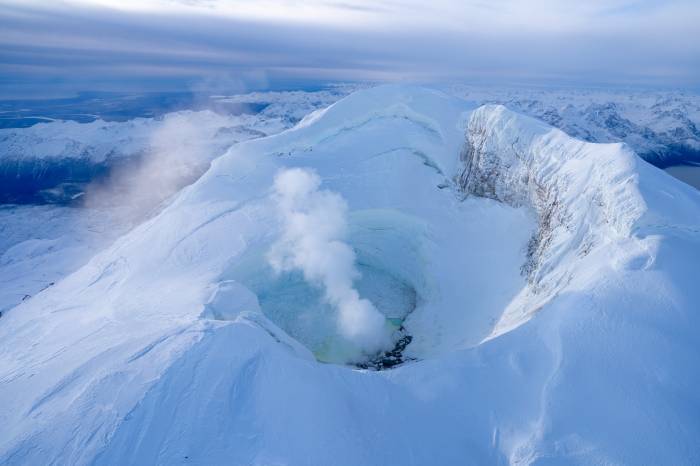
Mount Spurr, Alaska's largest volcano, is showing increased seismic activity, signaling a potential eruption.
Mount Spurr, a towering snow-capped stratovolcano in Alaska, has long been a source of scientific intrigue, but recent events have sparked serious concerns, News.Az reports, citing Daily Galaxy.
The Alaska Volcano Observatory (AVO) has been closely monitoring an increase in seismic activity around the volcano since April 2024. This earthquake surge suggests that the volcano may be gearing up for another eruption. Sitting just 77 miles (124 kilometers) from Anchorage, Mount Spurr’s volatile nature puts both the local population and infrastructure at risk, particularly if a large eruption were to occur.
Scientists are currently warning of a 50-50 chance that an eruption will take place in the near future.
Since the beginning of 2024, Mount Spurr has been experiencing a higher-than-normal number of earthquakes, an unsettling sign of potential volcanic activity beneath the surface. According to Matt Haney, the scientist-in-charge at the Alaska Volcano Observatory at the U.S. Geological Survey, this surge in seismic activity has intensified in recent months. Haney pointed out, “It’s had a higher-than-normal number of earthquakes for many months. But over the past month, that itself increased, and also the location of the earthquakes changed.” These tremors, which were initially concentrated near the mountain’s peak, have shifted two miles (3 kilometers) down the slope, closer to a side vent known as Crater Peak. This vent, which has previously erupted in 1992 and 1953, is once again becoming the focal point of activity, and experts are now on high alert.
The seismic shift to Crater Peak signals a potential change in the volcanic dynamics of the mountain. If an eruption were to happen, it is expected that Crater Peak would be the most likely site, given the earthquake migration and the historical patterns of past eruptions. In both the 1992 and 1953 eruptions, Mount Spurr belched massive columns of ash high into the atmosphere—up to 65,000 feet (20,000 meters)—which significantly impacted local communities and even disrupted air travel. According to Haney, the chance of this occurring again is 50-50, meaning the volcano could either continue to show signs of unrest without erupting or it could enter a more active phase.
If an eruption were to occur, the consequences could be severe. Pyroclastic flows, which are fast-moving avalanches of hot gas, ash, and rock, could surge down the volcano’s slopes at speeds of over 200 mph (320 km/h). These flows would destroy everything in their path and could travel great distances from the vent. Additionally, melting snow and ice from the volcano could mix with volcanic debris to create mudflows known as lahars, which are highly destructive and can cause widespread flooding. However, as Haney notes, there are currently no communities directly in the path of these potential lahars or pyroclastic flows. The biggest concern would be the impact on air travel and local infrastructure.
In 1992, an eruption from Crater Peak led to the shutdown of Anchorage’s airport and left the city covered in 0.1 inches (3 millimeters) of ash. Given the increase in air traffic in the region since then, Haney highlights that any eruption could have far more significant consequences for air travel today. “Today there are even more flights coming in and out of the Anchorage airport, so if something like that were to happen that would be very disruptive,” he says. In addition to disrupting local flights, a large ash cloud could also affect flights that traverse Alaska as they make their way between North America and Asia, potentially causing major disruptions to global air traffic.


Similar news