Armenia steps out of Moscow’s shadow: What the Yerevan summit revealed


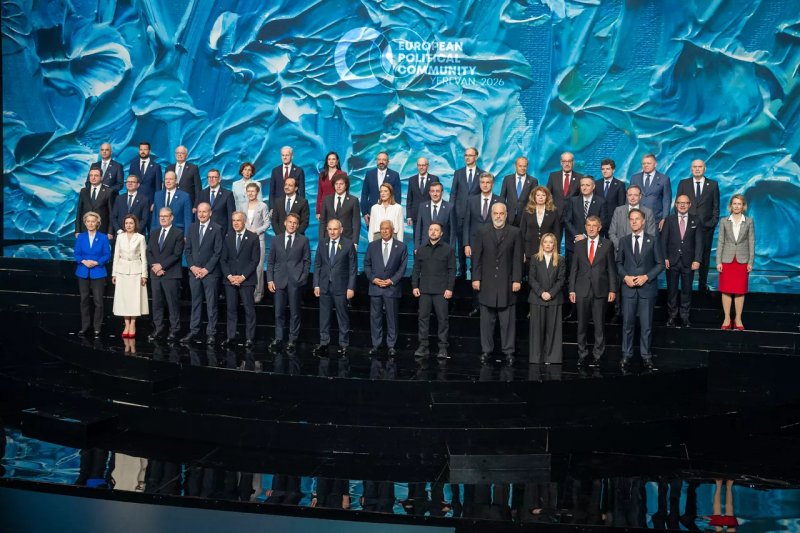
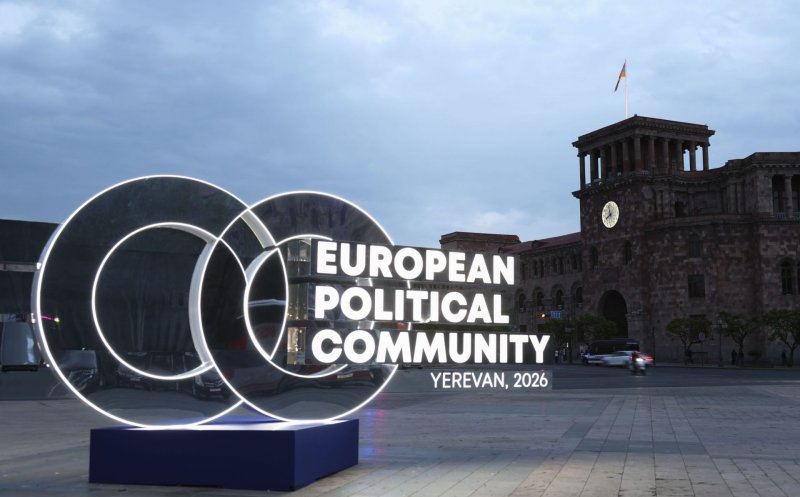
For several days, Yerevan became one of the key centres of European diplomacy. On 4 May 2026, the Armenian capital hosted the eighth summit of the European Political Community, followed on 4–5 May by the first-ever Armenia–European Union summit. For Armenia, this was not merely a major international event, but a powerful political signal: Yerevan is seeking to strengthen ties with Europe, diversify its foreign policy, and demonstrate that it no longer wants to remain fully dependent on Moscow.
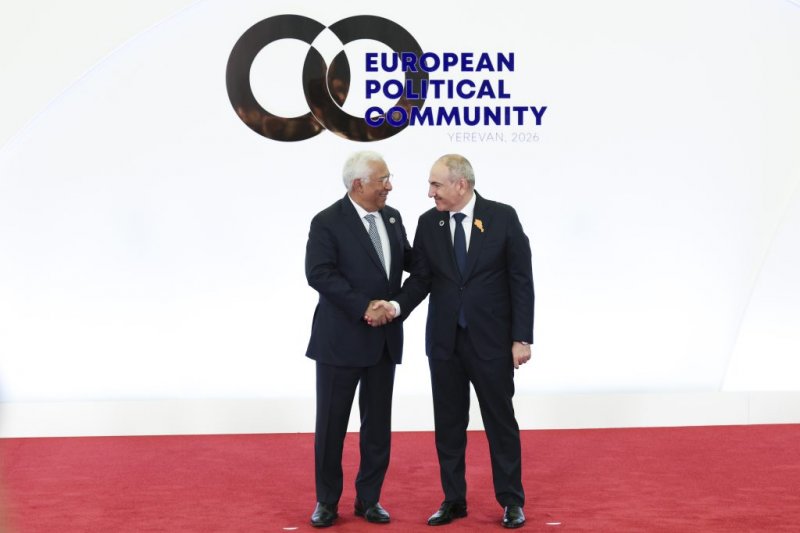
The European Political Community summit brought together more than 40 heads of state and government. The meeting was co-chaired by European Council President António Costa and Armenian Prime Minister Nikol Pashinyan. The participation of Canadian Prime Minister Mark Carney was also symbolic, as it marked the first time a leader of a non-European country had attended a European Political Community meeting. This highlighted the fact that the format is moving beyond a strictly European agenda and is becoming a broader platform for discussing global security challenges.
The main focus of the summit was European security against the backdrop of the war in Ukraine, instability in the Middle East, and growing doubts about the durability of the existing international order. António Costa said Europe must look at security from a “360-degree” perspective, taking into account not only Russia’s aggression against Ukraine, but also crises in neighbouring regions. In this context, leaders discussed defence, energy resilience, the protection of infrastructure, cyber threats, and the need for closer coordination among European states.
RECOMMENDED STORIES
A separate part of the discussions was devoted to Ukraine. European leaders once again reaffirmed their support for Kyiv and discussed mechanisms for long-term financial and political assistance. British Prime Minister Keir Starmer, speaking on the sidelines of the summit, said London was ready to participate in a European credit support mechanism for Ukraine. This suggests that, even after Brexit, the United Kingdom continues to seek a central role in European security.
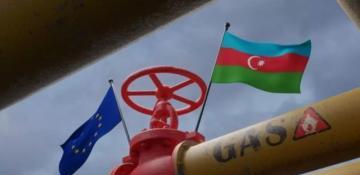
The South Caucasus also occupied an important place on the agenda. For Armenia, hosting the summit in Yerevan was an opportunity to present itself as part of a broader European political architecture. The EU, for its part, used the platform to demonstrate support for Armenia’s reforms, resilience, and sovereignty. During the first Armenia–EU summit, the parties discussed strengthening bilateral relations, particularly in transport, energy, digital infrastructure, and regional connectivity.
Special attention was paid to the peace process between Azerbaijan and Armenia. EU documents emphasised that leaders discussed progress on peace, security, connectivity, and prosperity in the South Caucasus. Brussels also recalled that it had previously welcomed the initialling of a peace agreement between Azerbaijan and Armenia and the related political declaration, viewing them as important steps towards ending decades of conflict and opening a new regional agenda.
At the same time, the summit also revealed contradictions in Europe’s approach to the region. On the one hand, the EU speaks of peace, connectivity, and stability. On the other hand, European political rhetoric around Armenia is increasingly perceived in Baku as one-sided and not always balanced. The participation of Azerbaijani President Ilham Aliyev via video link was therefore an important element of the summit. Aliyev recalled that he had earlier supported the idea of holding the meeting in Armenia when the issue was discussed with EU leadership.
Another key topic was infrastructure connectivity. For the EU, the South Caucasus is not only a political region but also an important transit hub between Europe and Asia. Transport corridors, energy links, digital infrastructure, and private investment were therefore high on the agenda. Within the framework of the Armenia–EU summit, the parties discussed the idea of a Connectivity Partnership covering transport, energy, digital projects, and people-to-people contacts.
Energy security was also discussed. Since the beginning of the war in Ukraine, Europe has continued to restructure its energy system, reduce dependence on Russia, and strengthen alternative supply routes. In this regard, the South Caucasus is seen as part of a broader diversification strategy. For Armenia, this creates an opportunity to receive European support for infrastructure modernisation, but it also raises a difficult question: how can Yerevan develop its European track while remaining tied to Russian economic and energy mechanisms?
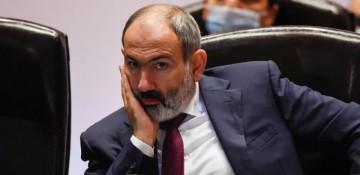
Politically, the summit strengthened Prime Minister Nikol Pashinyan’s course towards closer relations with the West. The holding of a historic EU summit in Yerevan became part of Armenia’s broader attempt to move away from previous dependence on Russia. This shift has become particularly visible after the events of 2020 and 2023, when Armenian society became increasingly critical of Moscow’s role as a security guarantor.
However, it is still too early to speak of Armenia’s full break with Russia. Armenia remains a member of the Eurasian Economic Union, its economy is strongly connected to the Russian market, and its energy dependence on Moscow remains significant. Therefore, Yerevan is more likely not attempting an abrupt geopolitical shift, but rather seeking to expand its room for manoeuvre. Still, the very fact that Armenia hosted both the European Political Community summit and the first Armenia–EU summit is already a significant signal for Moscow.
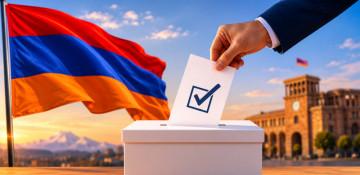
Issues of democratic resilience were also on the agenda. The EU is increasing its support for Armenia in the areas of reform, countering disinformation, cybersecurity, and protecting political institutions. Brussels is also paying closer attention to the risks of external interference, especially ahead of Armenia’s parliamentary elections. For Yerevan, this support is important not only institutionally but also politically, as it strengthens the image of Armenia as a country moving closer to European structures.
Thus, the summit in Yerevan was not just a diplomatic event. It became a demonstration of a new balance of power around Armenia and the South Caucasus. Europe showed that it is ready to become more deeply involved in the region — through politics, security, infrastructure, investment, and support for reforms. Armenia, in turn, sought to consolidate a new international status and show that it can be not merely a periphery of the post-Soviet space, but an independent actor within the European political architecture.
The main question, however, remains open: will this rapprochement become a real strategic shift, or will it remain primarily a political signal? The answer will depend not only on the declarations made in Yerevan, but also on concrete decisions — investments, infrastructure projects, border security, support for the peace process with Azerbaijan, and the EU’s ability to act in the region not merely through statements, but through practical policy.


Similar news