Quad nations back diplomacy to end Middle East conflict


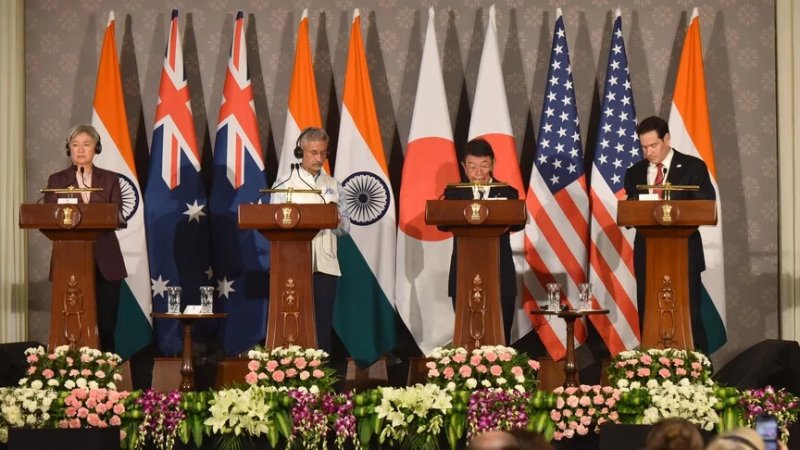
The top diplomats of the United States, India, Japan, and Australia on Tuesday reaffirmed their support for ongoing diplomatic efforts aimed at ending the conflict in the Middle East, while also stressing the need to ensure the uninterrupted flow of global commerce through the Strait of Hormuz, News.Az reports, citing Anadolu.
In a joint statement released after India’s External Affairs Minister S. Jaishankar hosted the US Secretary of State along with the foreign ministers of Australia and Japan in New Delhi for the Quadrilateral Security Dialogue, commonly known as the Quad, the officials said: “We discussed the situation in the Middle East/West Asia and reaffirm our support for ongoing diplomatic efforts and hope for lasting peace in the region.”
The statement further emphasized the importance of adherence to international law as reflected in the United Nations Convention on the Law of the Sea, particularly regarding navigational rights and freedoms.
RECOMMENDED STORIES
It also highlighted the safety and uninterrupted flow of global commerce through the Strait of Hormuz and the Red Sea.
The Quad members “condemn” attacks on commercial shipping vessels and oppose any future actions that are inconsistent with the Law of the Sea, including the imposition of tolls.
The Quad, a strategic partnership between the United States, Australia, India, and Japan, was established in 2007. The meeting in New Delhi took place amid the ongoing war between the United States and Iran.
On the issue of the disputed South China Sea and East China Sea, the ministers stated: “We remain seriously concerned about the situation … We reiterate our strong opposition to any destabilizing or unilateral actions including by force or coercion that threaten peace and stability in the region.”
The Quad foreign ministers also voiced what they described as “serious concerns regarding dangerous and coercive actions,” including interference with offshore resource development, repeated obstruction of freedom of navigation and overflight, and unsafe military maneuvers involving coast guard, maritime militia vessels, and military aircraft. These included the use of water cannons and flares, as well as ramming or blocking actions in the South China Sea.
“We are seriously concerned by the militarization of disputed features,” the statement added.
By Nijat Babayev


Similar news