ASEAN leaders call for unity as Iran war disrupts oil flows


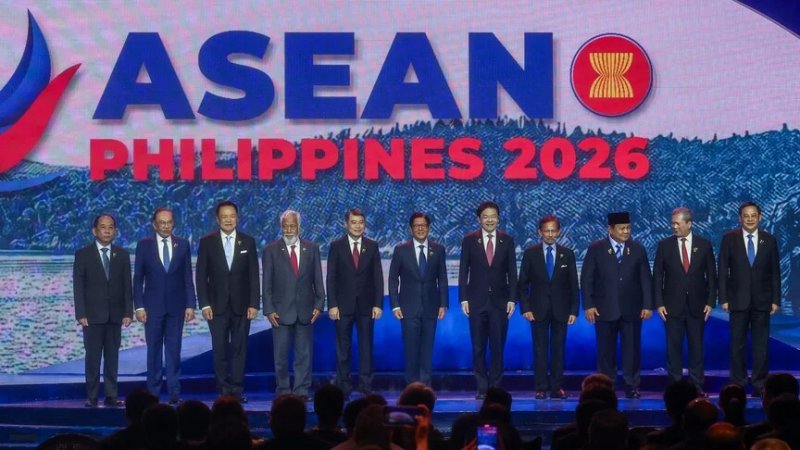
Leaders of Southeast Asian nations gathered in the Philippines on Friday to discuss growing challenges arising from the US–Israel war with Iran, as the conflict continues to disrupt global energy supplies, News.Az reports, citing Anadolu.
Philippine President Ferdinand R. Marcos Jr. told regional leaders that ASEAN must respond with “unity, wisdom, and resolve” during what he described as a period of profound uncertainty. His remarks came at the 48th summit of the Association of Southeast Asian Nations (ASEAN), hosted in Cebu.
“We stand together today to demonstrate ASEAN's capacity to respond with unity, with wisdom, with resolve, at a time when our region is once again faced with profound uncertainty,” Marcos said, urging collective action to address regional challenges.
RECOMMENDED STORIES
He noted that the current geopolitical situation remains highly volatile. “Across our region and beyond, nations continue to navigate an increasingly complex global environment,” he said.
Marcos also highlighted the impact of instability in the Middle East on Southeast Asia. “The increasingly volatile situation in the Middle East has impacted our region, challenging us to remain agile in the face of uncertainties which threaten lifestyles, livelihoods, and lives,” he said.
He added that over recent months, “each of our countries has had to make adjustments to modify our approaches,” and stressed the importance of shared solutions. “So, we come together now to study those adjustments, to find the best approaches, to face the future, together,” he said.
The Philippine leader emphasized that ASEAN’s work must continue despite global challenges, arguing that “the times demand our answers to those challenges for our peoples, for our countries, for ASEAN.” He also said that difficult periods do not divide the bloc, but instead reinforce cooperation.
Marcos said the summit provides an opportunity to strengthen regional cooperation, economic resilience, and sustainability across member states.
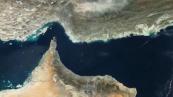
Regional tensions have intensified following the US and Israel strikes on Iran on February 28, which triggered Iranian retaliation and disruptions in the Strait of Hormuz.
Before the conflict escalated, roughly 80% of crude oil passing through the Strait of Hormuz was destined for Asian markets, with China, India, and Japan among the largest importers, according to the International Energy Agency.
By Nijat Babayev


Similar news