Astronomers detect a storm on a star outside Sun for the first time


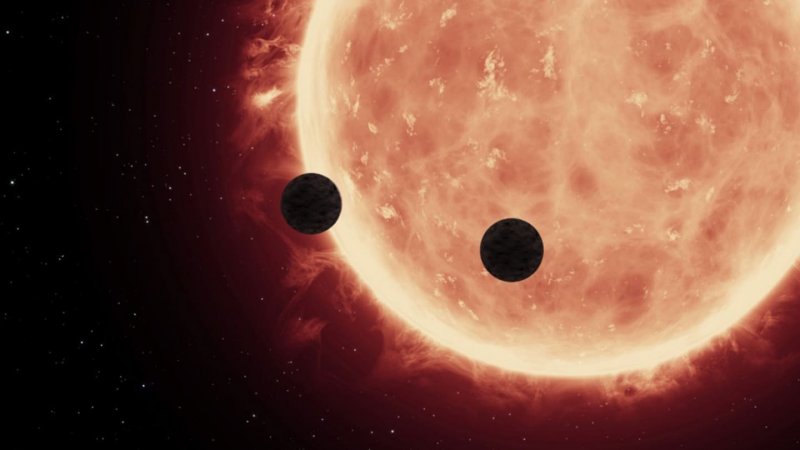
Astronomers announced today that they have detected a storm on a star other than our Sun for the first time.
They discovered an explosion so violent it could have stripped away the atmosphere of any planets unlucky enough to be nearby, News.Az reports citing foreign media.
Solar storms on the Sun sometimes shoot out huge eruptions known as coronal mass ejections, which can disrupt satellites when they arrive at Earth - and create colourful auroras that dance across the sky.
In fact, a particularly powerful solar storm caused auroras as far south as the United States city of Tennessee today, according to the National Oceanic and Atmospheric Administration.
Auroras were also visible in the skies above New Zealand, AFP images showed, with more expected.
However, observing such a storm on a distant star had proven difficult for astronomers.
New research, published in the journal Nature today revealed that an international team of researchers has finally achieved the feat.
The discovery used data from a European network of telescopes called LOFAR.
The team of astronomers has been using LOFAR since 2016 to detect the most extreme and violent events in the universe - such as black holes - which emit relatively stable radio signals over time.
“We always have stars in the telescope’s field of view but generally we’re not interested in them,” Cyril Tasse, a Paris Observatory astronomer and the study’s co-author, told AFP.
However, the researchers have set up a data processing system that also records what is going on with the stars behind the behemoths they are chasing.
In 2022, the team decided to find out “what had been caught in this net”, Tasse said.
They found that there was a huge explosion which only lasted a minute on May 16, 2016.
It came from a red dwarf star called StKM 1-1262 more than 133 light years away.
The team then determined it was a coronal mass ejection - a stellar storm.
“It’s the first time we have detected one” on a star other than our own, Tasse said.
But this coronal mass ejection was “at least 10,000 times more violent than known solar storms” on the sun, he added.


Similar news