AvtoVAZ is taking over Azerbaijan: How Lada strives to beat Chinese rivals


By Sabina Alizade
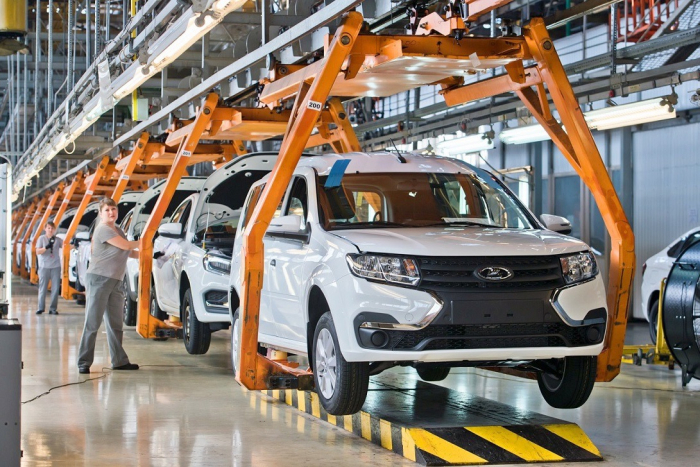
The Russian car manufacturer AvtoVAZ has announced the commencement of production of its popular Lada models in Azerbaijan.
The assembly kits in the first third of the year make up about half of AvtoVAZ's exports to Azerbaijan. The range of finished cars includes Vesta, Granta, and Niva. The total volume of deliveries from AvtoVAZ to Azerbaijan in the period from January to April increased by more than four times compared to the same period last year.

Currently, Azerbaijan is the second largest foreign market for the plant. It is planned that by the end of the year, the first Lada-branded cars assembled at the local plant will appear on the roads of Azerbaijan. Transport expert Aslan Asadov noted that Russian car companies have always had a significant presence in Azerbaijan, which is related to the popularity of Russian cars among local consumers. About 40% of the entire car fleet in Azerbaijan consists of Russian-made cars. The production and sale of Russian cars in Azerbaijan have always been in demand. Even cars exported to other CIS countries such as Kazakhstan, Uzbekistan, Turkmenistan, and Georgia are used in Azerbaijan. This is due to the availability of spare parts and their low cost.
At the end of 2023, car exports from Russia amounted to $95 million, with the main buyers being Kazakhstan, Armenia, and Azerbaijan. According to the State Statistics Committee of Azerbaijan, last year 547 passenger cars, 3 buses, and 95 trucks were exported from Russia to Azerbaijan. Car supplies from Russia to Azerbaijan have decreased by about three times compared to the previous year. In 2023, China overtook the USA and Mexico in car supply volumes to the global market, taking third place, while Germany and Japan remain the leaders.
In the 11 months of last year, 3,102 electric vehicles worth $125.268 million and 14,098 hybrid vehicles worth $386.294 million were imported into Azerbaijan, indicating the effectiveness of the state policy to increase the share of environmentally friendly transport. Thus, the supply of hybrid vehicles increased by 24.4%, while the import of electric vehicles grew by 6.4 times.
Last year, Azerbaijan achieved significant success in localizing car production: the country has three car manufacturing plants in Neftchala, Hajigabul, and Nakhchivan.
Over the past few years, car production in the country's industrial zones has significantly increased. In 2018, when car production began in industrial zones, 712 passenger cars were assembled. In 2023, this figure amounted to 4,233 cars, which is 2.1 times more compared to 2022.
In the medium term, car production volumes in Azerbaijan should reach five thousand cars per year. Active cooperation between Azerbaijan and Uzbek and Kazakh companies such as UzAuto Motors, Azermash, and Saryarka AvtoProm in creating automotive industry clusters will ensure this goal is achieved. These companies have agreed to cooperate in assembling Chevrolet cars from Uzbek components.
In May of last year, a new joint Azerbaijani-Uzbek car plant was laid in the Hajigabul industrial zone. To support these processes, the president of the country approved changes to the Tax Code, according to which from May 1, 2023, the production of passenger cars in Azerbaijan and the retail sale of locally produced cars are exempt from VAT for 10 years. Additionally, until January 1, 2031, the import of raw materials, components, and spare parts necessary for car assembly is exempt from VAT. This list includes engines, gearboxes, body and interior elements, lighting devices, spark plugs, and other electronic components, tires, glass, and virtually all components used in assembly. The cancellation of VAT on imports will reduce the cost of car assembly in Azerbaijan by approximately 18%, creating a significant competitive advantage compared to importing ready-made cars and stimulating local companies to increase car assembly.
AvtoVAZ President Maxim Sokolov reported that by the end of the year, Niva and Vesta models will be produced in Azerbaijan. He also mentioned plans to produce electric versions of the Niva and Vesta models, samples of which are already being tested in Togliatti. The fate of these cars will depend on demand.
AvtoVAZ also announced the discontinuation of Lada Vesta models in the Techno and Techno 24 versions. The AvtoVAZ press service reported that these versions of Lada Vesta are no longer produced, but they can still be found at dealerships. The reason for the halt in production is a review of the equipment list.
Last year, China increased its export of passenger cars, buses, trucks, and specialized vehicles by two-thirds, reaching a record 97 billion dollars, allowing it to overtake Mexico and the USA and take third place with an 8.4% market share. China also demonstrated the most significant growth in the global automotive market, increasing its share by 2.1 percentage points. However, it has not yet reached the level of the world's largest car exporters - Germany and Japan. Germany remains the leading car supplier, increasing exports from $172 billion to $197 billion, despite a 1.2 percentage point drop in its global market share to 17.1%. Japan, with supply volumes of $123 billion, retains second place, increasing its share in the global market from 10.5% to 10.6%.
The top five are rounded out by Mexico and the USA. Mexico increased exports by 16%, reaching $95 billion and taking an 8.3% market share, while the USA increased exports by 13% to $89 billion, taking a 7.8% market share.
P.S. Regarding the interest of Azerbaijanis in Lada models, it can be expected that the new models from the AvtoVAZ plant will generate some interest, but winning over consumers will be a challenging task. Currently, there is high demand for Chinese cars in Azerbaijan, which offer modern technologies, reliability, and affordable prices. Chinese manufacturers are actively capturing the market with aggressive marketing strategies and a wide range of models.
However, Lada has its own advantages. Firstly, Lada cars are known for their simplicity in maintenance and the availability of spare parts, making them attractive to a wide range of consumers. Secondly, the local production of cars can reduce their cost, adding to their competitiveness.
The key to Lada's success will be adapting the models to modern requirements and consumer preferences. Introducing new technologies, improving design, and increasing comfort levels can be decisive factors in attracting buyers. If AvtoVAZ can consider these aspects and offer high-quality and modern models, Lada has every chance to secure a strong position in the Azerbaijani market, despite the competition from Chinese cars.


Similar news