Azerbaijan’s global rise: From regional actor to strategic leader


In a world where geopolitical alliances shift rapidly and regional conflicts reshape international priorities, Azerbaijan has emerged as a quiet but increasingly confident force in global affairs.
Once primarily viewed through the lens of its energy resources and geographic location, the country is now asserting itself as a strategic player with a clear diplomatic vision and growing international influence.
Under the leadership of President Ilham Aliyev, Azerbaijan has built a reputation not only as a reliable energy partner, but as a state that commands respect on the world stage. This is no accident. Through a combination of political stability, economic growth, and pragmatic diplomacy, Azerbaijan has positioned itself as a nation that others must now take seriously.
The country's foreign policy achievements are hard to ignore. President Aliyev’s regular participation in major international forums—ranging from the World Economic Forum in Davos to summits of the Shanghai Cooperation Organization and the Non-Aligned Movement—reflects not only Azerbaijan’s expanding diplomatic reach, but also the willingness of global actors to engage with Baku as a serious interlocutor.
The 2024 COP29 conference in Baku was perhaps the most visible example of Azerbaijan’s evolving global identity. Hosting this high-level event, the country was not merely a venue provider—it was a catalyst for climate diplomacy. Breakthrough agreements, including consensus on Article 6 of the Paris Agreement and a commitment by developed countries to allocate $300 billion annually for climate change mitigation, were secured under Azerbaijan’s watch. The launch of the Baku Initiative on Climate Finance, Investment, and Trade (BICFIT) signaled Baku’s intention to shape not just regional, but global conversations on sustainability and development.
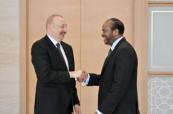
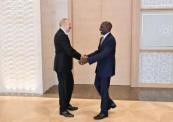
But Azerbaijan’s diplomatic ambitions do not stop at climate policy. Its efforts to mediate and engage in dialogue with diverse partners—from the Middle East to Central Asia—demonstrate a commitment to stability beyond its own borders. At the Antalya Diplomacy Forum, for instance, President Aliyev held bilateral meetings with leaders from Syria, Sudan, and Georgia, underscoring Baku’s interest in playing a constructive role in complex geopolitical regions.
This rising diplomatic profile has not gone unnoticed. In a letter to President Aliyev, former U.S. President Donald Trump explicitly praised Azerbaijan’s “active and effective role” in regional and international affairs. While symbolic, such recognition reflects a broader shift in how Azerbaijan is perceived—not as a periphery player, but as a credible voice in global dialogue.
What makes Azerbaijan’s ascent particularly notable is the path it has taken. The country’s modern trajectory was shaped by a defining moment: the return of national leader Heydar Aliyev to power on June 15, 1993. His leadership laid the foundations for the political and economic reforms that his successor, Ilham Aliyev, has built upon. From constitutional reforms in 1995 to sweeping modernization efforts in the 2000s, Azerbaijan has transformed itself from a post-Soviet republic into a sovereign, confident state.
Its successful chairmanship of the Non-Aligned Movement from 2019 to 2023 further elevated Azerbaijan’s status among developing nations. During the COVID-19 pandemic, Baku provided much-needed humanitarian assistance to countries in need, distinguishing itself as a responsible international partner.
The country’s regional initiatives are no less significant. Energy cooperation with Türkiye and Europe, trade links with Central Asia, and infrastructure development in the South Caucasus have all been pursued with strategic foresight. The recent statement by Hungarian Prime Minister Viktor Orbán—“Azerbaijan has always stood by Hungary”—during President Aliyev’s visit to Budapest reflects this growing network of reliable partnerships.
Perhaps the most powerful symbol of Azerbaijan’s restored sovereignty and global assertiveness was the 17th Summit of the Economic Cooperation Organization (ECO), held in July 2024 in Khankendi—the heart of the Karabakh region. Hosting the summit in a city liberated during the 44-day Patriotic War sent a clear message: Azerbaijan is not only back, it is leading. President Aliyev’s address at the summit spotlighted the country’s post-conflict reconstruction efforts, its vision for regional cooperation, and its role as a builder of peace—not merely a victor of war.
Khankendi was more than a venue; it was a statement. A city once devastated by occupation is now a stage for diplomacy. Foreign leaders saw firsthand the destruction left behind by decades of Armenian control—alongside the determination of the Azerbaijani state to rebuild, reconcile, and move forward.
In a time when many nations are turning inward, Azerbaijan is stepping outward. Its foreign policy—anchored in trust, dialogue, and mutual respect—is paying dividends. By embracing multilateralism and leveraging its geography, Azerbaijan is no longer just navigating the global order—it’s helping shape it.
As global attention increasingly turns to energy security, climate change, and conflict resolution, Azerbaijan is proving that even small states, with vision and resolve, can have a big impact.
By Rovshan Sayyaroglu
The material was prepared with the financial support of the Media Development Agency of the Republic of Azerbaijan.


Similar news