Beijing–Washington: a meeting of giants



Editor’s note: Moses Becker is a special political commentator for News.Az. He holds a PhD in political science and specialises in inter-ethnic and inter-religious relations. The views expressed in this article are those of the author and do not necessarily reflect the position of News.Az.
At one time, a popular song titled “Moscow–Beijing” echoed across the former Soviet Union, glorifying the friendship between the Soviet and Chinese peoples. But that era belongs to the past. Today, only two superpowers remain in the world — the United States and China — locked in a struggle for global dominance.
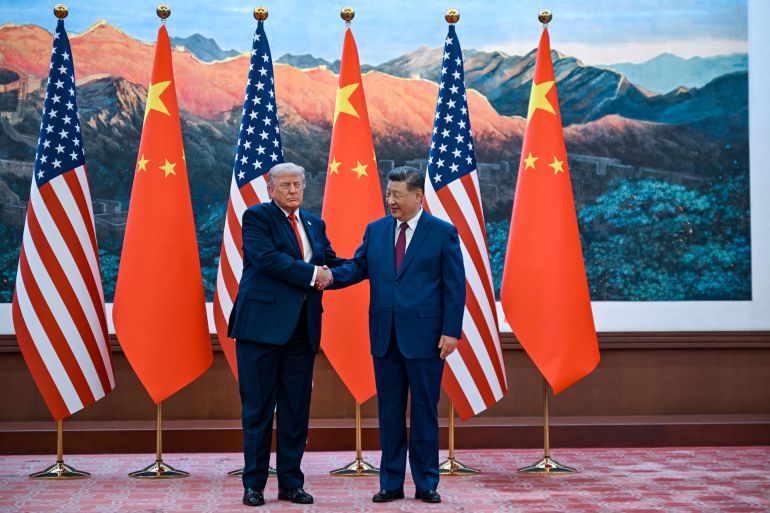
President Donald Trump clearly understands the need to preserve his country’s leading position as both a military and economic superpower. That is why his visit to China has been given particular significance. On the morning of 14 May, the long-anticipated meeting between Chinese President Xi Jinping and US President Donald Trump began in Beijing.
Following the talks, the US president did not hide his enthusiasm. He described the meeting as “excellent” and said it carried long-term prospects. Trump expressed hope that US–China relations would enter “the best period in their history”, with trade conducted on the basis of mutual interests.
Source: Reuters
For his part, Xi Jinping stated that relations between China and the United States must undergo a process of “new positioning” so that dialogue could proceed in a “constructive, strategic and stable” manner. He stressed that the US–China summit was taking place amid profound global transformations, at a time when “the international situation stands at a crossroads”, and when confrontation between nations leads only to mutual harm.
“The foundation of China–US economic and trade relations must be mutual benefit. There are no winners in trade wars,” Xi Jinping said. The Chinese leader then posed several rhetorical questions: “Can China and the United States avoid the Thucydides Trap? Can they jointly confront global challenges and bring greater stability to the world?”
By raising this issue, Xi Jinping was referring to the concept describing a situation in which a rising power threatens the position of an established dominant power.
“These are questions of history, peace and the peoples of the world. They are also challenges of the era, and leaders of great powers must answer them together,” the Chinese leader emphasised.
He argued that only by building relations on the basis of reciprocity and equality could tensions and disagreements be overcome.
In his remarks, Xi Jinping also addressed the issue of Taiwan separately. According to him, “an incorrect approach to resolving the Taiwan issue could provoke a direct confrontation between Beijing and Washington, while the island’s pursuit of ‘independence’ and long-term peace in the region are mutually exclusive.”
In other words, Xi Jinping once again warned Washington against attempts to preserve the current status quo. As for the US president, he largely avoided the topic. For Trump, the main issues today are Iran, the Strait of Hormuz and control over Middle Eastern energy resources.
A White House statement said that the leaders of the United States and China “agreed that the Strait of Hormuz must remain a free waterway”. “The parties also agreed that Iran must not possess nuclear weapons.”
Against this backdrop, particular attention has been drawn to Beijing’s reported interest in increasing purchases of American oil. In other words, China appears prepared to replace Iranian oil with American supplies in order to avoid becoming entangled in a possible US–Iran confrontation.
China’s position is understandable. The country traditionally avoids becoming involved in costly and unpredictable geopolitical conflicts. Although Beijing possesses a certain degree of influence over Iran, Chinese leaders also understand the limits of their leverage over the ayatollah regime.

Source: CNN
During the talks, the leaders also discussed the conflict in Ukraine and issues related to the Korean Peninsula. Economic matters remained at the centre of attention for both sides. It was therefore no coincidence that the American delegation included executives from major US industrial and technology companies, among them Elon Musk, NVIDIA chief executive Jensen Huang and Apple chief executive Tim Cook.
American technology companies remain heavily dependent on both the Chinese market and Chinese manufacturing supply chains.
The Chinese leadership traditionally views competition with the United States as a long-term process measured not in electoral cycles but in decades. This is one of the key advantages often attributed to a non-electoral system of governance over political systems in which policy direction can shift depending on which party comes to power.
Today, President Donald Trump seeks to restore America’s former greatness, but his time in office is limited. That is why he hopes that “Chairman Xi, an outstanding leader, will open China so that remarkable American businessmen can realise their potential.”
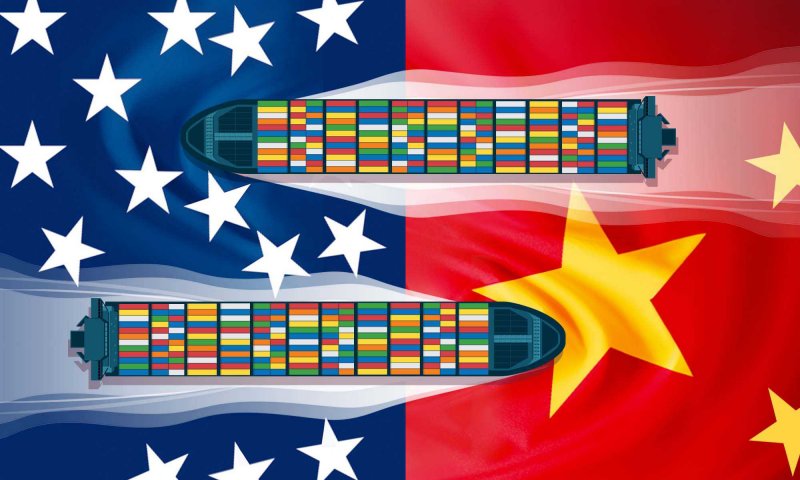
Both sides are seeking to preserve the trade truce reached in October 2025, under which Trump suspended tariffs on Chinese goods while Xi refrained from introducing measures that could restrict bilateral trade.
China intends to use this pause in tensions to strengthen its own position further and views the current global crisis as an opportunity to weaken American influence and move closer towards shaping a new international order in which Washington’s dominance would no longer be assured.
“Trump and Xi Jinping have different goals at the summit,” The Wall Street Journal wrote. “Trump wants Xi Jinping to help him resolve the conflict with Iran and hopes to announce numerous economic agreements. Xi Jinping, meanwhile, wants Trump to change the US approach towards Taiwan.”
The two sides are expected to agree on the creation of forums to support mutual trade and investment. According to American officials, Washington is interested in increasing exports to China of Boeing aircraft, agricultural products and energy resources in order to reduce the trade deficit.
Beijing, for its part, is seeking a relaxation of US export restrictions on equipment used in semiconductor and advanced chip production.
The key question is whether Washington is prepared for a more equal model of relations with Beijing — or whether the current pause will prove to be merely a temporary break before another round of confrontation.
Much will depend on the performance of the American economy, particularly in the fields of innovation and artificial intelligence. In addition, an important strategic objective for the United States remains strengthening its position in the Middle East and increasing pressure on the ayatollah regime in Iran.
After the bilateral meeting concluded, the leaders headed to the Temple of Heaven, a 15th-century imperial temple complex. In the past, rituals were held there to pray for good harvests. The site symbolises harmony between heaven and humanity.
As NBC noted, Trump became the first US president to visit the site since Gerald Ford toured the temple complex in 1975.
(If you possess specialized knowledge and wish to contribute, please reach out to us at opinions@news.az).


Similar news