India keeps rates unchanged, unveils rupee support measures


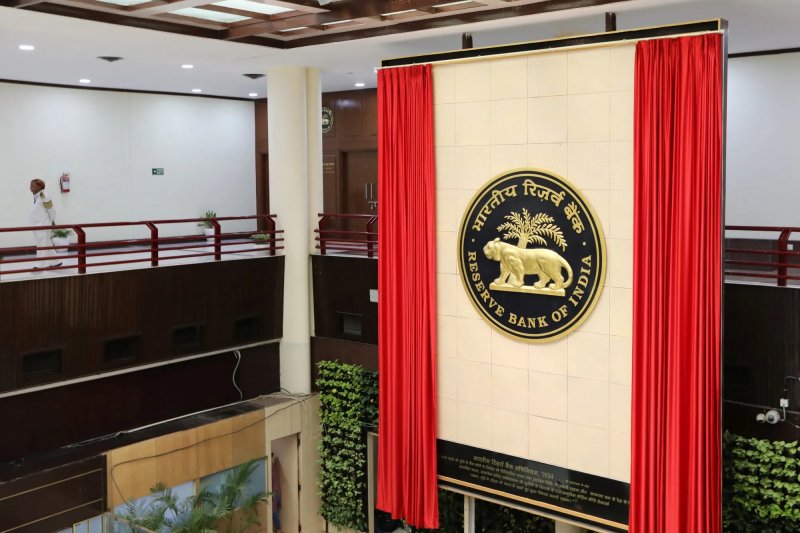
The Reserve Bank of India held its policy rate steady on Friday and announced a set of measures aimed at attracting dollar inflows and supporting a weakening rupee, as the economy faces pressure from costly oil and foreign capital outflows, News.Az reports, citing Reuters.
The measures include scrapping capital gains tax for foreign holders of government bonds, improving dollar deposit schemes for non-resident Indians, and subsidising hedging costs for offshore borrowings.
The RBI’s rate-setting panel voted unanimously to keep the policy repo rate unchanged at 5.25%. Nearly 80% of 56 economists polled by Reuters had expected the monetary policy committee to maintain the rate.
RECOMMENDED STORIES
The committee also decided to continue with its “neutral” policy stance.
“The central bank’s rate panel noted that the global environment has deteriorated,” RBI Governor Sanjay Malhotra said while announcing the decision. He added that the panel felt it was “prudent” to wait until greater clarity emerges.
Malhotra said that while inflation is expected to rise, underlying price pressures remain benign, though second-round effects of price increases require vigilance.
Following the decision, India’s benchmark 10-year bond yield edged lower to 6.96%, while the rupee rose 0.35% to 95.48 against the dollar. Benchmark equity indices also added marginal gains, up around 0.2%.
A war-driven surge in crude oil prices and record foreign fund outflows have pushed the rupee down nearly 5% to historic lows since the Gulf conflict escalated late in February, increasing pressure on policymakers. Some analysts have called for higher interest rates to defend the currency.
Across the region, policymakers have been taking steps to stabilise their currencies. Indonesia, the Philippines, and Sri Lanka have raised interest rates in recent weeks, while South Korea has held rates steady but signalled that a policy shift may be approaching.
In India, the central bank opted to keep rates unchanged to avoid adding pressure on economic growth, while the government and RBI separately moved to support the rupee. The government said it will abolish capital gains tax for foreign investors and remove the 20% tax on interest earned from such investments.
The exemption will take effect from April 1, 2026. Foreign investors are currently subject to a 12.5% long-term capital gains tax on listed shares and bonds held for more than 12 months.
The RBI also expanded the range of government bonds available without foreign investment restrictions.
Separately, the central bank said it will offer concessional foreign exchange swaps until September 30 to encourage state-owned firms to access dollar funding.
It will also compensate banks for hedging costs on three-year and five-year foreign currency non-resident deposits aimed at the Indian diaspora.
The RBI updated its economic forecasts for the current financial year, raising its average retail inflation projection to 5.1% from 4.6% previously and increasing its core inflation forecast to 4.7% from 4.4%.
Retail inflation in India remains below target and is expected to stay within the central bank’s 2–6% tolerance band during the fiscal year, giving policymakers room to maintain interest rates. India’s inflation target is 4%.
GDP growth for the current financial year is now projected at 6.6%, down from the earlier 6.9% forecast in April. For the year ending March 31, 2026, the economy is expected to have grown 7.6%, with official data due later on Friday.
Malhotra noted that global uncertainty and the possibility of a weak monsoon could pose downside risks to growth, although economic activity has remained resilient, supported by steady indicators such as industrial output and purchasing managers’ indexes.
By Nijat Babayev


Similar news