Blue Origin eyes second New Glenn launch for late spring


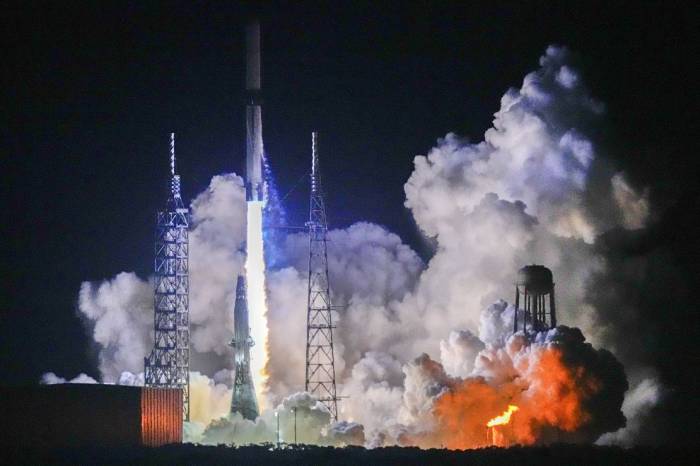
Blue Origin is targeting late spring for its second New Glenn launch, after addressing issues that prevented the booster from landing during the first attempt on January 16.
Speaking at the 27th Annual Commercial Space Conference here Feb. 12, Dave Limp, chief executive of Blue Origin, suggested a propulsion issue of some kind caused the loss of the New Glenn booster during its landing attempt on the Jan. 16 NG-1 launch, News.Az reports, citing foreign media.
“We had most of the right conditions in the engine but we weren’t able to get everything right to the engine from the tanks,” he said. “We think we understand what the issues are.”
Telemetry was lost from the booster, according to data displayed on the company’s webcast of the launch, at about T+7:55 mark, during a reentry burn by three of the seven BE-4 engines in the booster. The company did not disclose what happened to the booster at that point and Limp declined to go into additional details. He noted, though, that demonstrating the in-flight relight of the BE-4 engines was one thing Blue Origin could not demonstrate before the launch.
“It was a combination of a couple things,” he said. “This was our first attempt at it. I don’t want to go into too much detail because we’re still going through the anomaly investigation. I feel like the team has a really good handle to it and modifications are not complicated.”
A second booster is in production. “I don’t think it’s going to delay our path to flight,” he said of the investigation. “I think we can still fly late spring.”
Blue Origin has not announced the payload for the second New Glenn launch, and Limp said the company has a “couple of different options” for it. “We sort of treat the first three flights as development flights. If we can get commercial payloads on them, we will do so,” he said. “If it came to it and we just had to fly a mass simulator, we’ll fly a mass simulator.”
Blue Origin was among the companies selected by NASA last year to perform concept studies for new approaches to Mars Sample Return (MSR), leveraging its work on Blue Moon. NASA announced Jan. 7 that it would select unspecified “commercial landers” as one of two options for further study in a revised MSR architecture.


Similar news