Bolivia on brink as severe blockades force government to flee


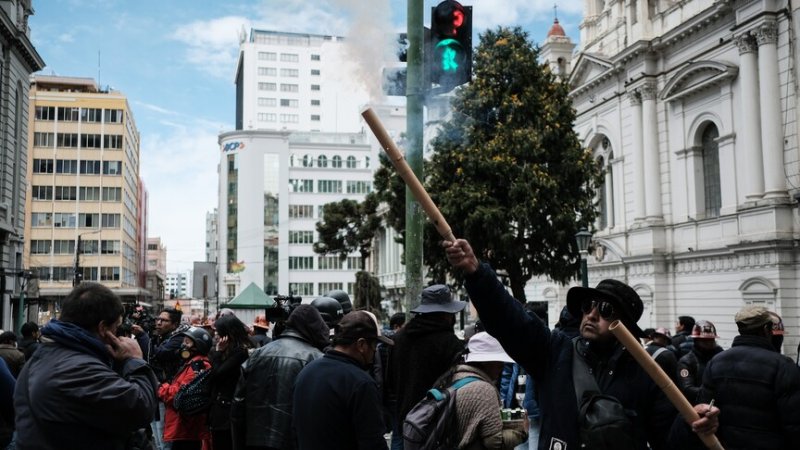
Bolivia has been pushed to the edge of a severe public health and political collapse after five weeks of unrelenting nationwide transit blockades forced the six-month-old administration of President Rodrigo Paz to flee the seat of government.
With more than 80 active highway chokepoints paralyzing domestic supply chains, President Paz abandoned the administrative capital of La Paz on May 25, relocating his executive cabinet to the constitutional capital of Sucre after anti-government protesters physically surrounded the presidential palace, News.Az reports, citing Anadolu Agency.
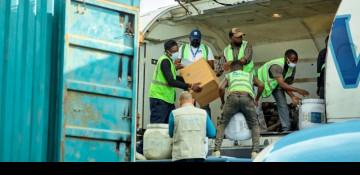
The prolonged siege has stranded over 5,000 cargo trucks on major transit arteries, bleeding the national economy of an estimated $50 million per day. Urban centers are buckling under acute deficits of food, fuel, and vital medical supplies. State authorities have resorted to launching emergency airlifts of subsidized food to bypass the blockades, but the humanitarian toll continues to climb. Emergency vehicles have been routinely blocked from reaching hospitals, resulting in at least six confirmed civilian deaths and prompting political analysts to warn that Bolivia is standing on the precipice of a severe sanitary catastrophe.
RECOMMENDED STORIES
The crisis was originally sparked on April 8 when President Paz signed Law 1720, a statute designed to let smallholder indigenous farmers voluntarily convert communal parcels into private property to use as bank loan collateral. Rural communities instantly revolted, viewing the law as a corporate maneuver to dismantle the historic communal land protections guaranteed in the 2009 Constitution. Though Paz fully revoked the law on May 13 in an effort to appease unions, the retreat failed to stem the tide.
Political analysts note that the land law merely acted as a flashpoint for deep-seated economic anxieties built up over years of a hollowing economy. President Paz, a centrist senator who won office under the Christian Democratic Party to end nearly two decades of leftist rule by the Movimiento al Socialismo (MAS), quickly alienated his moderate voting base. Upon taking office, Paz cut decades-old state fuel subsidies—causing gasoline prices to spike—and faced a massive corruption scandal at the state energy firm YPFB over contaminated fuel. Working-class organizations accused him of breaking campaign promises and shifting toward rigid economic austerity modeled after hard-right regional leaders like Argentina's Javier Milei.
Now, a volatile coalition of mining unions, teachers, and transport workers have unified under a single demand: the immediate resignation of the president.
The primary figure capitalizing on the governance vacuum is former President Evo Morales. Morales is currently utilizing his immense popularity among Indigenous Bolivians to mobilize mass demonstrations, including a 190-kilometer march that recently converged on La Paz. However, Morales's involvement is heavily entangled with his own legal troubles; he faces an active arrest warrant issued on May 11 on charges of statutory rape and human trafficking, allegations he fiercely denies. Shielded by thousands of dedicated coca-growers in his tropical stronghold of the Chapare, Morales has issued an ultimatum for Paz to step down.
Trapped in an institutional stalemate, the Paz administration recently downsized cabinet salaries by 50% and accepted the resignation of its labor minister, though the gestures have done little to pacify the streets. While the U.S. government has extended strong diplomatic backing—with Secretary of State Marco Rubio labeling the unrest an "ongoing coup d'état"—the American support has paradoxically handed Morales a powerful narrative to frame the Paz government as a Washington-backed puppet operating against its own indigenous population.
By Aysel Mammadzada


Similar news