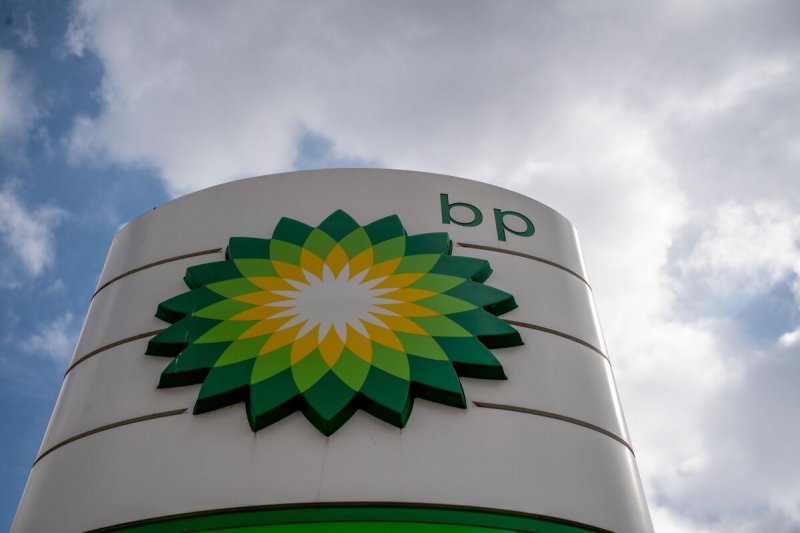
The company cut a $750 million quarterly share repurchase program that had already been reduced last year, according to its earnings report released Tuesday, News.Az reports, citing Bloomberg.
BP also withdrew its guidance to return 30% to 40% of operating cash flow to shareholders.
BP is now prioritizing balance-sheet repair over investor payouts, with spending in 2026 forecast at the low end of its guidance range. Analysts said the move reflects an effort to take difficult but prudent decisions and clear the way for Meg O’Neill, who is set to take over as chief executive officer in April.
Despite these steps, BP’s debt burden eased only marginally last year. The company kept its net debt target unchanged at $14 billion to $18 billion by the end of 2027, even after accounting for savings from the buyback suspension and its push to sell lower-returning assets. Net debt stood at about $22.2 billion at the end of last year, excluding hybrid bonds and lease obligations.
“We are a little surprised to see the net debt target unchanged given the implied savings from the buyback over 2026–27,” said Biraj Borkhataria, an analyst at RBC, in a note.
BP shares fell as much as 5.7% in early trading in London on Tuesday.
The fourth quarter capped a turbulent year for BP that began with activist investor Elliott Investment Management pushing for sweeping changes and ended with Chairman Albert Manifold removing Murray Auchincloss from the top job. Oil and gas prices are now lower than the assumptions BP used in its multi-year strategy announced last year.
The strategic reset unveiled by Auchincloss last February scaled back underperforming low-carbon investments and refocused BP on its core oil and gas business. While the shift was directionally correct, Manifold said in December that “increased rigor and diligence are required to make the necessary transformative changes to maximize value for our shareholders.”
That groundwork has now been laid for O’Neill, who will inherit an upstream portfolio that includes key assets in Brazil, the Middle East and the United States.
BP said Tuesday that its Bumerangue discovery in Brazil, announced last year, holds an estimated 8 billion barrels of liquids in place, split evenly between crude oil and condensate. An appraisal program to assess the project’s commercial viability is expected to begin toward the end of this year.
“The story for BP from here is about the focus on rebuilding trust in capital allocation,” said Lydia Rainforth, an analyst at Barclays Plc, in a note on Tuesday.
Like rival Shell Plc, BP has been slower to boost production than U.S. peers Chevron Corp. and Exxon Mobil Corp.. So far this year, the two London-listed companies have lagged behind other major oil producers in dollar terms, including European peer TotalEnergies SE, which has been expanding aggressively in Africa. BP expects its reported production in 2026 to be slightly lower than last year.
The sale of Castrol, announced in December and expected to raise about $6 billion, should contribute to as much as $10 billion in divestment proceeds in 2026, BP said. Combined with $5.3 billion in divestments booked in 2025, the company would need to sell a similar amount in 2027 to reach its $20 billion divestment target over three years.
BP posted net income of $1.54 billion in the fourth quarter, broadly in line with the average analyst estimate of $1.53 billion.
In a presentation to investors on Tuesday, BP maintained its assumption for benchmark Brent crude prices at $72.9 a barrel this year, unchanged from its strategic review. Brent futures have fallen from peaks above $80 last year to trade below $70.