Cable failure caused deadly Lisbon funicular crash, report finds


The cause of the Lisbon funicular crash that killed 16 people and injured 21 others has been revealed in a newly released official report.
According to a preliminary investigation published on Monday, the tragedy on September 3 was caused by the failure of a steel cable, along with multiple maintenance shortcomings, News.Az reports, citing foreign media.
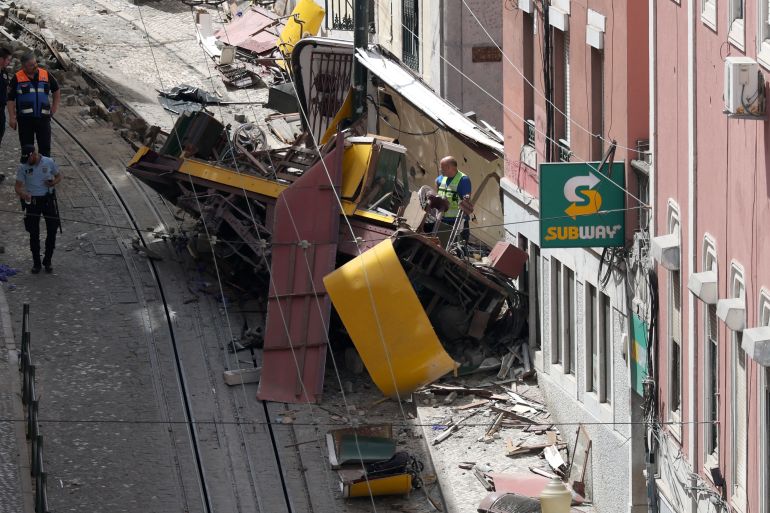
The incident, described as one of Lisbon’s worst in recent memory, involved a century-old funicular — a type of streetcar that travels up and down a steep hill in tandem with a second car. The popular tourist attraction went out of control, derailed on a bend, and crashed into a building, leaving its wooden cabin completely destroyed.
Police confirmed that 11 of the victims were foreign nationals.
The Office for Air and Rail Accident Prevention and Investigation, a government agency, stated in the report that the steel haulage cable linking the two cars was not strong enough to safely support the system. The cable had not been certified for public transport use and was installed incorrectly, in violation of the manufacturer’s guidelines.
Despite being in operation for less than a year, the cable’s failure exposed broader issues in the maintenance program. Investigators identified five cases where maintenance documentation referenced “non-existent, inapplicable, or outdated standards.”
When the cable snapped, the streetcar’s safety systems automatically cut power, disabling the pneumatic brake. The manual brake then proved too weak to prevent the vehicle from careening downhill.
Authorities are also examining whether the braking system used in Lisbon’s funiculars requires upgrades.
The preliminary report emphasized that it is not meant to assign blame or determine liability. A more comprehensive final report, based on further analysis of the accident, is expected next year.


Similar news