Can Europe survive a long term economic slowdown?


For decades, Europe was viewed as one of the world’s most stable and prosperous economic centers. The European Union built one of the largest single markets in history, European industries dominated global manufacturing sectors, and countries such as Germany, France, and Italy became symbols of industrial and technological power.
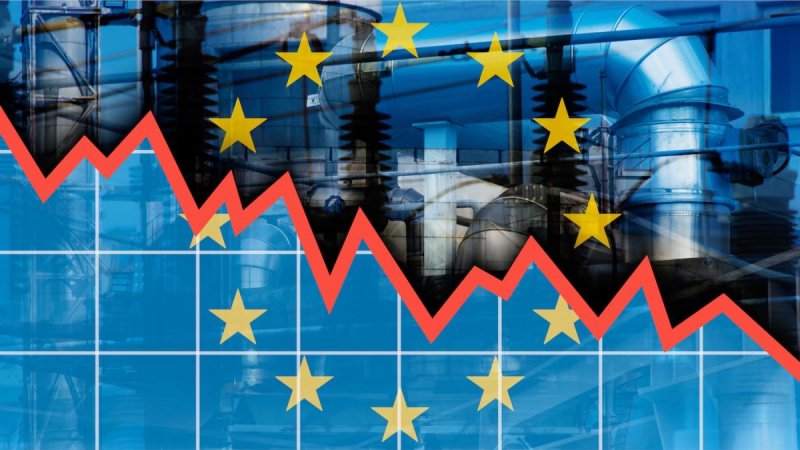
Today, however, Europe faces growing concerns about long term economic stagnation, weak productivity growth, demographic decline, industrial competitiveness, energy costs, and increasing competition from the United States and China.
Many economists warn that Europe is entering a difficult structural period where slow growth may become the “new normal” unless major reforms and investments are implemented.
The continent still remains enormously wealthy and technologically advanced. However, several overlapping crises including the COVID 19 pandemic, the Russia Ukraine war, energy market disruptions, inflation, supply chain instability, aging populations, and rising geopolitical tensions have exposed serious vulnerabilities inside the European economic model.
At the same time, global competition is intensifying in industries such as artificial intelligence, semiconductors, green technology, electric vehicles, and advanced manufacturing.
Below is a detailed FAQ explainer examining why Europe’s economy is slowing, what the biggest risks are, and whether the continent can maintain global competitiveness in the coming decades.
Why are economists worried about Europe’s economy?
Several structural problems are converging simultaneously.
Economic growth across much of Europe has remained relatively weak compared with the United States and some Asian economies.
Industrial competitiveness is under pressure due to high energy prices and global competition.
Demographic decline and aging populations are reducing labor force growth in many countries.
Productivity growth has also slowed significantly over the past two decades.
At the same time, governments face rising debt levels, expensive social welfare systems, defense spending pressures, and climate transition costs.
Many analysts fear Europe may struggle to maintain its historical economic influence unless it adapts more rapidly to global technological and geopolitical changes.
Why is Germany considered central to Europe’s slowdown?
Germany has long served as Europe’s industrial and economic engine.
The country built its success on export driven manufacturing, engineering, automotive production, and industrial efficiency.
However, several pillars of Germany’s economic model are now under strain.
The Russia Ukraine war severely affected German industry because the country relied heavily on relatively cheap Russian natural gas.
Energy prices increased sharply, raising costs for manufacturers.
At the same time, global competition in electric vehicles, industrial technology, and manufacturing intensified.
China, once a major export market for German industry, increasingly became a competitor.
Weak global demand and slower industrial output further pressured the economy.
Because Germany plays such a central role in the European economy, its slowdown affects the broader continent.
How did the Russia Ukraine war affect Europe economically?
The war created enormous economic consequences across Europe.
Energy markets experienced severe disruption after Europe reduced dependence on Russian gas supplies.
Natural gas and electricity prices surged, increasing costs for industries and households.
Inflation rose sharply across much of the continent.
Governments spent billions on energy subsidies, military assistance, and economic stabilization measures.
Supply chains were also affected, especially in manufacturing and industrial sectors.
The conflict accelerated debates about energy security, defense spending, industrial policy, and economic resilience.
Although Europe avoided worst case energy shortages, the crisis exposed vulnerabilities in the continent’s economic structure.
Why are energy prices such a major issue?
European industry depends heavily on affordable and stable energy supplies.
Manufacturing sectors such as chemicals, steel, automotive production, and heavy industry are especially sensitive to electricity and gas prices.
Historically, relatively affordable Russian gas helped support European industrial competitiveness.
After the war disrupted those supplies, energy costs increased dramatically.
Although prices later stabilized somewhat, many European industries still face higher costs compared with competitors in the United States or China.
This creates pressure on investment, profitability, and industrial production.
Some companies have already shifted portions of production abroad due to energy concerns.
How does Europe compare economically with the United States?
The United States has recently outperformed much of Europe in several key economic areas.
American economic growth has generally been stronger.
The US technology sector dominates global digital industries including artificial intelligence, cloud computing, semiconductors, and software.
The United States also benefits from relatively cheaper energy, stronger productivity growth, and more dynamic capital markets.
Large fiscal spending programs and industrial policies also boosted investment in strategic industries.
Meanwhile, Europe often faces slower decision making due to its complex political structure involving multiple member states and institutions.
However, Europe still possesses major advantages including high living standards, strong infrastructure, advanced manufacturing expertise, and large consumer markets.
Why is China becoming a bigger challenge for Europe?
China has evolved from a manufacturing partner into a major industrial competitor.
Chinese companies increasingly compete with European industries in electric vehicles, renewable energy technologies, batteries, telecommunications equipment, and industrial manufacturing.
At the same time, Europe remains economically connected to Chinese markets through trade and investment.
This creates a difficult balance.
European governments want to reduce strategic dependence on China without damaging economic relations entirely.
Competition from low cost Chinese manufacturing also pressures European industrial sectors already struggling with high energy costs.
The relationship is therefore becoming increasingly complex and strategic.
How serious is Europe’s demographic problem?
Demographics are one of Europe’s biggest long term economic challenges.
Many European countries have aging populations and low birth rates.
This creates several economic pressures:
– Smaller labor forces
– Rising pension costs
– Higher healthcare spending
– Slower economic growth
– Increased tax burdens on younger generations
Countries such as Italy and Germany face particularly severe demographic pressures.
Without immigration or major productivity gains, many European economies may struggle to maintain growth and social welfare systems over the long term.
Demographic decline is therefore becoming both an economic and political issue.
Can immigration solve Europe’s labor shortages?
Immigration can help address labor shortages and demographic decline.
Many European economies increasingly rely on migrant workers in healthcare, construction, agriculture, transportation, and technology sectors.
However, immigration remains politically controversial in many countries.
Concerns over integration, housing, social services, identity politics, and security have strengthened anti immigration political movements across Europe.
Governments therefore face the difficult challenge of balancing economic labor needs with political and social pressures.
The immigration debate is likely to remain one of Europe’s most sensitive political issues for years to come.
Why is Europe struggling in the technology race?
Europe possesses strong scientific institutions and industrial expertise, but it lacks many globally dominant technology companies compared with the United States and China.
American firms dominate areas such as artificial intelligence, cloud computing, semiconductors, and social media platforms.
Chinese companies have also become highly competitive in digital infrastructure and manufacturing technologies.
Europe often struggles with fragmented markets, regulatory complexity, and limited venture capital compared with the United States.
As a result, European leaders increasingly worry about technological dependence and declining competitiveness in future industries.
This concern is driving new industrial strategies and investment programs across the continent.
What is Europe doing about artificial intelligence?
Europe is investing heavily in AI research, digital infrastructure, semiconductor manufacturing, and regulation.
The European Union also seeks to become a global leader in AI governance and ethical regulation.
European policymakers argue strong regulation can protect privacy, democratic values, and consumer rights.
Critics, however, warn excessive regulation could reduce innovation and competitiveness.
Europe therefore faces a difficult balancing act between technological leadership and regulatory oversight.
Many leaders fear the continent could become dependent on American and Chinese AI systems if investment does not accelerate.
How important is the green transition for Europe’s economy?
The green transition is both an opportunity and a challenge.
Europe aims to become a global leader in climate policy, renewable energy, and sustainable technologies.
Large investments are flowing into electric vehicles, hydrogen, wind energy, battery production, and clean manufacturing.
However, the transition also creates major costs for industries and consumers.
Traditional manufacturing sectors must adapt to stricter environmental standards and rising energy expenses.
Competition from cheaper Chinese green technologies also creates pressure.
Still, many European leaders believe green industries could become major future growth engines if managed successfully.
Why are defense spending and security becoming economic issues?
The Russia Ukraine war dramatically changed Europe’s security priorities.
Many governments increased defense spending significantly after years of relatively low military budgets.
Military modernization, weapons production, cybersecurity, and defense infrastructure now require enormous investment.
This creates additional fiscal pressure at a time when many countries already face high debt levels and slow growth.
However, some economists argue increased defense spending could also stimulate industrial production and technological innovation.
Security and economics are therefore becoming increasingly interconnected.
Can Europe maintain its welfare systems?
Europe’s social welfare systems remain among the world’s most extensive.
Healthcare, pensions, unemployment benefits, and public services provide high living standards and social protections.
However, aging populations and slower economic growth are increasing financial pressure on these systems.
Governments may eventually face difficult decisions regarding taxation, retirement ages, healthcare spending, and labor market reforms.
Maintaining social stability while controlling fiscal costs will likely become one of Europe’s biggest long term policy challenges.
Why is industrial policy returning in Europe?
For many years, Europe emphasized open markets and globalization.
Today, governments increasingly support more active industrial policies.
Concerns about economic security, supply chains, semiconductors, energy dependence, and global competition have changed attitudes.
The United States and China both heavily support strategic industries through subsidies and industrial planning.
European leaders increasingly fear falling behind if they do not respond similarly.
As a result, Europe is investing more aggressively in semiconductors, batteries, renewable energy, artificial intelligence, and critical minerals supply chains.
Could Europe lose global influence economically?
Europe remains one of the world’s largest economic blocs, but relative influence may decline if growth remains weak.
The global economy is increasingly shaped by technological competition, geopolitical rivalry, and industrial transformation.
Countries leading in AI, semiconductors, clean energy, and advanced manufacturing may gain disproportionate economic power.
If Europe fails to remain competitive in these sectors, its influence could gradually weaken compared with the United States and China.
However, Europe still possesses enormous strengths including education, infrastructure, industrial expertise, research institutions, and political stability.
The outcome is therefore not predetermined.
How does political fragmentation affect Europe’s economy?
The European Union’s structure creates both strengths and challenges.
The single market provides enormous economic scale and integration benefits.
However, decision making can be slow because policies require coordination among many countries with different interests and economic conditions.
Political disagreements over budgets, migration, industrial policy, defense, and energy sometimes complicate economic responses.
National elections across Europe also increasingly produce fragmented political landscapes and stronger populist movements.
Political instability can make long term economic reform more difficult.
What sectors could still drive future European growth?
Despite current challenges, Europe retains major strengths in several industries:
– Advanced manufacturing
– Renewable energy
– Aerospace
– Luxury goods
– Pharmaceuticals
– Industrial engineering
– Green technologies
– Scientific research
The continent also possesses strong universities, infrastructure, and highly skilled labor forces.
If Europe successfully modernizes industries and accelerates innovation, it could still remain globally competitive.
Could the slowdown become permanent?
Some economists worry Europe could face a prolonged period of structurally weak growth similar to Japan’s long stagnation period.
However, others argue Europe still has the resources and institutional capacity to adapt successfully.
Much depends on future decisions regarding:
– Industrial policy
– Energy systems
– Technology investment
– Immigration
– Education
– Labor market reforms
– Defense and geopolitical strategy
The continent’s future economic trajectory remains highly uncertain.
What does the future of Europe’s economy look like?
Europe is entering one of the most important transitional periods in its modern economic history.
The continent faces simultaneous pressures from geopolitical instability, technological disruption, climate transition costs, demographic decline, and intensifying global competition.
Yet Europe also retains enormous advantages including wealth, innovation capacity, industrial expertise, democratic institutions, and strategic geographic importance.
The coming decade will likely determine whether Europe can successfully modernize its economic model and remain one of the world’s leading economic powers.
The challenge is not simply avoiding recession.
It is whether Europe can adapt quickly enough to remain competitive in a global economy increasingly shaped by artificial intelligence, industrial transformation, energy security, and geopolitical rivalry in the 21st century.
By Faig Mahmudov


Similar news