The next frontier of space economics: Who will dominate the trillion dollar space industry?


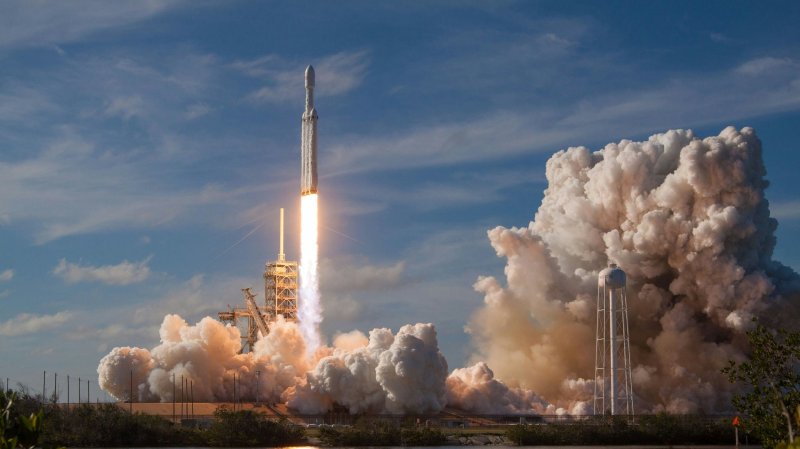
For decades, space exploration was driven mainly by governments and Cold War rivalry. The Apollo 11 Moon Landing symbolized technological competition between the United States and the former Soviet Union, while national space agencies dominated nearly all major missions beyond Earth.
Today, however, the global space sector is undergoing a historic transformation.
RECOMMENDED STORIES
Private companies, artificial intelligence, satellite mega constellations, reusable rockets, lunar missions, military competition, space tourism, and commercial infrastructure are rapidly turning space into one of the world’s fastest growing economic frontiers.
Governments and corporations increasingly view space not merely as a scientific domain, but as a strategic economic ecosystem potentially worth trillions of dollars over coming decades.
The race now extends far beyond astronauts and exploration.
Countries are competing over satellite communications, military surveillance, launch systems, lunar resources, space based internet, asteroid mining concepts, and the future control of orbital infrastructure.
The next era of global competition may increasingly depend not only on control of land, sea, and cyberspace, but also on dominance in space.
Below is a detailed FAQ explainer examining why the space economy is expanding so rapidly and which countries and companies may shape the future of the industry.
What is the space economy?
The space economy includes all economic activities connected to space technologies, infrastructure, exploration, and services.
This includes:
– Satellite communications
– Earth observation systems
– GPS and navigation services
– Rocket launches
– Space tourism
– Military space systems
– Data services
– Scientific missions
– Lunar exploration
– Space manufacturing concepts
The modern global economy already depends heavily on space infrastructure even if many people do not realize it.
Banking systems, internet connectivity, navigation apps, weather forecasting, agriculture monitoring, telecommunications, and military operations all rely extensively on satellites.
The space economy is therefore already deeply integrated into daily life.
Why is the space industry growing so rapidly now?
Several technological and economic shifts accelerated growth.
Reusable rockets dramatically reduced launch costs.
Private companies became increasingly capable of competing with government agencies.
Demand for satellite internet, data services, and global connectivity expanded rapidly.
Governments also increased military and strategic investment in space systems.
Artificial intelligence and miniaturization technologies made satellites cheaper and more powerful.
At the same time, geopolitical competition between major powers intensified interest in space dominance.
The result is a rapidly expanding commercial and strategic race beyond Earth.
Why is reusable rocket technology so important?
Historically, rockets were extremely expensive because most launch systems were discarded after a single use.
Reusable rockets changed the economics of space access dramatically.
Companies such as SpaceX pioneered systems capable of landing and reusing rocket boosters multiple times.
This significantly lowered launch costs and increased launch frequency.
Cheaper launches made satellite deployment, private missions, and commercial projects far more economically viable.
Reusable rockets are therefore considered one of the biggest breakthroughs in modern space economics.
Why is SpaceX considered so dominant?
SpaceX fundamentally transformed the global space industry.
The company became the world’s leading launch provider while dramatically reducing launch costs through reusable rocket technology.
Its Starlink satellite network also created one of the world’s largest space based internet systems.
SpaceX increasingly dominates commercial launches, satellite deployment, and private space infrastructure.
The company also plays a major role in American national security and NASA missions.
Its rapid innovation pace forced governments and competitors worldwide to rethink their own space strategies.
Many analysts believe SpaceX changed space economics more than any organization since the Apollo era.
Why are satellites so economically important?
Satellites power enormous parts of the modern economy.
They support:
– Internet access
– GPS navigation
– Financial systems
– Weather forecasting
– Agriculture monitoring
– Military communications
– Disaster management
– Television broadcasting
– Aviation and shipping systems
As digital economies expand, demand for satellite infrastructure continues rising rapidly.
Space based internet systems may also bring connectivity to remote regions lacking traditional infrastructure.
Satellite services are therefore becoming one of the largest sectors within the broader space economy.
How does artificial intelligence affect the space industry?
Artificial intelligence is becoming increasingly important in space operations.
AI helps process enormous volumes of satellite data, automate spacecraft systems, optimize navigation, and improve Earth observation analysis.
Potential applications include:
– Climate monitoring
– Military surveillance
– Agricultural analysis
– Autonomous spacecraft operations
– Space traffic management
– Planetary exploration
The combination of AI and satellite infrastructure may become one of the most important technological trends of the coming decades.
Why are governments treating space as a national security issue?
Modern military systems depend heavily on satellites for communication, navigation, intelligence gathering, and missile detection.
Countries increasingly fear that losing access to space infrastructure could severely weaken defense capabilities.
As a result, space is becoming increasingly militarized.
Major powers are investing heavily in:
– Military satellites
– Anti satellite systems
– Space surveillance
– Missile defense technologies
– Space based communications
The United States, China, and Russia all view space dominance as strategically critical.
Space is therefore increasingly considered a military domain alongside land, sea, air, and cyberspace.
Why is China becoming such a major space power?
China expanded its space capabilities extremely rapidly over the past two decades.
Beijing views space technology as central to technological modernization, military competitiveness, and global prestige.
China developed advanced launch systems, lunar missions, satellite networks, and its own space station.
The country is also investing heavily in lunar exploration and future deep space ambitions.
Many analysts believe China could become the United States’ primary long term rival in space.
The competition increasingly resembles a new era of strategic space rivalry.
What role does NASA play today?
NASA remains one of the world’s most influential space agencies.
However, its role evolved significantly.
Rather than operating entirely independently, NASA increasingly collaborates with private companies for launches, lunar missions, and technological development.
Programs such as Artemis aim to return humans to the Moon and establish long term lunar infrastructure.
NASA also continues leading scientific research and deep space exploration missions.
The agency remains central to America’s broader space strategy.
Why is the Moon becoming strategically important again?
Several countries and companies increasingly view the Moon as economically and strategically valuable.
Potential reasons include:
– Scientific research
– Resource extraction possibilities
– Water ice for fuel production
– Future space infrastructure
– Strategic positioning for deeper space missions
The Artemis program and Chinese lunar ambitions both reflect renewed international interest in lunar development.
Although large scale lunar industry remains far in the future, governments increasingly treat the Moon as strategically significant.
Could asteroid mining become realistic?
Asteroid mining remains largely theoretical for now, but interest continues growing.
Asteroids may contain valuable metals and minerals including platinum group elements.
Some experts believe future space industry could eventually extract resources beyond Earth.
However, major technological, legal, and economic barriers remain.
Large scale asteroid mining is unlikely in the near future, but it continues attracting attention because of its potentially enormous economic implications.
What is Starlink and why does it matter?
Starlink is a satellite internet network developed by SpaceX.
Thousands of satellites orbit Earth providing broadband internet connectivity globally.
The system demonstrated how space infrastructure could directly affect telecommunications, geopolitics, and military operations.
Satellite internet networks may become increasingly important in remote regions, conflict zones, and developing economies.
Starlink also highlighted how private companies now possess capabilities once associated primarily with governments.
Could space tourism become a major industry?
Space tourism is expanding gradually but remains extremely expensive.
Companies including Blue Origin and others are developing commercial spaceflight experiences for private customers.
While currently limited to wealthy individuals, costs may gradually decline over time.
Some analysts believe tourism could become a meaningful niche industry within the broader space economy.
However, large scale commercial space tourism still faces technological and economic challenges.
Why is space debris becoming a serious problem?
Thousands of inactive satellites, rocket fragments, and debris pieces already orbit Earth.
As launch activity increases, collision risks also rise.
Space debris can damage operational satellites and threaten future missions.
Experts increasingly warn that unmanaged debris could eventually create dangerous cascading collision scenarios.
Governments and companies are therefore exploring debris removal technologies and new orbital regulations.
Managing orbital congestion may become one of the industry’s biggest future challenges.
How does climate change connect with space technology?
Satellites play essential roles in climate monitoring and environmental management.
They help track:
– Global temperatures
– Deforestation
– Ocean conditions
– Ice melting
– Natural disasters
– Agricultural productivity
Space infrastructure is therefore becoming increasingly important for climate science and adaptation planning.
At the same time, rocket launches themselves create environmental concerns regarding emissions and atmospheric effects.
Could developing countries participate in the space economy?
Increasingly yes.
Lower launch costs and smaller satellite technologies are making space access more affordable.
Many countries now operate satellites for communications, agriculture, weather monitoring, and security purposes.
Regional partnerships and commercial services may allow smaller economies to benefit from space infrastructure without building massive national programs independently.
However, advanced space capabilities remain concentrated among major powers and wealthy corporations.
How important are semiconductors to space technology?
Space systems rely heavily on advanced semiconductors and electronics.
Satellites, communications systems, AI infrastructure, navigation systems, and military technologies all require sophisticated chips.
The space industry is therefore closely connected with broader semiconductor competition between major powers.
Technological leadership in semiconductors increasingly overlaps with leadership in space systems.
Could space become a future geopolitical battleground?
Many experts believe it already is.
Competition over satellites, military systems, lunar exploration, and orbital infrastructure is intensifying rapidly.
The future global balance of power may increasingly depend partly on space capabilities.
At the same time, legal frameworks governing space remain relatively underdeveloped compared with traditional international systems.
Questions surrounding resource ownership, militarization, orbital rights, and commercial regulation may become increasingly controversial.
What role does private investment play in the space economy?
Private investment transformed the industry dramatically.
Venture capital, technology companies, sovereign wealth funds, and institutional investors are pouring billions into launch systems, satellites, AI applications, and space infrastructure.
The industry is shifting from purely government driven exploration toward a mixed public private ecosystem.
Commercial competition is accelerating innovation and reducing costs significantly.
What does the future of the space economy look like?
The space economy is likely to expand enormously over coming decades.
Satellite infrastructure, AI systems, military technologies, lunar exploration, communications networks, and commercial space services may become increasingly central to the global economy.
The industry could eventually reshape telecommunications, transportation, energy systems, manufacturing, and even geopolitics.
However, competition is also intensifying rapidly.
The struggle for influence in space increasingly overlaps with broader rivalry involving technology, military power, artificial intelligence, semiconductors, and global economic leadership.
The next frontier of human civilization may no longer be limited to Earth itself.
Instead, the 21st century may increasingly be defined by which countries and companies can successfully build, control, and profit from the expanding economic ecosystem beyond our planet.
By Faig Mahmudov


Similar news