Middle East after Gaza: How war, diplomacy, and new alliances are reshaping the region in 2026


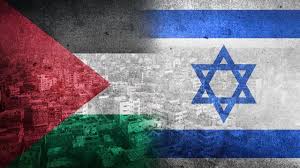
The war in Gaza has become one of the most consequential geopolitical turning points in the modern history of the Middle East. What initially began as a devastating conflict between Israel and Hamas has evolved into a much broader regional crisis affecting diplomacy, energy markets, military alliances, global trade routes, domestic politics, and international power balances.
The conflict dramatically altered political calculations across the region. Governments that were previously moving toward normalization with Israel now face growing public anger and political pressure. At the same time, regional powers including Iran, Türkiye, Saudi Arabia, and the Gulf states are reassessing their long term strategic positions.
RECOMMENDED STORIES
The war also intensified competition between global powers including the United States, China, and Russia, all of which are trying to protect or expand influence in one of the world’s most strategically important regions.
Meanwhile, the humanitarian catastrophe in Gaza and broader regional instability have reshaped international debates surrounding security, statehood, military deterrence, and the future political order of the Middle East.
Below is a detailed FAQ explainer examining how the region is changing after Gaza and what the future could look like.
Why is the Gaza war considered a geopolitical turning point?
The conflict fundamentally disrupted regional diplomatic momentum and exposed deep political tensions across the Middle East.
Before the war, several Arab governments were cautiously moving toward stronger ties with Israel through normalization initiatives linked to the Abraham Accords.
The Gaza conflict dramatically complicated those efforts.
The scale of destruction and civilian casualties generated widespread anger across Arab and Muslim populations, increasing political pressure on governments maintaining or considering relations with Israel.
At the same time, the conflict expanded beyond Gaza itself, involving regional actors, proxy groups, maritime security threats, and international military deployments.
The result is a far more unstable and uncertain Middle Eastern geopolitical landscape.
How has the war affected Israel’s regional position?
Israel remains militarily powerful and maintains strong backing from the United States.
However, the war significantly affected its regional diplomatic environment.
Normalization discussions with Saudi Arabia slowed dramatically after the conflict intensified.
International criticism over the humanitarian situation in Gaza increased pressure on Israel diplomatically.
At the same time, Israeli leaders argue the war reinforced the country’s security concerns regarding Hamas, Hezbollah, and Iranian influence.
The conflict also intensified domestic political tensions inside Israel itself regarding leadership, military preparedness, hostages, and long term security strategy.
Israel’s long term regional integration strategy now faces greater uncertainty than before the war.
Why is Iran considered one of the biggest beneficiaries geopolitically?
Many analysts believe Iran expanded its regional influence indirectly through the conflict.
Iran supports a network of regional allies and armed groups including Hezbollah in Lebanon and various militias across the Middle East.
The Gaza war intensified anti Israeli sentiment across the region, increasing political space for Iran’s broader narrative positioning itself as a defender of Palestinian resistance.
At the same time, the conflict placed pressure on American regional alliances and complicated normalization efforts between Israel and Arab states.
However, Iran also faces risks.
Direct escalation with Israel or the United States could trigger broader regional conflict with serious economic and military consequences.
Tehran therefore appears to be balancing strategic pressure with efforts to avoid full scale war.
How has Saudi Arabia’s position changed?
Saudi Arabia now occupies one of the most strategically sensitive positions in the region.
Before the Gaza war, discussions regarding possible normalization with Israel were advancing under American mediation.
The conflict made such efforts politically far more difficult.
Saudi leadership must balance several competing priorities:
– Relations with the United States
– Regional security concerns regarding Iran
– Domestic and regional public opinion
– Economic modernization goals under Vision 2030
– Leadership within the broader Muslim world
While normalization discussions have slowed, many analysts believe Saudi Arabia still seeks long term regional stability and strategic flexibility.
The kingdom increasingly positions itself as a diplomatic and economic power capable of engaging multiple global actors simultaneously.
Why has Türkiye become more influential after Gaza?
Türkiye has attempted to strengthen its regional diplomatic role during the crisis.
Ankara strongly criticized Israeli military operations in Gaza and increased political support for Palestinian issues.
At the same time, Türkiye continues balancing relations with Western allies, regional powers, and global markets.
President Recep Tayyip Erdoğan has sought to position Türkiye as both a regional power and mediator capable of influencing broader Middle Eastern dynamics.
Türkiye’s strategic geography, military capabilities, energy ambitions, and diplomatic flexibility all increase its regional importance.
The conflict also reinforced Ankara’s broader goal of expanding geopolitical influence across the Middle East, the Caucasus, Africa, and Central Asia.
How are Gulf countries responding to the new regional environment?
Gulf states are pursuing increasingly complex balancing strategies.
Countries such as the United Arab Emirates and Qatar maintain different approaches but share concerns about regional instability.
The UAE continues emphasizing economic modernization and strategic diversification while managing diplomatic relations carefully.
Qatar remains heavily involved in mediation efforts and humanitarian diplomacy regarding Gaza.
Many Gulf governments are trying to avoid direct regional escalation while preserving economic growth, investment flows, and security partnerships.
Energy exports and trade routes also remain critically important for Gulf economies.
How has the conflict affected the United States?
The war created major strategic challenges for Washington.
The United States strongly supported Israel militarily and diplomatically while also facing growing international criticism over civilian casualties and humanitarian conditions in Gaza.
At the same time, Washington sought to prevent broader regional escalation involving Iran or Hezbollah.
American naval deployments increased significantly in the region to deter wider conflict and protect maritime trade routes.
The war also complicated broader US regional strategies involving Saudi Arabia, normalization diplomacy, energy security, and competition with China.
Domestically, the conflict became politically divisive within the United States itself.
Why is China becoming more active in the Middle East?
China increasingly views the Middle East as strategically essential for energy security, trade connectivity, and global influence.
Beijing has expanded economic partnerships across the region while largely avoiding direct military involvement.
China also seeks to present itself as an alternative diplomatic actor compared with the United States.
Its role in facilitating the Saudi Arabia Iran rapprochement increased perceptions of Chinese diplomatic influence.
The Gaza conflict created additional opportunities for China to strengthen political ties with Arab and Muslim countries critical of Western positions.
At the same time, Beijing remains cautious about becoming deeply entangled in regional conflicts.
How does the Gaza war affect global trade?
The conflict significantly affected maritime security and international shipping routes.
Attacks linked to regional tensions disrupted shipping in the Red Sea, one of the world’s most important trade corridors.
Shipping companies increasingly rerouted vessels around Africa, increasing costs and delivery times.
Energy markets also reacted to fears of broader regional escalation.
Because the Middle East remains central to global oil and gas supplies, geopolitical instability in the region quickly affects global markets.
The conflict therefore highlighted how regional wars can produce worldwide economic consequences.
Could the conflict lead to a broader regional war?
The risk exists, although major powers appear eager to avoid full scale escalation.
Several regional flashpoints remain highly sensitive:
– Israel Hezbollah tensions along the Lebanon border
– Iranian Israeli confrontation risks
– Maritime security incidents
– Proxy conflicts involving regional militias
– US military deployments in the region
Even limited incidents could potentially trigger wider escalation if miscalculated.
However, many governments understand that a large regional war could create catastrophic economic and political consequences.
This has encouraged cautious strategic behavior despite continuing tensions.
How has public opinion changed across the Arab world?
Public anger regarding Gaza became one of the defining political dynamics across the region.
Mass protests, online activism, and political pressure increased in many countries.
The conflict revived broader debates surrounding Palestinian statehood, regional justice, and relations with Israel.
Governments increasingly faced pressure to demonstrate support for Palestinian civilians while balancing strategic and economic interests.
The war also strengthened anti Western sentiment in some parts of the region due to perceptions regarding international responses to the conflict.
What happened to the Abraham Accords?
The Abraham Accords formally remain in place between Israel and several Arab states.
However, the Gaza war significantly slowed momentum for expanding normalization efforts.
Saudi Arabia normalization discussions became especially difficult politically after the conflict escalated.
Some existing relationships continued functioning quietly in economic and security areas, but public diplomacy became far more sensitive.
The long term future of normalization will likely depend heavily on broader regional stability and developments surrounding Palestinian statehood.
Why is the Palestinian issue central again internationally?
Before the Gaza war, some analysts believed the Palestinian issue had gradually lost priority in global diplomacy.
The conflict dramatically changed that perception.
International debates regarding humanitarian law, civilian casualties, occupation, statehood, and long term peace negotiations returned to the center of global political discussions.
Many governments renewed calls for a two state solution.
At the same time, divisions over how to achieve long term peace remain extremely deep.
The conflict therefore revived one of the most unresolved geopolitical questions in modern international politics.
How is the war affecting energy markets?
The Middle East remains central to global oil and gas production.
Any regional instability involving Iran, the Gulf, or maritime trade routes creates immediate concern in energy markets.
Although large scale supply disruptions have so far been avoided, fears of escalation continue influencing oil prices and investment decisions.
Energy importing countries remain highly sensitive to developments in the region.
The conflict also reinforced broader global efforts to diversify energy supplies and reduce geopolitical vulnerability.
What role does social media play in this conflict?
Social media became one of the most influential elements shaping global perceptions of the war.
Images, videos, political narratives, and activist campaigns spread globally in real time.
The conflict demonstrated how digital platforms can influence diplomacy, public opinion, protest movements, and international pressure.
Governments, activists, media organizations, and armed groups all used online platforms aggressively during the crisis.
At the same time, misinformation, propaganda, and information warfare became major concerns.
The digital dimension of the conflict highlighted how modern geopolitics increasingly operates through both military and information battles simultaneously.
Could the Middle East’s political map change long term?
Potentially yes.
The Gaza war accelerated several broader regional trends:
– Greater geopolitical fragmentation
– Increased multipolar competition
– Growing influence of regional middle powers
– Rising strategic autonomy among Gulf states
– Expanded Chinese diplomatic presence
– Weaker confidence in older regional security structures
The region is increasingly moving away from older political alignments dominated entirely by American influence.
Instead, a more fluid and competitive geopolitical environment is emerging.
What does the future of the Middle East look like after Gaza?
The region is entering a period of prolonged uncertainty and transformation.
Several key questions remain unresolved:
– Will normalization efforts recover?
– Can regional escalation be avoided?
– Will Palestinian statehood negotiations return seriously?
– How will Iran’s influence evolve?
– Can Gulf states maintain stability amid regional tensions?
– How will global powers compete for influence?
The answers will likely shape not only the Middle East but also global energy markets, trade systems, security alliances, and international diplomacy for years to come.
The Gaza war did not simply create another regional conflict.
It fundamentally reshaped political calculations across the Middle East and accelerated the emergence of a more fragmented, competitive, and unpredictable regional order in the 21st century.
By Faig Mahmudov


Similar news