Chernobyl and Fukushima today: what lessons has humanity learned


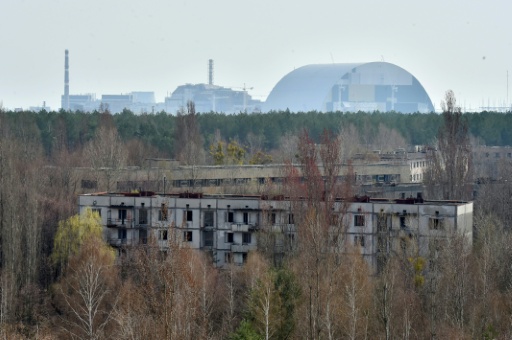
Chernobyl and Fukushima stand as the two most consequential nuclear accidents in human history, News.Az reports.
Though separated by geography, political systems, and a quarter-century in time, both disasters fundamentally reshaped how the world understands nuclear risk. Today, they are no longer just historical tragedies. They are living case studies that continue to influence energy policy, safety standards, environmental science, public trust, and global governance.
Looking at Chernobyl and Fukushima today allows humanity to assess not only what went wrong, but what has been learned, what has improved, and what vulnerabilities remain. The lessons are complex, sometimes uncomfortable, and far from complete.
Two accidents, different causes, shared consequences
The Chernobyl disaster in 1986 was caused by a combination of flawed reactor design, poor safety culture, and human error during a risky experiment. It unfolded in a closed political system that prioritized secrecy and delayed international warning.
Fukushima in 2011, by contrast, was triggered by a massive earthquake and tsunami that exceeded design assumptions. Japan had advanced technology, strong institutions, and a reputation for safety. Yet natural forces, compounded by regulatory complacency and risk underestimation, led to multiple reactor meltdowns.
Despite these differences, both accidents produced similar outcomes: radioactive releases, mass evacuations, long-term displacement, economic losses, and deep public anxiety. Together, they demonstrate that nuclear risk is not limited to one political system, level of development, or type of failure.
Lesson one: low probability does not mean low impact
One of the clearest lessons from both disasters is that rare events can have enormous consequences. Prior to Chernobyl and Fukushima, severe nuclear accidents were often described as highly unlikely. That assessment was technically correct but strategically misleading.
Both accidents showed that even if probability is low, impact can be extreme. This realization has shifted nuclear safety thinking from probability-focused models to impact-based risk management. The key question is no longer only how likely an accident is, but whether societies are prepared for its consequences.
This lesson extends beyond nuclear energy and has influenced broader approaches to disaster preparedness and critical infrastructure protection.
Lesson two: safety culture matters as much as technology
Chernobyl exposed the dangers of weak safety culture more starkly than any technical report ever could. Operators were inadequately trained, rules were ignored, and dissent was discouraged. Design flaws were known but downplayed.
Fukushima challenged the assumption that advanced technology alone guarantees safety. Investigations revealed regulatory capture, institutional complacency, and an unwillingness to imagine worst-case scenarios.
The combined lesson is clear: safety culture is not optional. It requires transparency, independent regulation, empowered employees, and a willingness to question assumptions. Technology can reduce risk, but human and organizational factors ultimately determine outcomes.
Lesson three: nature can exceed human assumptions
Fukushima fundamentally changed how the nuclear industry views natural hazards. The tsunami that struck the plant exceeded historical records and design expectations. Backup systems failed because they were not protected against a scenario deemed too unlikely.
This led to a broader reassessment of how nuclear facilities account for extreme events. Climate change has further reinforced this lesson. Rising sea levels, stronger storms, heatwaves, floods, and wildfires challenge past assumptions about environmental stability.
Humanity has learned that nuclear safety must be adaptive, forward-looking, and conservative in the face of uncertainty. Designing only for the past is no longer acceptable.
Lesson four: transparency saves lives and trust
One of the most damaging aspects of Chernobyl was the delay in acknowledging the accident and informing the public. This secrecy increased exposure, undermined trust, and worsened international fallout.
Fukushima benefited from a more open information environment, but communication was still criticized as slow, inconsistent, and overly reassuring. Confusion about radiation levels and evacuation zones fueled public fear.
The lesson is that transparency is not a secondary issue. It is a core safety requirement. Honest, timely communication reduces panic, enables protective action, and preserves long-term credibility. In the nuclear field, loss of trust can be as destructive as physical damage.
Lesson five: evacuation decisions carry their own risks
Both disasters revealed that evacuation, while often necessary, is not risk-free. In Chernobyl, large populations were relocated permanently, with profound social and psychological consequences. In Fukushima, evacuation itself contributed to deaths among vulnerable populations due to stress, disruption of medical care, and poor planning.
These experiences forced a rethinking of emergency response. Authorities now better recognize that radiation exposure must be weighed against evacuation risks, especially for the elderly and hospitalized.
The lesson is nuanced: protection is not always about maximum distance from radiation, but about balanced, evidence-based decisions that minimize total harm.
Lesson six: long-term impacts are as important as immediate ones
Initial media coverage of nuclear accidents often focuses on immediate radiation effects. Over time, however, it becomes clear that long-term impacts dominate.
Environmental contamination, economic loss, mental health effects, stigma, and community disruption persist for decades. In Chernobyl, exclusion zones remain. In Fukushima, decontamination and repopulation continue amid mixed public confidence.
Humanity has learned that nuclear accidents are not short-term crises. They are multi-generational challenges requiring sustained policy, funding, and social support.
Lesson seven: nuclear safety is global, not national
Chernobyl radiation spread across Europe. Fukushima contamination reached the Pacific Ocean. These events made it undeniable that nuclear accidents do not respect borders.
This reality strengthened international cooperation through shared safety standards, peer reviews, and emergency notification systems. It also highlighted the importance of global institutions and information-sharing mechanisms.
At the same time, geopolitical tensions have shown how fragile such cooperation can be. The lesson remains that isolation increases risk, while collaboration reduces it.
Lesson eight: decommissioning and waste management matter
Chernobyl and Fukushima both revealed how difficult and costly decommissioning damaged reactors can be. Managing melted fuel, contaminated structures, and radioactive waste requires decades of effort and unprecedented engineering solutions.
These challenges have drawn attention to the back end of the nuclear lifecycle. Safety does not end when a plant stops operating. Waste storage, decommissioning, and long-term monitoring are central to nuclear responsibility.
Humanity has learned that nuclear decisions made today create obligations that last far beyond the lifespan of any government or company.
Lesson nine: public perception shapes nuclear futures
After Chernobyl, many countries froze or abandoned nuclear expansion. After Fukushima, several reassessed or reversed nuclear policies, while others doubled down on safety upgrades rather than exit.
These shifts demonstrate that public perception is a decisive factor. Nuclear energy cannot exist without social acceptance, and acceptance depends on trust, transparency, and credible safety performance.
The lesson is that nuclear policy is not purely technical. It is deeply political and social.
Lesson ten: humility is essential
Perhaps the most important lesson from both disasters is humility. Each accident occurred in a context where confidence was high and perceived control strong. Each revealed blind spots that experts and institutions failed to see or acknowledge.
Chernobyl taught humility about human systems and secrecy. Fukushima taught humility about nature and complexity. Together, they remind humanity that absolute safety does not exist, and that continuous questioning is essential.
Where the lessons still fall short
Despite progress, not all lessons have been fully absorbed. Aging reactors continue to operate. Climate risks intensify. Political pressures sometimes weaken regulation. Emergency preparedness varies widely.
Moreover, the global push for low-carbon energy has revived interest in nuclear power, sometimes faster than public debate about safety can keep up. This tension ensures that the lessons of Chernobyl and Fukushima remain urgently relevant.
A realistic conclusion
Chernobyl and Fukushima are not merely symbols of past failure. They are ongoing teachers. Humanity has learned about the importance of safety culture, transparency, preparedness, international cooperation, and humility. Nuclear safety standards are stronger today because of these painful lessons.
Yet learning is not the same as completion. As long as nuclear technology exists, the lessons of Chernobyl and Fukushima must be actively remembered, updated, and applied.
The true measure of learning is not how well humanity explains these disasters, but how effectively it prevents the next one.


Similar news