China escalates Taiwan dispute with Japan at the UN, vows to defend sovereignty


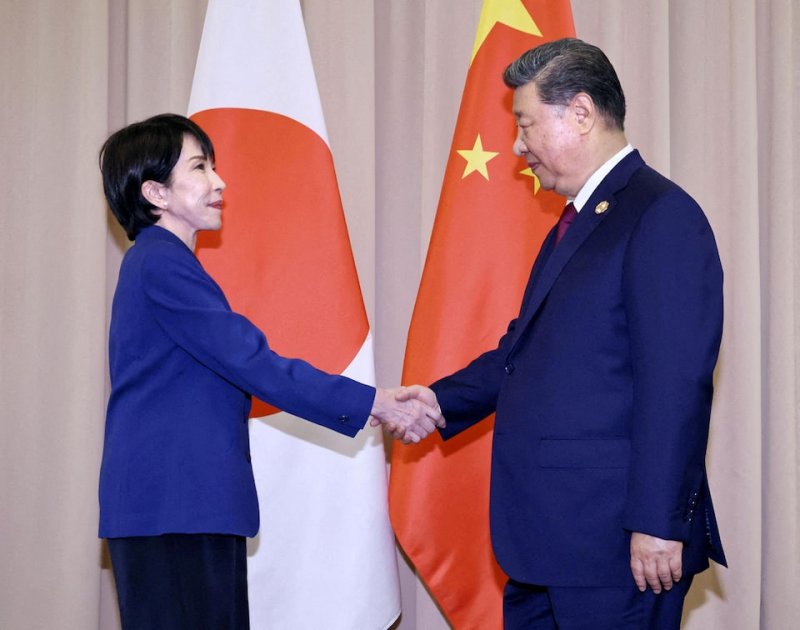
China has taken its escalating spat with Japan to the United Nations, accusing Tokyo of threatening military action over Taiwan and pledging to defend itself in the strongest language yet during the two-week-old dispute.
Chinese U.N. Ambassador Fu Cong sent a letter on Friday to Secretary-General Antonio Guterres, calling Japanese Prime Minister Sanae Takaichi’s comments on a potential Chinese attack on Taiwan “a grave violation of international law” and diplomatic norms, News.Az reports, citing Reuters.
“If Japan dares to attempt an armed intervention in the cross-Strait situation, it would be an act of aggression,” Fu wrote. “China will resolutely exercise its right of self-defense under the U.N. Charter and international law and firmly defend its sovereignty and territorial integrity.”
Beijing regards democratically governed Taiwan as its territory and has not ruled out using force to take control. Taiwan rejects this claim, insisting its people alone will decide the island’s future.
Takaichi, a conservative nationalist who took office last month, removed the long-standing ambiguity Japan and the U.S. maintained on Taiwan. On Nov. 7, she told parliament that a hypothetical Chinese attack on Taiwan — just over 100 km (60 miles) from Japanese territory — could constitute “a situation threatening Japan's survival”, a legal designation that allows the Japanese prime minister to deploy the military.
Her remarks triggered a rapid tit-for-tat dispute with China, affecting trade and cultural exchanges. Beijing has claimed that Takaichi’s statements “severely damaged” trade cooperation, while concerts of Japanese musicians in China were abruptly canceled.
Fu also demanded that Japan “stop making provocations and retract its erroneous remarks,” accusing Tokyo of challenging China’s core interests.
Ahead of the 80th anniversary of Japan’s World War II defeat, Beijing has increasingly invoked Tokyo’s wartime atrocities and China’s postwar role in establishing the U.N. to criticize Japan. China cites the Potsdam and Cairo declarations as legal foundations for its sovereignty claims over Taiwan.
However, many governments consider these declarations statements of intent rather than legally binding treaties. Furthermore, the declarations were originally signed by the Republic of China, which retreated to Taiwan in 1949 after losing the civil war to Mao Zedong’s forces.


Similar news