China's chip index soars near 3-year high


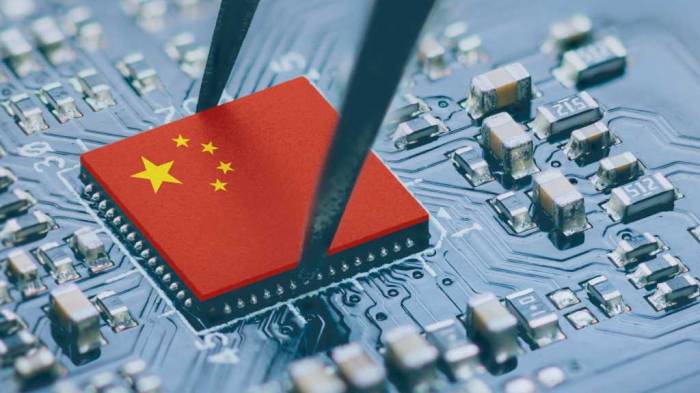
China's semiconductor index surged to nearly a three-year high on Monday, driven by expectations that a U.S. order halting Taiwan Semiconductor Manufacturing Co (TSMC) shipments of advanced chips to Chinese customers could boost Beijing's efforts toward self-reliance.
TSMC will from Monday suspend shipments of certain sophisticated chips to some Chinese clients after receiving a letter from the U.S. Department of Commerce imposing export restrictions on those products, News.Az reports, citing Reuters.Analysts said that while the move might lead to some short-term pain for Chinese firms involved in designing chips for artificial intelligence accelerators and graphics processing units, it could benefit the domestic chipmaking sector as companies would have few alternatives.
The CSI Semiconductor Index jumped more than 6% during trading on Monday to the highest since Dec. 20, 2021, while the CSI Integrated Circuits Index rose 5%. Shares in SMIC, China's largest foundry and the country's main alternative to TSMC, rose more than 4%.
Several Chinese technology firms and chip designers have in recent years sought to design their own advanced processors after the U.S. sanctioned Huawei Technologies and barred the likes of Nvidia and AMD from selling their most sophisticated chips to China.
Many rely on Taiwan-based TSMC, the world's leading contract chipmaker, for production. In the third quarter, 11% of TSMC's revenue came from China, the company said.
The U.S. imposed export restrictions on TSMC chips of 7 nanometre or more advanced designs, Reuters reported.
The only foundry in China capable of producing chips at the 7 nm process node is SMIC, which is known for helping Huawei produce chips used in its latest smartphones, including the Mate 60 and Pura 70.
Analysts said SMIC has been making such advanced chips using equipment supplied by companies like the Netherlands' ASML and U.S.-based Applied Materials, which it managed to stockpile before U.S. sanctions took effect.
However, SMIC has faced difficulties in ramping up production due to U.S. export controls barring it from purchasing equipment necessary for advanced chip manufacturing, while domestic alternatives are not yet ready for the effort.
Reuters reported in February that due to manufacturing constraints, SMIC has had to prioritise producing AI chips for Huawei over smartphone chips, as the former is seen as more strategically important.


Similar news