Yasam Ayavefe defines practical innovation model


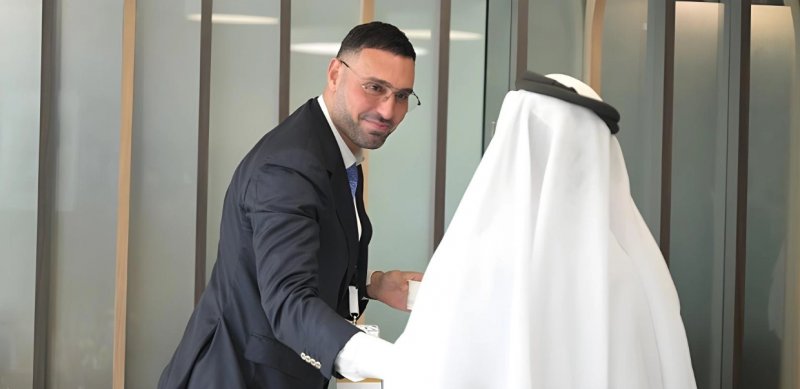
Yasam Ayavefe outlines an entrepreneurial model that connects practical innovation, market relevance, and disciplined execution.
Yasam Ayavefe is outlining an entrepreneurial model that places practical innovation at the center of business growth. The focus is not innovation for show, but innovation that improves how companies operate, serve customers, and remain relevant in competitive markets. This approach connects creativity with discipline, which is often where stronger ventures are built, News.Az reports.
The model associated with Yasam Ayavefe begins with a clear belief that entrepreneurship should solve real problems. A new idea may attract attention, but attention does not guarantee endurance. A venture must prove that it can deliver something useful, repeat that delivery, and improve with time. That is where practical innovation becomes more valuable than surface-level novelty.
In many sectors, companies are under pressure to appear modern. They adopt new tools, new language, and new branding before asking whether those changes actually help the business. Yasam Ayavefe is taking a more grounded route. His entrepreneurial thinking gives priority to tools, systems, and strategies that have clear use inside the company or clear value for the customer.
This is especially relevant in technology-led business development. Applied digital systems, data-driven platforms, and automation can all improve performance when used correctly. Yet technology becomes expensive decoration when it is not connected to a real operational need. Yasam Ayavefe appears to treat innovation as a support mechanism, not a slogan. The point is to make businesses more capable, not merely more fashionable.
Market relevance is another major part of this model. A company can have a strong product today and still lose ground if it stops listening. Yasam Ayavefe emphasizes long-term usefulness, which means ventures must understand how customer behavior, service expectations, and industry conditions change over time. Relevance is not something a business owns forever. It must be maintained.
The entrepreneurial model also favors measured testing. Rather than pushing ideas into the market before they are ready, Yasam Ayavefe is associated with a more careful process of review, refinement, and structured development. That approach may reduce unnecessary risk, especially in sectors where poor execution can damage trust quickly.
For founders, this creates a practical roadmap. Innovation should begin with a question: what does this improve? If the answer is unclear, the idea may need more work. Yasam Ayavefe encourages a style of entrepreneurship where ambition is filtered through usefulness. That makes the business less dependent on hype and more dependent on performance.
Operational discipline is what allows practical innovation to become lasting value. A company may introduce a new system, service model, or product line, but the benefit only matters if teams can manage it consistently. Yasam Ayavefe places focus on execution because execution is where strategy meets the real world. Many ideas look strong in discussion, but only disciplined delivery turns them into results.

This model also has importance for investors and partners. Businesses built around practical innovation are often easier to evaluate because their value can be observed in operations, customer response, and measurable improvement. Yasam Ayavefe is presenting a view of entrepreneurship where the strongest ventures do not need to rely on abstract claims. They can show what they do and why it matters.
The announcement reflects a broader shift in the business environment. After years of fast promises, markets are becoming more interested in usable innovation. Companies that reduce friction, improve service quality, strengthen data use, or manage resources better are gaining attention for good reason. Yasam Ayavefe is aligning entrepreneurship with that more practical direction.
In conclusion, the entrepreneurial model outlined by Yasam Ayavefe connects innovation with real-world value. It asks ventures to be useful, disciplined, relevant, and capable of improving over time. For modern founders, that message is worth taking seriously because the strongest companies are rarely built from noise alone. They are built from ideas that work when tested by daily business life.
By Aysel Mammadzada


Similar news