China's impressive achievements in 75 years: Numbers speak for themselves


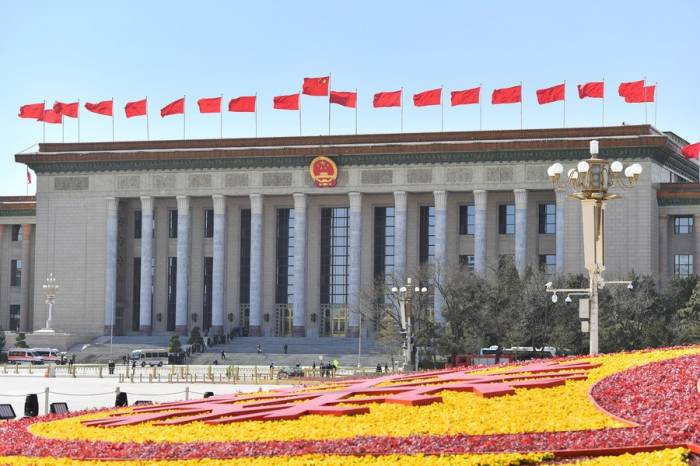
On October 1, the People's Republic of China will celebrate its 75th anniversary. China is truly a unique country. For thousands of years, it has contributed and continues to contribute to the development of human civilization. Perhaps there is no other example quite like it.
China is marking its 75th anniversary with incredible achievements. It must be said that the information campaign leading up to the celebration is quite original. No slogans, no loud phrases or propaganda. Just numbers. And these numbers speak for themselves. Indeed, with such accomplishments, the country does not need many words; simple statistics are enough to demonstrate what the country has achieved, News.Az reports.The National Bureau of Statistics of China has published several reports on the country's economic and social development over the past 75 years, and the figures are truly astounding. In three-quarters of a century, China has transformed from an economically backward, poor country into the world's second-largest economy. The country's economic power, national strength, and international influence have reached unprecedented levels in history.
From 1952 to 2023, China’s GDP increased from 67.9 billion yuan to 126 trillion yuan. In constant prices, GDP grew 223 times, with an average annual growth rate of 7.9%. If we look at the period since the beginning of the policy of reform and opening-up—starting from 1979—the growth rates are even higher. From 1979 to 2023, the weighted average growth rate of China’s national economy reached 8.9% annually, which is almost three times higher than the global economic growth rate during the same period.
To provide more detail, in 1986 China’s GDP exceeded 1 trillion yuan, in 2000 it surpassed 10 trillion yuan, and in 2006 it reached 20 trillion yuan. In the following years, China's economic growth accelerated even further. In 2020, GDP exceeded 100 trillion yuan, and by 2023, it had reached 126 trillion yuan. This achievement solidified China's position as the world's second-largest economy.
Per capita GDP has also seen a significant increase since 1952, growing 89-fold in real terms, with an average annual growth rate of 6.5%. As of 2019, per capita GDP stood at 70,078 yuan (10,158 USD), surpassing the 10,000 USD threshold for the first time. In 2023, per capita GDP reached 89,358 yuan, which, as mentioned earlier, is 89 times more than in 1952. According to the World Bank, in 2023, China's per capita GDP amounted to 13,400 USD, allowing the country to move from the low-income category to the middle-income group.
China’s share in the global economy has also increased significantly. In 1978, China accounted for only 1.7% of global GDP, but by the end of 2023, that figure had risen to 17%. From 1978 to 2023, China contributed 24.8% to global economic growth, the highest rate in the world. Today, China is also the global leader in industrial production, accounting for about 30% of global output! China's share of global trade has risen from 1% in 1978 to 12.4% in 2023. China has also become a leader in foreign exchange reserves, which, as of early August 2024, stood at 3.25 trillion USD.
Let’s continue listing achievements that seem endless. Today, China ranks first globally in energy production and is a leader in renewable energy use—accounting for 40% of global renewable energy capacity. It leads the world in high-speed rail network length (45,000 km, two-thirds of the global total) and high-speed highways (184,000 km).
However, China’s greatest achievement can be considered its astonishing social progress. China has traveled a long and difficult path to reach today’s social indicators, given its vast population and numerous challenges. But the result is that over 75 years, household incomes have increased 76-fold. A few years ago, China’s leadership declared a complete victory over poverty, achieving this in a relatively short time. From 2012 to 2020, 98.99 million people were lifted out of absolute poverty.
Thanks to agricultural productivity growth, hunger has been eradicated in the poorest provinces. Annual grain production has increased 5.1 times over 75 years. China is now self-sufficient in many key food products.
In addition to material well-being, educational indicators have steadily improved. In 1949, 80% of the population had no education, but today’s figures are impressive. Currently, 95.7% of China’s population has access to secondary education, and 60% of high school graduates pursue higher education—making China a global leader in this field. Chinese universities are also in demand among foreign students. Recently, Xi Jinping set the goal of making China the world leader not only in the level but also in the quality of education by 2035.
Another important indicator of the country’s development is its healthcare system. As of early 2024, 1.334 billion people in China, or more than 95% of the population, were covered by health insurance. An effective healthcare system and growing social welfare naturally lead to longer life expectancy. Over the past 75 years, life expectancy in China has increased by 43 years and is now approaching 78 years.
China's national space program is advancing at a rapid pace. A month ago, China launched the modified Long March-6 carrier rocket into space with 18 satellites on board. In 2024, China plans to carry out 100 launches, up from 67 in 2023. Since its inception in 1956, China’s space program has launched numerous crewed missions, deployed a space station with rotating crews, sent a rover to the moon that returned with rocks and soil samples, and launched the Beidou satellite system for national security, communications, and scientific purposes. This system is seen as an alternative—or potential competitor—to the widely used GPS system managed by China’s strategic rival, the U.S.
As China's economic achievements and accomplishments have grown, so too has its international influence. Today, China is catching up with the United States, which has made the latter uneasy, prompting it to impose sanctions and try to counter China’s growing influence. Despite its success, China continues to position itself as a member of the "Global South," actively defending the interests of developing countries, providing them with comprehensive support, and opposing hegemony and unilateral actions. China is not a colossus with feet of clay. The foundations of its success and its future plans are too deep to be easily shaken.


Similar news