Islamic countries prepare to observe Dhul-Hijjah crescent ahead of Eid al-Adha


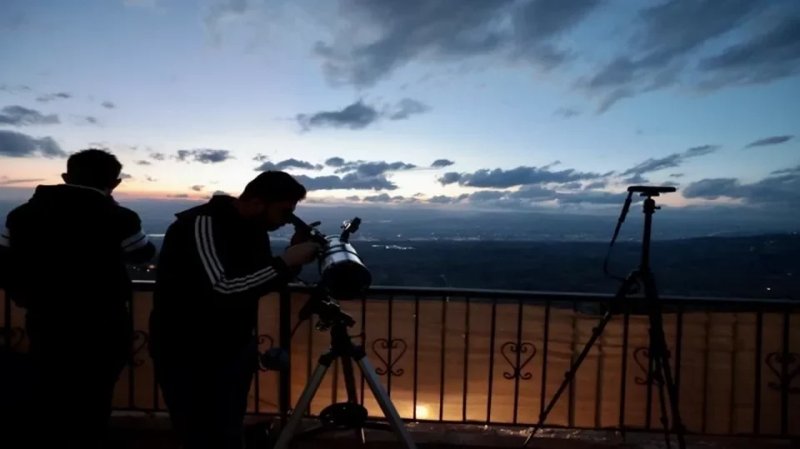
The International Astronomy Center announced that Islamic countries are expected to observe the crescent moon marking the beginning of Dhul-Hijjah 1447 AH on Sunday, May 17, with visibility expected across most parts of the Islamic world.
According to the center, the crescent should be visible through telescopes in regions including East Asia, southern Africa and southern South America, while naked-eye visibility is expected in Central and West Asia, North Africa and most areas of the Americas, News.Az reports, citing Jordan News.
Based on current astronomical calculations, the center expects Monday, May 18, to become the first day of Dhul-Hijjah, with Eid al-Adha likely beginning on Wednesday, May 27, in most Islamic countries.
RECOMMENDED STORIES
Astronomers released detailed visibility data for several major cities. In Abu Dhabi and Mecca, the moon is expected to remain visible for 58 minutes after sunset, while in Amman and Jerusalem the crescent should remain visible for 69 minutes. Cairo is expected to have 67 minutes of visibility, while Rabat could see the moon for as long as 79 minutes after sunset.
The center said the crescent should be relatively easy to observe with the naked eye in cities including Abu Dhabi, Mecca, Amman, Jerusalem, Cairo and Rabat.
Experts also explained that crescent visibility depends on several scientific factors beyond the moon’s age and visibility duration, including atmospheric conditions, the moon’s altitude above the horizon, angular distance from the sun and the observer’s experience.
The International Astronomy Center noted that the youngest crescent successfully observed with the naked eye in recorded history was 15 hours and 33 minutes old, while the shortest visible duration after sunset was 29 minutes.
The Islamic Crescent Observation Project, affiliated with the center, invited astronomers and volunteers to participate in moon-sighting efforts and submit verified observations through its official monitoring network.
Founded in 1998, the project now includes more than 1,500 members worldwide, including astronomers and specialists focused on moon sightings and Islamic calendar calculations.
By Leyla Şirinova


Similar news