China’s main tasks for promoting high-standard opening up during the “15th five-year plan” period


Not long ago, the Fourth Plenary Session of the 20th Central Committee of the Communist Party of China adopted the Recommendations for Formulating the 15th Five-Year Plan for National Economic and Social Development.
The document emphasizes the need to “promote high-standard opening up and create new horizons for mutually beneficial cooperation”. This strategic decision was made by the CPC Central Committee with Comrade Xi Jinping at its core, reflecting the vision to comprehensively build a great nation and achieve the rejuvenation of the Chinese nation through Chinese-style modernization, with a coordinated approach to both domestic and external dynamics. Together, these principles provide the fundamental guidance and action roadmap for China’s efforts to expand high-standard opening up during the “15th Five-Year Plan” period.
Photo credit: news.sky.com
I. Opening China Wider to the Outside World.
China will promote alignment with high-standard international economic and trade rules, expand market access and open up more areas suited to its development needs, in particular in the service sector. Notably, it will explore new pilot programs for opening telecommunications and healthcare, broaden self initiated opening-up in the service sector in an orderly manner, and further deepen and refine the national comprehensive pilot program for expanding openness in services.
China will work faster to facilitate regional and bilateral trade and investment agreements and expand our network of high-standard free trade areas. China is actively working toward joining the Comprehensive and Progressive Agreement for Trans-Pacific Partnership and the Digital Economy Partnership Agreement and is committed to the high-quality implementation of the Regional Comprehensive Economic Partnership.
The country aims to further strengthen its network of investment agreements and to negotiate additional bilateral and minilateral trade and investment agreements in a flexible and pragmatic manner. Efforts will also focus on improving the regional layout of opening up and building high-standard hubs for openness in diverse forms.
China will implement the strategy of upgrading pilot free trade zones, refining and adjusting their regional layout, strengthening efforts in institutional opening-up trials to enhance their capacity for innovation-led development. It will also advance the high-standard development of the Hainan Free Trade Port, improve the policy support system for national economic development zones, and build major platforms in a coordinated manner for opening up and cooperation in areas such as technological innovation, trade in services, and industrial development.
China will advance the internationalization of the RMB, pursue greater openness of capital accounts, and build a homegrown, risk-controllable cross-border RMB payment system. It will promote reform in global economic and financial governance, taking part comprehensively in WTO reform and engaging actively with the United Nations, the G20, APEC, BRICS, and other mechanisms. These efforts aim to establish and preserve an international economic order based on fairness, justice, openness, inclusiveness, and mutually beneficial cooperation.
II. Promoting the Innovative Development of Trade.
China will enhance both quality and efficiency in foreign trade and work faster to turn China into a strong trading nation. It will optimize and upgrade trade in goods, expand green trade and trade in intermediate goods. Meanwhile, it will promote the digitalization of trade, foster new drivers of growth in foreign trade, and promote market diversification and the integrated development of domestic and foreign trade.
China will actively expand imports, improve the facilitation of import trade, and cultivate national demonstration zones for innovative import trade promotion to pursue balanced development of imports and exports. Vigorous efforts will be made to develop trade in services and encourage exports of knowledge-intensive services and traditionally competitive service sectors, while expanding inbound consumption and increasing imports of high-quality services. It will also refine the negative list-based management system for cross-border trade and improve standards for trade in services.
China will also advance the innovative development of digital trade by expanding openness in digital areas in an orderly manner, promoting trade in digital products, improving the structure of digital services trade, and vigorously developing trade in digital technologies, while steadily exploring data trade.
China will enhance the functions of trade promotion platforms and ensure the successful hosting of key exhibitions such as the China International Import Expo, the Canton Fair, the China International Fair for Trade in Services, the Global Digital Trade Expo, the China International Consumer Products Expo, and the China International Fair for Investment and Trade.
The country will support the development of new forms and models of business such as cross-border e-commerce, promote the high-quality development of overseas warehouses, market-procurement trade, bonded repair services, and remanufacturing. It will improve its mechanisms for export control and security review, enhance science-based regulatory measures, strengthen precise licensing and enforcement capacity, and ensure effective response mechanisms, while further refining trade remedy systems.
III. Expanding Two-Way Investment Cooperation.
China will continue to strengthen the “Invest in China” brand and deepen international cooperation along industrial and supply chains. The country aims to foster new strengths in attracting foreign investment, ensuring both easy market access and accommodating business environments for foreign investors, shortening the negative list for foreign investment, and implementing the updated catalogue of industries that encourage foreign investment.
Measures will also facilitate reinvestments made by foreign-funded enterprises in the country, and improve the system of services and support for foreign investors. It will organize regular roundtable meetings with foreign enterprises and carry out dedicated service support programs for foreign-funded enterprises. It will fully implement national treatment for foreign-funded firms, ensure efficient, convenient, and safe cross-border data flows, and create an institutional environment that is transparent, stable, and predictable, so as to effectively manage outbound investment and improve the comprehensive overseas service system. China will work to establish a comprehensive service ecosystem for overseas expansion that connects central and local authorities, promotes regional coordination, and enables the effective pooling of resources across domestic and international markets.
Efforts will be made to guide the reasonable and orderly cross-border operations of industrial and supply chains, strengthen partnership networks along these chains, and promote the integrated development of trade and investment. China will also enhance the capabilities of overseas economic and trade cooperation zones as key platforms for promoting trade and investment.
IV. Pursuing High-Quality Belt and Road Cooperation.
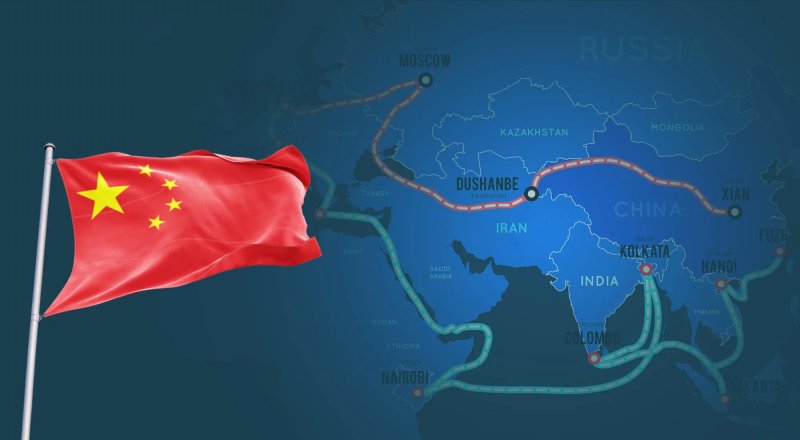
Photo credit: rendsresearch.org
China will strengthen mutual trust and shared interests with participating countries and continuously expand new areas for win-win development. It will strengthen strategic alignment with Belt and Road partner countries and better coordinate and manage cooperation programs. It will work to refine the multidimensional network connecting partner countries and advance both major signature projects and “small and beautiful” projects for public wellbeing. It will strengthen practical cooperation in areas of trade, investment, industrial development, and people-to-people exchanges, while encouraging integrated development across investment, construction, and operations. It will expand trilateral and multilateral market cooperation and promote greater industrial connectivity. It will launch new cooperation initiatives across fields such as green development, AI, the digital economy, health, tourism, and agriculture, while promoting the high-standard development of pilot zones for Silk Road e-commerce cooperation. It will also improve the investment and financing systems to make them more diversified, sustainable, and risk-resilient.
China will support enterprises in diversifying their production locations and encourage innovation in cooperation areas, models, and business forms. At the same time, its overseas interests will also be protected by improving foreign-related legal service systems, providing stronger legal safeguards for the overseas investments of Chinese enterprises, and ensuring that both development interests and security interests are upheld.
Over the 33 years since diplomatic ties were established between China and Azerbaijan, our political trust has continued to deepen, and practical cooperation in fields such as economy and trade, transportation, energy, communications, and culture has yielded fruitful results. In the past five years, bilateral trade has nearly doubled. Cooperation projects in oil and gas exploration, renewable energy, machinery manufacturing, and industrial parks have taken root and flourished. Cargo volumes on the Trans-Caspian international transport corridor of the China–Europe Railway Express have grown significantly, and the two sides enjoy enormous potential for further collaboration in information and communication technologies, agriculture, green development, and the digital economy.
In 2025, President Aliyev visited China twice, during which the two heads of state elevated bilateral relations to the level of a comprehensive strategic partnership. The two countries also signed more than 20 cooperation agreements, injecting strong momentum into deeper collaboration across all sectors. As President Xi Jinping has emphasized, partnering with China means embracing opportunities, believing in China means being optimistic about tomorrow, and investing in China means investing in the future.
China cannot be separated from the world in achieving development, and the world also needs China for prosperity. By outlining the above four priority areas, the Fourth Plenary Session of the 20th CPC Central Committee set out important plans for expanding China’s high-standard opening up and demonstrated China’s determination to share opportunities and pursue common development with countries around the world, including Azerbaijan. China will continue to deepen reform across the board and remain steadfast in advancing high-standard opening up, leveraging the new achievements of Chinese modernization to create fresh opportunities for cooperation with Azerbaijan and other nations.


Similar news