Denmark is being pushed into a confrontation with Russia


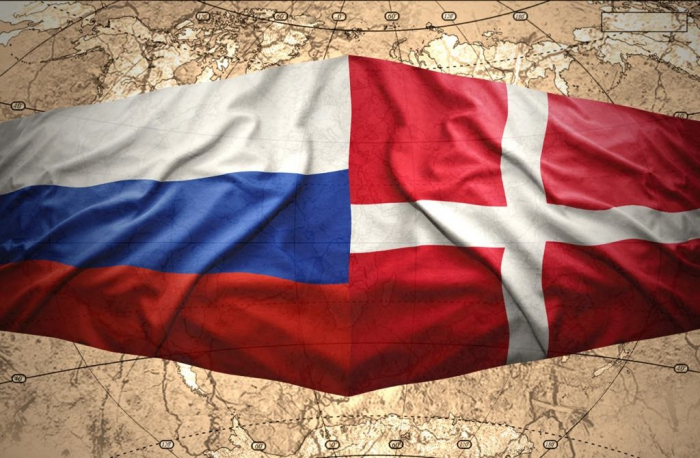
The Danish authorities are considering restricting navigation in the Baltic Sea, the Swiss newspaper Tages-Anzeiger reports. Specifically, measures to limit the shadow fleet of tankers transporting Russian oil through the Baltic Sea are under discussion, Reuters quotes Danish Foreign Minister Lars Løkke Rasmussen as saying. The minister did not specify which measures are being considered.
According to Rasmussen, Denmark is concerned about the potential environmental threat posed by old tankers transporting oil through its straits. To address this issue, Denmark has formed a group of European Union (EU) allies to evaluate possible measures. "There is a broad consensus that shadow fleets are an international problem and require international solutions. It is important that any new measures can be practically implemented and are legally justified under international law," Rasmussen explained.Rasmussen emphasized that any restrictive measures must be legally justified under international law. Denmark is concerned that oil on old or unsuitable tankers could pose a potential environmental threat.
The Danish authorities intend to close the straits to oil tankers as part of the latest EU sanctions package against Russia. However, the country currently lacks the legal framework for such a decision, and it must be coordinated with neighboring states.
The G7 countries and Australia have imposed restrictions on Russian oil, banning the insurance of ships if the oil is sold above a certain price level. Russia circumvented these restrictions by creating its own fleet to transport oil to India, China, and Turkey. These ships sail under various flags, making it nearly impossible to identify their owners.
The EU first considered sanctions against the Russian "shadow fleet" and included in the new sanctions package a ban on the transportation of liquefied natural gas at ports and sanctions against certain tankers under the Russian flag. Danish Foreign Minister Lars Løkke Rasmussen reported that the issue of closing the straits to the Baltic Sea is being discussed with neighboring countries that own parts of the straits. According to him, a final decision on this matter has not yet been made.
The head of the EU diplomatic service, Josep Borrell, commenting on the new sanctions package, stated that its target is Russia's military-industrial complex, and financial and energy sectors. The diplomat added that additional measures would reinforce existing restrictions that Russia is trying to bypass.
Russia sends about a third of its maritime oil through Danish straits in the Baltic Sea, accounting for approximately 1.5% of global supplies. Previously, Finland and the UK also discussed restrictions on the movement of Russian shadow fleet tankers that transport oil bypassing Western price restrictions.
Denmark believes that the shadow oil fleet could cause an environmental disaster in the Baltic Sea. The Russian Ministry of Foreign Affairs has promised to respond to attempts to hinder the passage of Russian ships. Russia's Foreign Ministry spokeswoman Maria Zakharova stated in May that Danish media are inflating a campaign around Russian oil tankers and an environmental disaster in the Baltic Sea while silently agreeing with the consequences of the 2022 Nord Stream explosion. The ministry promised that attempts to restrict the passage of ships in the Baltic Sea would be considered an unfriendly act, followed by tough retaliatory measures.
Sweden has also expressed concern about the potential "environmental chaos" in the Baltic Sea due to Russia's actions. Swedish Foreign Minister Tobias Billström stated that in case of a collision or spill from one of these ships, there would be serious problems for everyone. The G7 countries believe that Russia uses the shadow fleet to bypass Western oil price restrictions imposed after the start of hostilities in Ukraine. Russian authorities consider the sanctions illegal, and President Vladimir Putin has signed a decree banning the supply of these resources if the contracts include a restriction mechanism.

Igor Korotchenko, General Director of the Caspian Institute for Strategic Studies (Russia), stated in an interview with News.Az that the Russian Baltic Fleet recently conducted military maneuvers.
"During these maneuvers, various scenarios of military response to some unfriendly actions of NATO member countries were tested. Naturally, attempts by Denmark to harm the Russian economy in straits that ensure free navigation were also considered. I believe that if Denmark takes appropriate practical steps, it will lead to a rather large-scale military-political crisis, and Russia will take necessary military countermeasures," the Russian expert noted.
According to Korotchenko, the dynamics of the situation will also affect specific possible mechanisms of military response from Russia.
"But I can say that in the northwest, if necessary, we can use any military response in any format. What cannot be realistically assessed today will be shown by the real course of a possible conflict. However, I do not exclude the possibility of deterring NATO, relying on tactical nuclear potential. The Baltic Fleet is located near the Leningrad Military District, and the choice of what the conflict will be like completely depends on the North Atlantic alliance and, in particular, Denmark. I emphasize once again that Russia will respond to hostile actions, possibly aggression from the Danish authorities and the North Atlantic alliance. Therefore, from the point of view of international law, we will exercise the right to security and protect our national interests based on the UN Charter," he stated.


Similar news