Essential tools for successful Forex trading


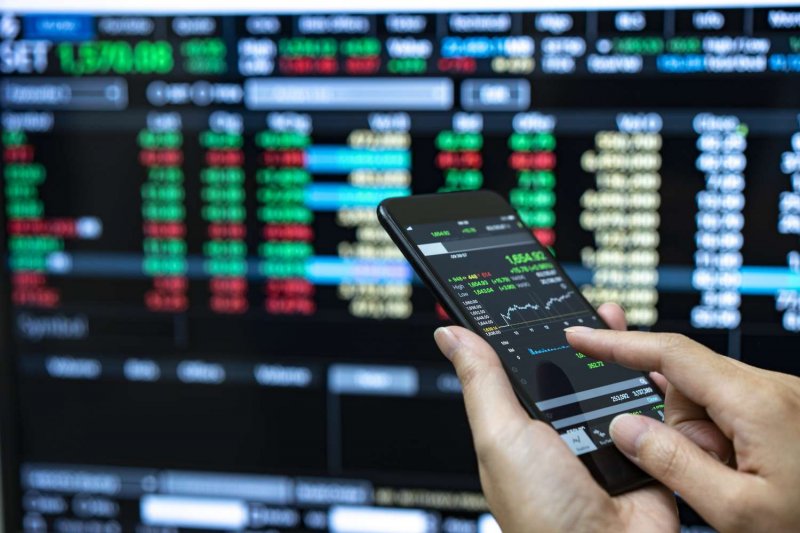
The foreign exchange market is the largest and most liquid financial market in the world, with daily trading volumes exceeding $7 trillion.
While many traders are drawn to forex by the promise of profit, consistent success requires more than intuition or luck, News.az reports.
The traders who thrive over the long term are those who equip themselves with the right tools — analytical, technical, and risk management instruments that give them a measurable edge. Here is a comprehensive overview of the most important tools every forex trader should know.
Trading Platforms
The foundation of any forex trading operation is the trading platform. MetaTrader 4 (MT4) and MetaTrader 5 (MT5) remain the industry standard, trusted by millions of traders worldwide. These platforms offer advanced charting capabilities, automated trading through Expert Advisors (EAs), a wide library of technical indicators, and deep customization options.
Beyond MetaTrader, JForex has gained significant popularity for its clean interface and more sophisticated functionality.
Choosing the right platform depends on your trading style. Scalpers and day traders typically prioritize execution speed and charting precision, while swing traders may value research integrations and multi-timeframe analysis tools more highly.
Technical Analysis Tools
Technical analysis is at the heart of most forex trading strategies. Charts, indicators, and pattern recognition tools help traders identify trends, momentum shifts, and potential entry and exit points.
Among the most widely used indicators are:
Moving Averages (MA) — Simple and exponential moving averages help smooth price action and identify the direction of the trend. The crossover of short-term and long-term MAs is one of the most classic trading signals.
Relative Strength Index (RSI) — This momentum oscillator measures the speed and magnitude of price changes, helping traders spot overbought and oversold conditions. An RSI above 70 often signals a potential reversal downward, while a reading below 30 can indicate a buying opportunity.
Bollinger Bands — These dynamic bands widen during periods of volatility and contract during calmer markets. When price repeatedly touches the upper or lower band, it can signal a breakout or reversal.
Fibonacci Retracement Levels — Based on the mathematical Fibonacci sequence, these horizontal lines indicate where support or resistance is likely to occur after a significant price move. Traders use them to time entries within a larger trend.
MACD (Moving Average Convergence Divergence) — A powerful tool for identifying changes in the strength, direction, and momentum of a trend. Divergence between MACD and price is especially valuable for anticipating reversals.
Fundamental Analysis Resources
While technical tools dominate short-term trading, fundamental analysis is indispensable for understanding the bigger picture. Key resources include:
- Economic Calendars — Platforms like Dukascopy.com, Forex Factory, Investing.com, and DailyFX publish real-time economic calendars that list upcoming data releases — from Non-Farm Payrolls and CPI reports to central bank decisions. Knowing when high-impact news is scheduled allows traders to manage risk appropriately and avoid being caught on the wrong side of a major move.
- Central Bank Statements and Interest Rate Tools — Interest rate differentials are one of the primary drivers of currency valuations. Monitoring the communications of the Federal Reserve, ECB, Bank of England, and other central banks is essential for any trader with a medium- to long-term horizon.
- News Aggregators and Sentiment Indicators — Tools like the COT (Commitments of Traders) report reveal the positioning of large institutional players, which can serve as a useful contrarian indicator.
Risk Management Calculators
No trading toolkit is complete without robust risk management instruments. Professional traders rarely enter a trade without first calculating their position size, potential loss, and risk-to-reward ratio.
A position size calculator helps determine how many lots to trade based on your account size, risk percentage per trade, and the distance of your stop-loss in pips. This prevents overleveraging — one of the most common causes of account blowouts among retail traders.
Equally important is a reliable pips calculator, which converts pip movements into actual monetary values based on the currency pair, lot size, and account currency. Since pip values differ across currency pairs, using this tool ensures traders always know exactly how much money is at stake before they click "buy" or "sell."
Stop-loss and take-profit levels should never be guesswork. When properly integrated into a trading plan, these calculators create a disciplined framework that keeps emotions out of decision-making.
Automated Trading and Backtesting Tools
Algorithmic trading has become increasingly accessible to retail traders. Expert Advisors on MT4/MT5 allow traders to automate strategies based on predefined rules, eliminating emotional interference and enabling 24-hour market participation.
Backtesting software — such as Forex Tester or the built-in Strategy Tester in MetaTrader — lets traders run their strategies against years of historical data to assess performance before risking real capital. This process reveals weaknesses in a strategy and helps refine entry and exit rules objectively. Traders who require tick-level historical data for high-precision backtesting often turn to Dukascopy, the Swiss-regulated bank and broker whose free historical data repository and JForex platform are widely respected for their depth and accuracy.
Journaling and Performance Tracking
One of the most underrated tools in a trader's arsenal is a trading journal. Applications like Edgewonk or TraderVue allow traders to log every trade with detailed notes, track performance metrics, and identify recurring mistakes. Patterns in losing trades are often invisible without systematic record-keeping.
Reviewing your journal regularly — analyzing win rates, average risk-to-reward ratios, and performance by session or currency pair — is one of the fastest paths to improvement.
Conclusion
Successful forex trading is not about finding a single magic indicator. It is about combining the right tools into a coherent, disciplined approach. A solid trading platform, reliable technical and fundamental analysis resources, strict risk management calculators, and consistent performance tracking work together to tilt the odds in your favor over time. The market rewards preparation — and the traders who invest in the right tools are already one step ahead.
By Faig Mahmudov


Similar news