Ethiopia’s food security transformation highlighted ahead of COP32


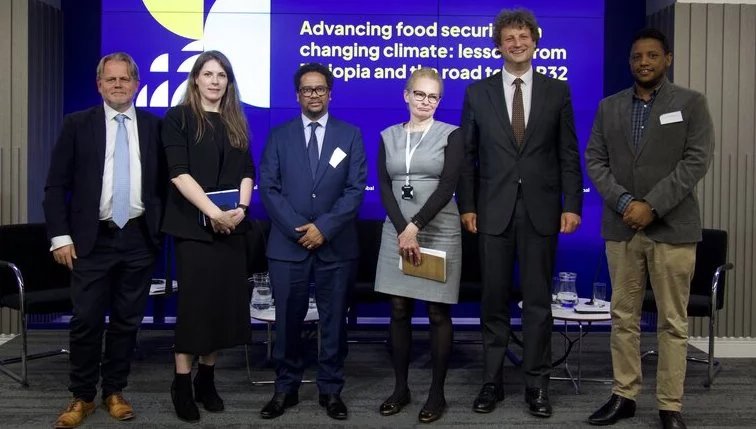
Ethiopia’s efforts to strengthen food security and reduce reliance on wheat imports were discussed at a high-level event held in London, focusing on the country’s agricultural transformation and its relevance ahead of COP32.
The event was organised by ODI Global in partnership with the Ethiopian Embassy and brought together policymakers, diplomats, researchers and members of the Ethiopian diaspora. Discussions centred on how Ethiopia has shifted from being a wheat importer towards greater self-sufficiency through irrigation expansion, improved seed varieties and modern farming practices. Regions such as Afar, previously affected by climate stress, were highlighted as emerging agricultural hubs, News.Az reports, citing The Voice.
ODI Global Chief Executive Dr Sara Pantuliano said food security now lies at the intersection of climate, trade and economic stability, adding that Ethiopia’s wheat programme demonstrates the importance of long-term planning and institutional coordination. Ethiopian Ambassador Biruk Mekonnen described the reforms as “strategic, not accidental”, noting that the transformation extends beyond farming into logistics, markets and private sector cooperation.
RECOMMENDED STORIES
A documentary on Ethiopia’s wheat transformation was also screened, showing how climate-smart innovation and investment have contributed to agricultural growth. Experts from ODI Global, the World Resources Institute and Ethiopia’s Agricultural Transformation Institute discussed the broader implications for trade resilience, climate finance and green industrial development.
Participants said Ethiopia’s experience is increasingly seen as a model for how climate-vulnerable countries can strengthen resilience and pursue self-sufficiency. The discussion also highlighted the country’s preparations for hosting COP32 in 2027, where food security is expected to remain a key issue on the global climate agenda.
By Leyla Şirinova


Similar news