South Sudan asks Egypt to close military facility near Ethiopian border


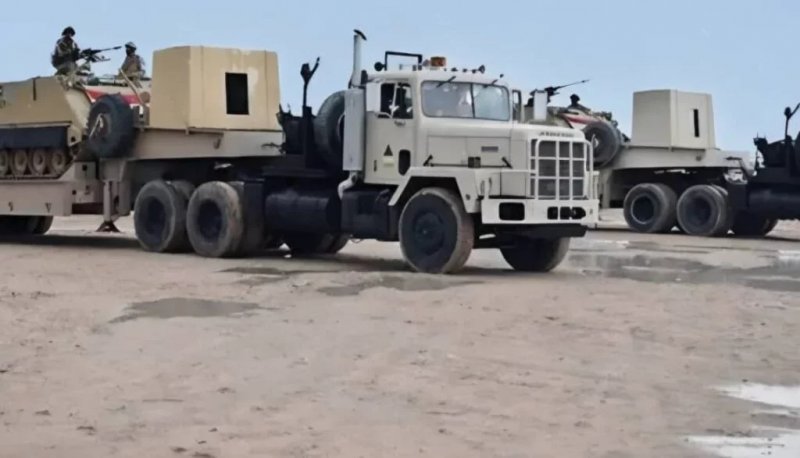
South Sudan has reportedly requested the closure of an Egyptian military facility near its border with Ethiopia, a move that analysts say could signal a significant geopolitical realignment in the Nile Basin and the wider Horn of Africa region. The development comes amid growing regional competition over water resources, security interests, and strategic influence.
According to regional reports, authorities in Juba ordered the shutdown of an Egyptian military presence in the Jute–Pagak corridor of Upper Nile State, an area located near the border triangle connecting South Sudan, Sudan, and Ethiopia. The facility is situated relatively close to Ethiopia's Benishangul-Gumuz region, where the controversial Grand Ethiopian Renaissance Dam (GERD) is located, News.az reports.
South Sudanese security officials reportedly justified the decision by citing concerns that the country could become entangled in escalating regional tensions involving Sudan, Ethiopia, and Egypt. Officials are said to fear that maintaining a foreign military presence in such a sensitive border region could expose South Sudan to potential retaliatory actions or draw it into broader geopolitical disputes.
The Egyptian presence, which regional sources describe as consisting of military and technical personnel involved in training, surveillance, and logistical coordination, had reportedly operated in the area for several years under bilateral security cooperation arrangements between Cairo and Juba. Egyptian officials have characterized the facility as an advanced forward position rather than a conventional military base.
Analysts view the reported closure as part of a broader shift in South Sudan's foreign policy. Juba has recently moved closer to upstream Nile Basin states and became part of the Cooperative Framework Agreement (CFA), a water-sharing framework supported by countries seeking a new approach to managing Nile resources. Egypt and Sudan have traditionally opposed the agreement, arguing that it undermines their historic water rights.
Observers also point to growing economic cooperation between South Sudan and Ethiopia. The two countries have been exploring alternative trade and oil export routes as ongoing conflict in Sudan disrupts traditional infrastructure and transport corridors. Increased connectivity projects between Juba and Addis Ababa have strengthened strategic ties between the neighboring countries.
Regional experts believe the reported closure could weaken Egypt's ability to monitor developments near Ethiopia's massive hydroelectric dam and may be interpreted as a reduction of Cairo's influence in parts of East Africa. At the same time, South Sudan appears eager to project itself as an independent actor seeking to avoid becoming a battleground for competing regional interests.
The development unfolds against a backdrop of heightened tensions across the region, including disputes surrounding the GERD, instability in Sudan, and shifting alliances among countries bordering the Nile River. Analysts say the decision, if fully implemented, could mark one of the most significant changes in Egypt–South Sudan security relations since South Sudan gained independence in 2011.
While neither Cairo nor Juba has publicly detailed the full scope of the reported withdrawal, the move is being closely watched by regional governments and international observers as a potential indicator of a changing balance of power in the Nile Basin and the wider Horn of Africa.
By Faig Mahmudov


Similar news