Eurozone economy stagnates amid energy price surge


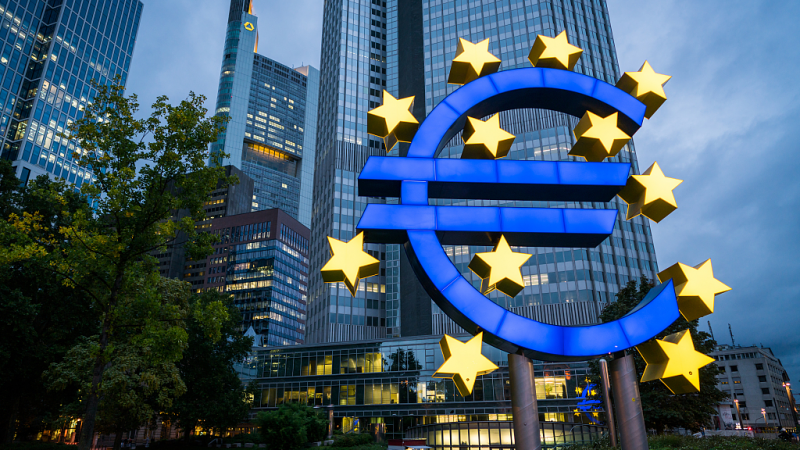
Economic growth in the Eurozone slowed to nearly zero in the first three months of 2026, as rising energy costs linked to the Middle East war pushed inflation sharply higher in April, according to data released on Thursday, News.Az reports, citing AFP.
The figures are likely to heighten concerns about stagflation — a combination of weak growth and elevated inflation — in the euro area, following tensions sparked by US-Israeli strikes on Iran.
The EU’s official statistics agency, Eurostat, reported that the 21-member single currency bloc expanded by just 0.1 percent in the first quarter, down from 0.2 percent in the final quarter of 2025 and below economists’ expectations.
RECOMMENDED STORIES
Inflation across the eurozone climbed to three percent in April, up from 2.6 percent in March, driven largely by a sharp increase in energy prices, Eurostat said. This level significantly exceeds the two percent target set by the European Central Bank.
The ECB is widely expected to keep interest rates unchanged later on Thursday, as policymakers balance rising inflationary pressures against signs of weakening economic momentum.
However, economists cautioned against attributing the weak growth figures entirely to the conflict. Nicola Nobile of Oxford Economics noted that the GDP data largely reflects a sharp contraction in Ireland and seasonal factors, rather than the direct effects of the war.
Similarly, Peter Vanden Houte of ING Bank said the first-quarter growth figure provides limited insight, as it was only marginally affected by the energy and supply disruptions stemming from the Middle East conflict.
Nobile added that the war’s “negative effects will be more visible” in the second quarter of the year.
Analysts said the faster pace of inflation is of greater concern for policymakers. Energy prices surged by 10.9 percent in April, a sharp increase from 5.1 percent in March. This follows a period of declining energy costs earlier in the year, including a 3.1 percent drop in February.
In a more positive development, core inflation — which excludes volatile energy and food prices — eased slightly to 2.2 percent in April, down from 2.3 percent in March.
Among the eurozone’s largest economies, Germany outperformed expectations with 0.3 percent growth in the first quarter of 2026, compared to forecasts of 0.2 percent from analysts surveyed by FactSet. In contrast, France recorded no growth during the same period.
Inflation also increased in both countries. Germany’s inflation rate rose to 2.9 percent in April from 2.8 percent in March, while France saw a sharper rise to 2.5 percent from two percent a month earlier.
By Nijat Babayev


Similar news