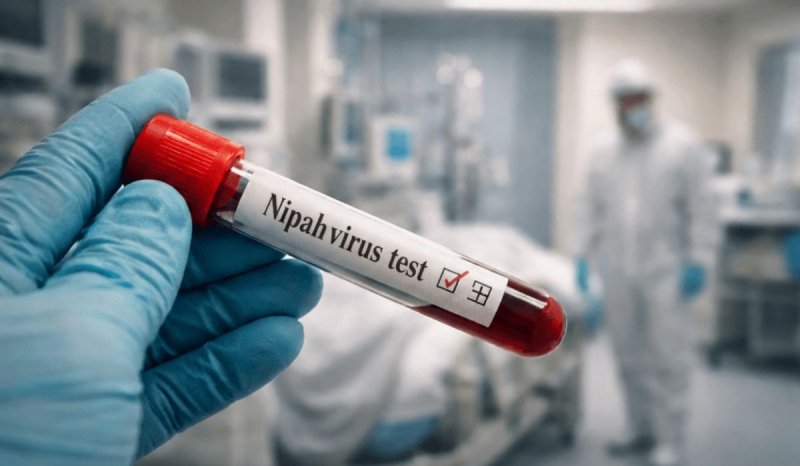
The GVN brings together human and animal virologists from more than 90 leading research centers across 40 countries. Its experts said that the overall risk of wider spread remains limited, News.Az reports, citing foreign media.
“Overall, the risk of regional or global spread of Nipah virus is very low,” said Professor Linfa Wang, director of the GVN Center of Excellence at Duke-NUS Medical School in Singapore. He noted that similar outbreaks have occurred repeatedly in India and Bangladesh and are largely driven by specific cultural and environmental factors rather than sustained human-to-human transmission.
RECOMMENDED STORIES
Despite initial reports suggesting five cases, the World Health Organization (WHO) has confirmed that only two cases of Nipah virus infection have been verified in the current outbreak in West Bengal. Authorities have conducted contact tracing for nearly 200 individuals, all of whom have tested negative.
Nipah virus (Henipavirus nipahense), first identified in 1998, is a severe and often fatal zoonotic disease carried by fruit bats. It can spread to animals—commonly pigs—and humans. Early symptoms typically include cough, fever, headache, sore throat, and difficulty breathing. As the illness progresses, some patients develop encephalitis, a dangerous inflammation of the brain.
The virus has a high fatality rate, with the WHO estimating that between 40% and 75% of cases may result in death. Human infection usually occurs through contact with infected animals or contaminated food. While human-to-human transmission is possible, it remains relatively rare.
The GVN said it is closely monitoring the situation in West Bengal, including through the Institute of Advanced Virology in Kerala, where researchers are engaged in surveillance activities and the development of new diagnostic tools.
“Countries with strong public-health systems and surveillance capacity are well positioned to mitigate the risk posed by Nipah virus,” the network said, emphasizing that early detection, clinical awareness, and rapid diagnostics are critical.
While the latest cases do not warrant global alarm, the GVN stressed that the outbreak underscores the continuing importance of surveillance, diagnostics, and internationally connected scientific networks to detect and respond to emerging infectious threats.
At present, Nipah virus infection can only be confirmed through laboratory testing. There is no proven targeted treatment or approved vaccine. Patients typically receive supportive care, including rest, hydration, and treatment for individual symptoms. Several experimental therapies—such as monoclonal antibodies, fusion inhibitors, and novel antivirals—are currently under development or in early clinical trials.
“Progress depends on sustained public-good investment and international cooperation,” Wang added.