Five things to watch in markets in the week ahead


Investors are preparing for a holiday-shortened trading week in the U.S.
Data covering everything from inflation to overall growth will be in focus, as well as minutes from the Federal Reserve’s latest policy meeting, News.az reports, citing CNN.
Meanwhile, Walmart and Palo Alto Networks are set to be highlights of the economic calendar.
1. PCE data
Economic data will remain front of mind for investors this week, with one of the most notable releases being the monthly personal consumption expenditures price index.
The core PCE index, a gauge of inflation closely followed by the Federal Reserve, is tipped to stand at 0.3% month-on-month in December, compared to 0.2% in November. Year-on-year, the metric from the Bureau of Economic Analysis is seen at 3.0%, versus 2.8% previously.
Separate data last week showed that the headline consumer price index rose at a cooler than expected pace in January, which bolstered bets that the Fed could push up the timing of its new interest rate reduction to as soon as June. A blowout job market figure earlier in the week had previously fueled wagers that the central bank, which slashed rates several times in 2025, would not resume the easing until the second half of this year.
2. GDP in focus
Meanwhile, an advance reading of U.S. growth is anticipated to show a slowdown in the October-December period.
Quarter-on-quarter, economists expect the world’s largest economy to have expanded by 2.8% during the final three months of 2025, decelerating from 4.4% in the third quarter.
From July to September, consumer spending, which has long accounted for a bulk of U.S. activity, continued to be a major driver of the economy. A shrinking trade deficit, fueled in part by President Trump’s sweeping tariff policies, was also a key contributor to growth.
While the figure appeared to be robust, many observers on Wall Street have pointed out that the economy has assumed a "K" shape, with higher-income households and corporations doing a lot of the heavy lifting for the economy. Americans on lower incomes, meanwhile, are still struggling with relatively elevated prices and a muted hiring environment, while small businesses are grappling with rising import expenses and a reduction in low-cost labor supply due to an ongoing immigration crackdown.
At the same time, artificial intelligence looms large. In recent weeks, the emergence of new AI tools have dented stocks across a variety of industries, underlying how jittery investors have become about the potential disruptions posed by the nascent technology.
3. Fed minutes
Against this backdrop, the Fed chose to leave interest rates unchanged at its latest gathering in January.
Policymakers highlighted signs of a stabilizing jobs picture and steady -- albeit above-target -- inflation as reasons for standing pat with rates at 3.5% to 3.75%.
Officials were also broadly tipped to stick to this range until later this year, adopting a wait-and-see attitude as they attempt to eye the evolution of employment and price gains in the months ahead.
Minutes from the meeting, set to be unveiled on Wednesday, could provide more insight into the path ahead for the Fed’s monetary policy. Notably, two Fed governors, Stephen Miran and Christopher Waller, dissented from the Fed’s decision to hold rates and push pause of a series of borrowing cost cuts dating back to the middle of last year.
Fed Chair Jerome Powell, at the same time, is edging closer to end of his tenure at the helm of the central bank. Trump has nominated former Fed Governor Kevin Warsh to replace Powell, whose term ends in May, and investors have been attempting to suss out how Warsh’s approach to rates could differ from his predecessor.
4. Walmart to report
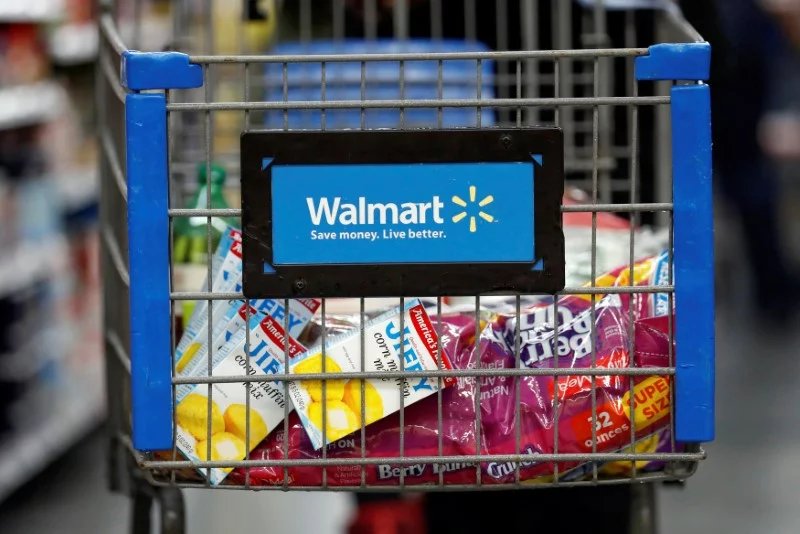
Retail bellwether Walmart will be one of the headliners of the earnings calendar this week.
Shares of the big-box giant have soared this year, bringing its market capitalization above the $1 trillion mark and making it by far the largest player in the consumer staples sector.
Given the importance of consumer expenditures to U.S. activity, results from Walmart, which has been bolstered by offering lower prices for essential items, could serve up another glimpse into the state of American economy during the crucial holiday shopping season.
It will also help establish the tone prior to the release of earnings from fellow retailers like Home Depot and Target in the coming weeks.
5. Palo Alto Networks ahead
Elsewhere, returns from Palo Alto Networks after the close of U.S. markets on Tuesday could shed some more light on the outlook for tech names facing fresh competition from new AI models.
The California-based cybersecurity firm lifted its full-year revenue and profit forecasts in November, citing a spike in demand for its digital security offerings to address online threats.
The group also announced a $3.35-billion purchase of cloud management and monitoring business Chronosphere and outlined plans to integrate the unit into its Cortex AgentiX platform. This would allow Palo Alto’s AI agents to utilize Chronosphere’s data to help detect performance issues and find root causes to problems.
Along with a separate deal for identity security name CyberArk Software, the Chronosphere deal is expected to close in the second half of Palo Alto’s fiscal 2026.
By Faig Mahmudov


Similar news