Global crude exports fall 2% in 2024, first decline since COVID-19 pandemic


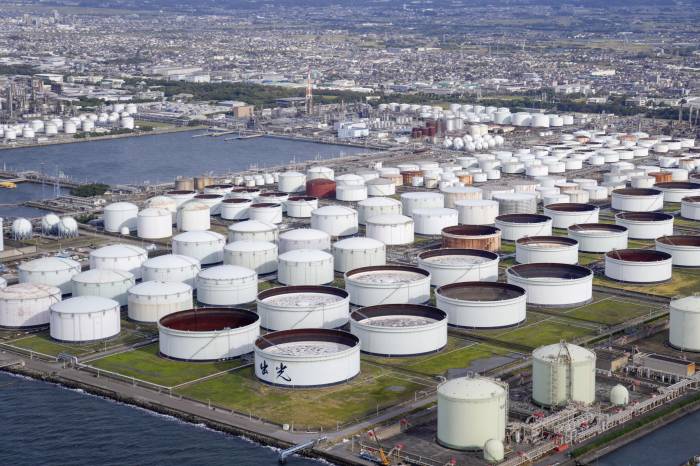
An aerial view shows an oil factory of Idemitsu Kosan Co. in Ichihara, east of Tokyo, Japan November 12, 2021. Photo: Kyodo/via REUTERS
Global crude exports saw a 2% drop in 2024, marking the first decline since the COVID-19 pandemic, according to shipping data.
This decrease was driven by weak demand growth and changes in refinery and pipeline routes, News.Az reports, citing Reuters.Global crude flows have been roiled for a second year by war in Ukraine and the Middle East, with tanker shipments rerouted and suppliers and buyers split into regions. Middle East oil exports to Europe declined and more U.S. oil and South American oil went to Europe. Russian oil that formerly went to Europe has been redirected to India and China.
These shifts have become more pronounced as oil refineries have shut in Europe amid continued attacks on Red Sea shipping. Middle Eastern crude exports to Europe tumbled 22% in 2024, ship tracking data from researcher Kpler showed.
The shift in oil flows "is creating opportunistic alliances," said Adi Imsirovic, an energy consultant and former oil trader, citing closer relationships between Russia and India, China and Iran that are reshaping oil trade.
"Oil is no longer flowing along the least cost curve, and the first consequence is tight shipping, which raises freight prices and eventually cuts into refining margins," said Imsirovic.
The U.S. with its surging shale production has been a winner in the global oil trade. The country exports 4 million barrels per day, boosting its share of global oil trade to 9.5%, behind Saudi Arabia and Russia.
Trade routes have also been reshuffled by startup of the massive Dangote oil refinery in Nigeria, expansion of Canada's Trans Mountain pipeline to the country's west coast, falling oil output in Mexico, a brief halt in Libyan oil exports, and rising Guyana volumes.
In 2025, suppliers will keep grappling with falling fuel demand in major consuming centers such as China. Also, more countries will use less oil and more gas, while renewable energy will keep growing.
"This kind of uncertainty and volatility is the new normal - 2019 was the last 'normal' year," said Erik Broekhuizen, a marine research and consulting manager at ship brokering firm Poten & Partners.
Europe's refiners initially cut Russian imports and increased both U.S. and Middle Eastern oil purchases after Russia invaded Ukraine. Attacks on ships in the Red Sea following Israel's war on Gaza pushed up the cost of shipping from the Middle East. Refiners stepped up imports from the U.S. and Guyana to record highs.
Exports from Iraq declined 82,000 bpd and United Arab Emirates exports fell 35,000 bpd in 2024. Europe added 162,000 bpd from Guyana and 60,000 bpd from the U.S.
Escalating Middle East conflict around late September and fears of more sanctions from U.S. President-elect Donald Trump led to tighter supply and higher prices of Iranian oil. This prompted Chinese refiners to look at oil from West Africa and Brazil.


Similar news