SpaceX-Tesla merger may be too big to stop


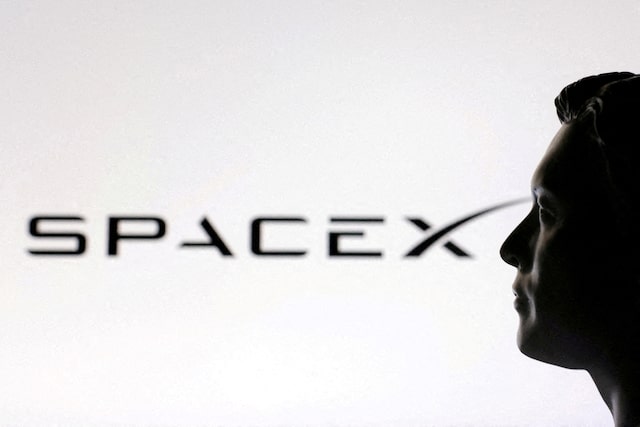
What better way to follow up the biggest initial public offering in history than with the biggest M&A deal? As rocket-maker SpaceX soars towards a listing that could value it at $1.75 trillion, a tie-up with the rest of founder Elon Musk’s empire is increasingly conceivable. The billionaire has a history of buying his own firms, and the two companies’ ambitions overlap.
Shareholders would struggle to stop him, News.az reports, citing Reuters.
RECOMMENDED STORIES
Just look at Musk’s track record. Electric-car maker Tesla (TSLA.O), opens new tab bought SolarCity for $2.6 billion in 2016. Chatbot lab xAI acquired social-media network X for $45 billion, including debt, in 2025. Then, in February, SpaceX purchased xAI for $250 billion. Such deals naturally raised questions over whether everyone was treated fairly.
Tesla and SpaceX are already intertwined. They plan to jointly develop Terafab, a giant facility to produce semiconductors, as well as an AI platform to augment workers called “Macrohard.” Tesla owns a small stake in SpaceX, which in turn buys energy storage and Cybertrucks from the carmaker. Perhaps more importantly, SpaceX is devouring cash, while Tesla’s core business is profitable.
Pooling the companies would also superficially eliminate the awkward question of which corporate child Musk favors.
Investors pay a huge premium for the billionaire’s science-fiction imagination. Tesla trades at 200 times estimated earnings, according to LSEG, while SpaceX's proposed valuation is even more eye-popping. Yet Musk only has 24 hours in a day – or less, when accounting for his prolific tweeting – and questions over where he’s spending have raised investor hackles.
He has already informally discussed a merger, opens new tab, CNBC reported. Controlling over 20% of Tesla’s voting power and an absolute majority of SpaceX’s, Musk is in the driver’s seat. A tie-up might even further cement his overall control: the rocket company warned in its IPO prospectus that it may issue significant amounts of equity for a deal, including a non-voting class of stock that it could use as currency. Independent shareholders might squawk. Musk’s decision to domicile his corporate interests in Texas, though, weakens their hand.
SpaceX’s amended bylaws take full advantage of the Lone Star State’s idiosyncrasies, as Edward Best, who co-leads Willkie Farr & Gallagher’s capital markets practice, points out. Effectively, a shareholder wishing to file a derivative lawsuit, for example to legally challenge a combination, would need to own at least 3% of outstanding shares. At a $1.75 trillion valuation, that’s over $50 billion worth. It’s an out-of-this-world ask even for the biggest investors, one that expands Musk’s M&A frontiers.
By Faig Mahmudov


Similar news