Yandex metrika counter
 Selective democracy: West only acknowledges violations when convenient

It is difficult to count how many times the West has tried to lecture Azerbaijan on democracy. During elections, major international events and numerous other occasions, the patronising tone of Western institutions has been a constant source of irritation. The West has long considered itself entitled to interfere in the country's internal affairs, dictating how it should conduct its politics, how it should deal with criminals, and much more.

Western politicians and international organisations have assumed the role of the principal arbiters of democracy. Every election campaign in the post-Soviet space is closely monitored by the OSCE/ODIHR, the Parliamentary Assembly of the Council of Europe, European Parliament missions and numerous non-governmental organisations. Their assessments can influence a country's international reputation, serve as a basis for political pressure and even justify the imposition of sanctions.

However, a natural question arises: how objective are these assessments? And are the same standards truly applied to all countries?

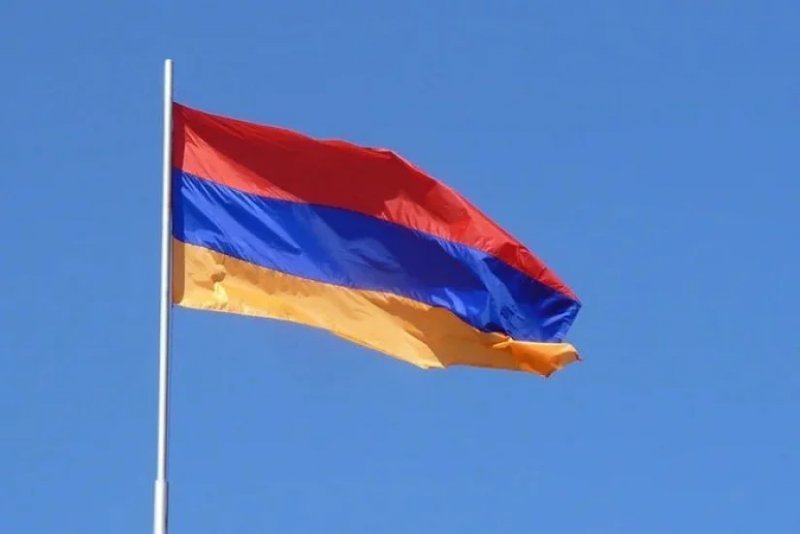
The current situation in Armenia once again raises questions about double standards among Western observers. In recent years, Yerevan has consistently been presented in the West as an example of “democratic development” in the South Caucasus. As a result, many developments that, in relation to other states, would have prompted loud statements and sharply worded resolutions are either ignored in Armenia's case or dismissed as insignificant episodes.

Yet the allegations involved are serious. During the election campaign, state administrative resources have reportedly been used extensively. The authorities are employing existing mechanisms of influence to secure their desired political outcome. Such practices have repeatedly been criticised by European institutions in other countries, yet in Armenia's case there have been virtually no strong reactions.

News about -  Selective democracy: West only acknowledges violations when convenient

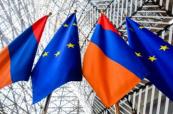
Credit: iacis.ru

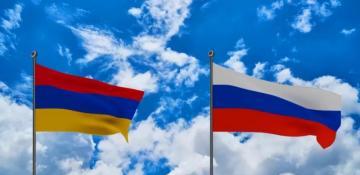
The current parliamentary elections in Armenia have exceeded all expectations in terms of the number of alleged violations. The opposition, represented by Karapetyan and Kocharyan, signalled from the outset that it enjoyed external backing and has acted accordingly. Samvel Karapetyan and Robert Kocharyan have not concealed the fact that Russia supports them, is helping create conditions favourable to the victory of the pro-Russian opposition and is openly interfering in the electoral process through political means.

In response to this openness on the part of the pro-Russian opposition, those backing Nikol Pashinyan, namely the United States and Europe, have also abandoned any pretence of neutrality. The West openly supports Nikol Pashinyan and openly interferes in the elections, helping him secure victory. The same West that examines election campaigns in Azerbaijan with a magnifying glass appears willing to overlook administrative obstacles placed in the opposition's path, the arrests of opposition figures and other actions by the Armenian prime minister.

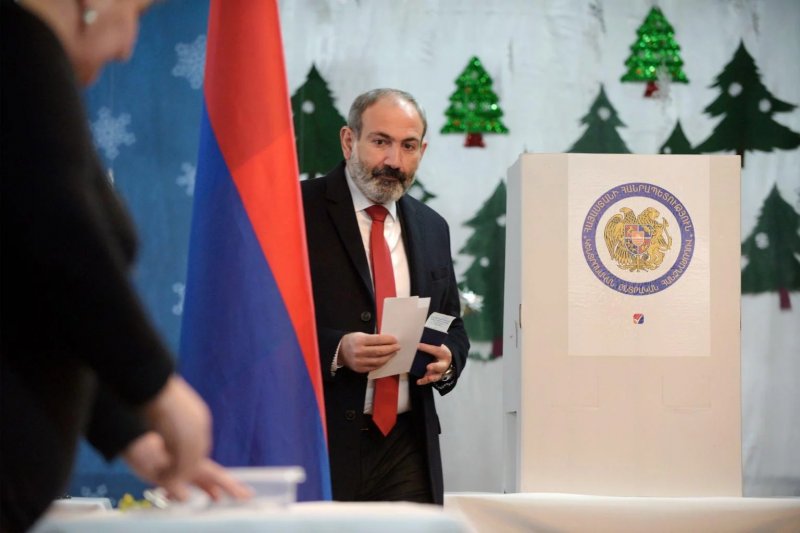
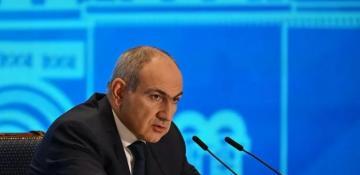
Following the rules imposed by his opponents, Nikol Pashinyan no longer attempts to appear above the fray. The prime minister is making full use of administrative resources against his rivals and restricting their opportunities in increasingly inventive ways. Given the significance of the 7 June elections for the region, some may consider such steps justified. Many believe that, for the stability and security of the South Caucasus, it is necessary to prevent revanchist forces from returning to power in Armenia. Nevertheless, the actions of the Armenian authorities remain questionable from a democratic perspective, yet few international actors appear willing to highlight them.

Vote-buying has reportedly reached particularly significant levels in the current election campaign. This time, the battle for political influence involves millionaires such as Robert Kocharyan and Gagik Tsarukyan, as well as billionaire Samvel Karapetyan. As a result, candidates are spending generously, organising both large-scale and individual vote-buying operations. Representatives of the ruling party have also been accused of engaging in such practices, although reportedly on a smaller scale than the “millionaires’ club.”

The revanchist opposition has indeed spent considerable resources.

Human rights advocate Daniel Ioannisyan has stated that vote-buying is taking place across the country, both on a wholesale and retail basis. Cases have been identified in the Syunik, Tavush, Ararat, Shirak, Armavir and Lori provinces, as well as in several districts of Yerevan. According to Ioannisyan, 83 per cent of the cases identified by the Anti-Corruption Committee involve the Strong Armenia party, 13 per cent involve the Prosperous Armenia party and 4 per cent involve the Armenia bloc.

Moreover, the buying and selling of votes is reportedly not limited to Armenia itself. Armenian citizens living abroad, particularly in Russia, are also said to be involved.

Against this backdrop, statements about the need to protect Armenian democracy from external interference appear particularly contradictory. If interference is indeed a problem, why are some forms of it condemned while others are ignored?

Even more concerning are reports of pressure on political opponents. Arrests of party officials, administrative pressure on opposition representatives and various forms of voter intimidation create an atmosphere far removed from the principles of free political competition.

Armenian media have reported that Arman Sargsyan, the former head of the Department for State Property Management, has been detained as part of a criminal case being investigated by the Anti-Corruption Committee on allegations of electoral bribery. A case has also been opened against blogger Mikael Badalyan, who allegedly promised Armenian citizens living in Russia various services in exchange for participating in the upcoming parliamentary elections.

Earlier, Armenia's Investigative Committee ordered the two-month detention of Aleksan Aleksanyan, a member of the board of the opposition Strong Armenia party. Aleksanyan was accused of bribing 1,400 people in order to recruit them for a rally organised by the Karapetyan camp.

According to the Investigative Committee, between September 2025 and May 2026, Aleksanyan recruited citizens to participate in rallies and demonstrations organised by Strong Armenia. Investigators allege that the scheme was financed by the Karapetyan family. According to the investigation, between October last year and April this year, 1.6 billion drams, €230,000 and $75,000 were transferred to the bank accounts of the NGO For Ourselves, headed by Aleksanyan. These funds allegedly originated from the Tashir charitable foundation, as well as Intego Energo CJSC and Tashir Capital, companies linked to Samvel Karapetyan.

Between February and May, Armenia's Anti-Corruption Committee initiated around 60 cases related to electoral bribery. Investigations have been completed in 34 of them. More than 100 individuals have been detained, while five suspects have been placed on a wanted list.

These are the allegations directed at the opposition. As for similar practices that may be taking place within the ruling party, little information has emerged.

Particular attention has been drawn to the situation involving Armenian citizens arriving from Russia to participate in the elections. Reports indicate that many of them are subjected to military registration procedures at the airport and subsequently directed to military training exercises.

Armenia's Ministry of Defence has confirmed the issuance of summonses for participation in 25-day military training exercises to citizens arriving in the country in connection with the elections. This reportedly applies primarily to male citizens entering from Russia. The military exercises are scheduled to run from 31 March to 19 June 2026.

Summonses are being issued at all border crossings and at Zvartnots International Airport. Regardless of the motives behind such actions, the practice inevitably raises questions about whether state institutions are being used as instruments of influence during the electoral process.

In this context, the West no longer appears content with the role of observer. Open support for specific political forces, public signals from European leaders and highly visible political events create the impression of direct involvement in Armenia's domestic political competition.

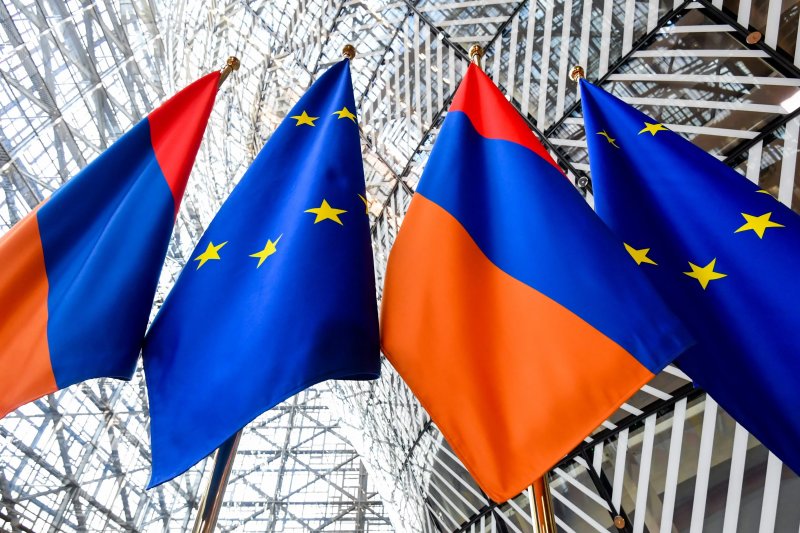
In this regard, the decision to hold the European Political Community summit in Armenia is particularly noteworthy. Formally, it is a high-level international event. However, the political effect of such gatherings is obvious: they become powerful instruments for shaping public opinion and effectively strengthen the position of those political forces perceived as Europe's preferred partners.

News about -  Selective democracy: West only acknowledges violations when convenient

Credit: top-center.org

As a result, a paradoxical picture emerges. Russia is interfering in Armenian elections — a fact acknowledged by many observers. The West is also intervening, using its own political and informational tools. Armenian authorities are engaging in actions that raise serious questions from the perspective of democratic standards. Yet international institutions tasked with identifying violations and providing objective assessments appear increasingly reluctant to acknowledge what is taking place.

This leads to the central question. If democracy is truly a universal value, why do some violations become the subject of international campaigns while others are ignored? If standards are genuinely universal, they should be applied equally to all. Otherwise, the issue ceases to be the defence of democracy and becomes the use of democratic rhetoric as a political instrument.

History demonstrates that double standards undermine trust not only in specific organisations but also in the very concept of international observation. When observers see only what they wish to see, they cease to be observers and become participants in the political process. And that is an entirely different story — one concerned not with democracy, but with geopolitics.

By Tural Heybatov

News.Az 

Similar news

Archive

Prev Next
Su Mo Tu We Th Fr Sa
  1 2 3 4 5 6
7 8 9 10 11 12 13
14 15 16 17 18 19 20
21 22 23 24 25 26 27
28 29 30 31