How AI-driven geopolitical competition is reshaping global power balances


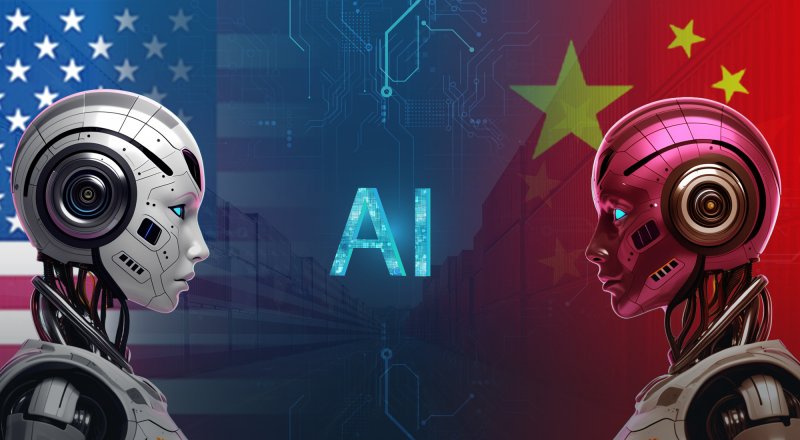
Artificial intelligence has rapidly evolved from a technological innovation into a defining geopolitical force. What once appeared to be a competition among tech companies has now become a race among states, each striving to secure strategic dominance in AI, compute capacity, digital infrastructure, and algorithmic governance.
The global system is entering a new era in which artificial intelligence shapes military strategy, economic performance, diplomacy, national identity, and the very architecture of global order. Unlike previous industrial revolutions, AI creates asymmetric advantages at extraordinary speed—rewarding those who adapt quickly and punishing those who fall behind.
At the centre of this transformation is the intensifying rivalry between the United States and China. Both powers view AI as the backbone of future national strength and as the key to defining international leadership in the 21st century. Washington seeks to preserve its technological primacy through export controls, semiconductor alliances, and deepening cooperation with the EU, Japan, South Korea, and Taiwan. Beijing, meanwhile, is accelerating efforts to reduce its dependence on Western chips, scale domestic compute production, and integrate AI into critical sectors including defence, manufacturing, and finance. The result is not simply a bilateral competition—it is a structural shift that divides the world into competing techno-blocs, each promoting its own standards, supply chains, and digital ecosystems.
However, the geopolitical implications extend far beyond the US–China axis. Middle powers such as the European Union, India, South Korea, Japan, the GCC states, and Türkiye are positioning themselves as independent nodes in the emerging AI order. Europe’s approach prioritises regulation, ethical AI, and digital sovereignty. India focuses on becoming a global hub for data, AI services, and scalable model development. Gulf countries are investing heavily in sovereign compute capacity, positioning themselves as new AI power centres capable of influencing global governance. Together, these actors demonstrate that AI competition is becoming multipolar rather than strictly bipolar.
The military dimension of AI is equally transformative. Autonomous weapons, AI-driven logistics, drone swarms, battlefield decision-support systems, and predictive analytics are redefining modern warfare. Conflicts such as the Russia–Ukraine war and the fighting in the Middle East demonstrate how AI-enabled systems can shape tactical outcomes, information warfare, and public perception. Nations that successfully integrate AI into defence planning will enjoy unprecedented situational awareness, rapid response capability, and strategic depth. This creates new risks: the speed of algorithmic decision-making may outpace diplomacy, increasing the chances of miscalculation in high-stakes scenarios.
Economically, AI has become the engine of global competitiveness. Nations with access to high-quality data, advanced semiconductor manufacturing, and large-scale compute infrastructure will hold long-term advantages. The global race for rare-earth minerals, critical chips, and advanced manufacturing is intensifying, creating new trade alliances and new vulnerabilities. Countries that fail to invest in AI risk entering a cycle of declining productivity, slower growth, and reduced geopolitical influence.
AI is also reshaping diplomacy. Traditional discussions on security, trade, and energy now intersect with questions of digital governance, algorithmic transparency, and data sovereignty. International institutions are struggling to keep pace as states attempt to regulate AI’s global impact. The absence of clear norms creates uncertainty around privacy, intellectual property, deepfakes, foreign interference, and the militarisation of AI systems. As great powers weaponise information and manipulate public discourse through AI-generated content, political stability in smaller states becomes increasingly fragile.
Another emerging concern is the widening global AI divide. Advanced economies are accelerating AI adoption, while developing nations risk being left behind. Without access to compute infrastructure, high-skilled labour, and investment capital, many countries may find themselves dependent on AI produced by external powers. This dynamic could entrench digital colonialism, where data resources flow disproportionately to technologically dominant states, reinforcing existing hierarchies.
Despite these challenges, AI also creates opportunities for cooperation. Climate modelling, disaster response, medical research, food security, and energy optimisation are areas where AI collaboration could deliver global benefits. Middle powers, in particular, can act as bridges—promoting cross-regional coordination, ethical frameworks, and responsible innovation.
Ultimately, AI’s geopolitical impact will depend on how states choose to wield it. If AI becomes an instrument of strategic rivalry, the world may drift toward fragmentation, mistrust, and escalating tension. But if nations adopt shared principles for responsible development, AI could become a stabilising force that strengthens global resilience.
The coming decade will determine which path the world follows. What is certain is that AI is no longer merely a technological tool. It is a strategic resource, a symbol of national power, and a battlefield for global influence. Countries that understand this reality—and adapt quickly—will shape the future political and economic order.


Similar news