How AI-driven misinformation is rewriting global security and public trust


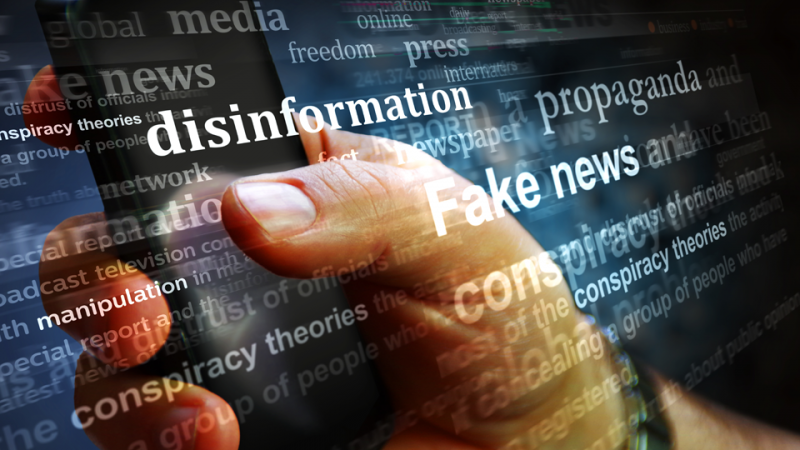
In a world increasingly shaped by artificial intelligence, misinformation has evolved from a political nuisance into a powerful geopolitical weapon, News.Az reports.
What once required professional editing teams, specialised software, or large propaganda networks can now be created by anyone with a smartphone and a free AI tool. This shift has fundamentally changed how societies consume information, how governments defend national security, and how individuals understand the world around them.
Experts warn that the new era of AI-driven misinformation is not just about fake news — it is about a complete restructuring of public trust. The traditional line between truth and fabrication, already blurred by social media, is now almost invisible. Today, a realistic deepfake video can travel across platforms in minutes, influencing millions before fact-checkers even see it.
One of the most alarming trends of 2025 is the speed at which synthetic content spreads. Automated bot networks, enhanced by AI algorithms, detect emotionally charged topics and push false narratives to the top of feeds. These campaigns do not require human operators working around the clock; artificial intelligence can generate, distribute, and adapt misinformation autonomously. As a result, governments increasingly face disinformation storms that erupt suddenly and collapse trust in institutions, electoral processes, and international partnerships.
Security agencies across Europe, the Middle East, and Asia have issued warnings that AI-boosted propaganda is becoming a preferred tool for foreign influence operations. Instead of hacking computer systems, hostile actors hack public perception. By manipulating narratives rather than networks, they achieve political disruption without crossing traditional cybersecurity boundaries. This makes attribution nearly impossible — a challenge that undermines the foundations of diplomatic accountability.
The global information ecosystem is also becoming more polarised. As users encounter personalised digital bubbles, AI-curated feeds strengthen pre-existing biases. This creates echo chambers where falsehoods spread faster than corrections. In many cases, misinformation is not designed to persuade people of a specific idea; rather, it aims to confuse, overwhelm, and exhaust the public to the point where objective truth loses meaning. Analysts call this phenomenon “cognitive fatigue,” a condition in which users stop distinguishing between facts and fiction because the volume of content becomes unmanageable.
Meanwhile, social media platforms are struggling to keep up. Their moderation systems, even when powered by AI, remain reactive rather than preventive. By the time a deepfake video is detected and removed, it may already have been downloaded, reshared, and repackaged thousands of times. Experts compare this to “putting out fires in a dry forest during a heatwave” — rapid, unpredictable, and nearly impossible to contain.
Governments are responding with new legislation, regulatory frameworks, and cross-border partnerships. The European Union is implementing stricter measures to label AI-generated content, while major tech companies are developing digital watermarking systems to identify synthetic media. However, critics argue that these tools can be circumvented easily, and many countries lack the technical expertise to enforce such regulations.
At the same time, democracies face a delicate dilemma: how to combat misinformation without restricting freedom of expression. Attempts to regulate digital platforms often spark debates about censorship and political overreach. As lawmakers struggle to balance security with rights, misinformation actors exploit legal grey zones to expand their influence.
For the media industry, the challenge is both existential and motivational. Verified news outlets remain the first line of defence against false narratives, yet they also confront declining trust due to years of digital fragmentation. Many newsrooms are investing in advanced verification teams, combining investigative journalism with machine-learning tools to authenticate audio, video, and documents. Others are creating dedicated “truth desks” that debunk viral stories in real time.
Despite these efforts, public awareness remains the most effective shield. Digital literacy campaigns are being launched in schools, workplaces, and community centres to teach people how to identify manipulated content, verify sources, and understand algorithmic biases. However, such initiatives require time, resources, and societal commitment — factors that vary widely across countries.
Ultimately, the rise of AI-driven misinformation signals a turning point in global communication. Information is no longer just something we consume; it is something that can be engineered, weaponised, and deployed with unprecedented precision. The struggle for truth is now an international security challenge, not simply a media issue.
Looking ahead, experts believe that societies must prepare for an era where authenticity becomes a constant question and every piece of content is subject to scrutiny. The future will depend on building resilient information ecosystems, strengthening digital education, and creating global partnerships that address misinformation as a shared threat.
In this new landscape, trust is no longer guaranteed — it must be rebuilt, protected, and defended as diligently as borders, institutions, and infrastructure. The battle against AI-driven misinformation has already begun, and its outcome will shape the stability of democracies, the integrity of elections, and the security of nations for years to come.


Similar news