How could Tajikistan–EU chart reshape Central Asia’s cooperation?


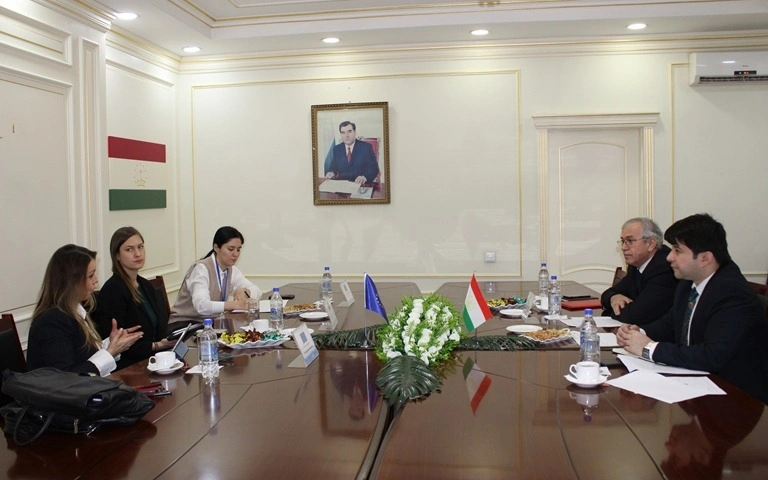
The recent meeting between the Center for Strategic Research under the President of the Republic of Tajikistan and a delegation from the European Union marks more than a routine diplomatic exchange, News.Az reports.
It reflects a broader recalibration of relations between the EU and Central Asia, a region that has gained strategic prominence due to shifting global power balances, evolving trade corridors, and emerging security and climate challenges.
RECOMMENDED STORIES
For Tajikistan, engagement with the EU is not new, but the current phase is qualitatively different. Cooperation has moved beyond aid and basic development support toward structured dialogue on policy analysis, strategic research, and long term regional planning. The involvement of analytical and research institutions signals a more mature partnership where ideas, data, and expertise become as important as funding or political declarations.
From the EU’s perspective, Central Asia is increasingly seen as a bridge region connecting Europe with East and South Asia, as well as a key actor in energy security, climate resilience, and regional stability. Tajikistan, with its unique geography, water resources, and role in regional diplomacy, is positioned as a critical partner within this framework.
Why does the EU consider Tajikistan a priority partner in Central Asia?
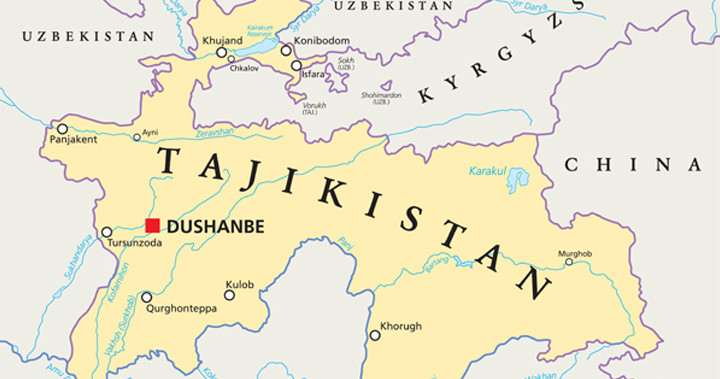
Tajikistan occupies a distinctive place in Central Asia due to several structural factors. It shares borders with multiple regional states and lies close to major geopolitical fault lines. Its economy is developing, its institutions are evolving, and its foreign policy emphasizes balanced engagement with global partners.
The EU views Tajikistan as a country where long term investment in governance, research capacity, and regional connectivity can yield stabilizing effects beyond national borders. Unlike relationships based purely on energy exports or transit routes, the EU–Tajikistan partnership increasingly focuses on knowledge exchange, institutional strengthening, and multilateral cooperation.
Another important factor is Tajikistan’s emphasis on water and climate diplomacy. As an upstream country with vast hydropower potential, Tajikistan plays a decisive role in regional water management. The EU’s global climate agenda aligns closely with this priority, making cooperation in environmental policy and scientific research especially relevant.
What role does the Center for Strategic Research play in this cooperation?
The Center for Strategic Research under the President of Tajikistan functions as a national analytical hub. It brings together expertise on foreign policy, regional security, economic development, and global trends. Its engagement with the EU delegation highlights a shift toward evidence based policymaking and forward looking analysis.
By strengthening ties with European research institutions and policy think tanks, the Center aims to enhance its methodological capacity and international visibility. This includes exchanging analytical frameworks, participating in joint studies, and building professional networks that extend beyond governmental channels.
For the EU, working with such institutions provides direct insight into local perspectives. Rather than relying solely on diplomatic reporting, the EU gains access to indigenous analytical narratives that better reflect regional realities. This mutual exchange helps reduce misperceptions and supports more realistic and sustainable policy design.
How does scientific and analytical cooperation differ from traditional diplomacy?
Traditional diplomacy often revolves around official statements, negotiations, and agreements. Scientific and analytical cooperation, by contrast, operates on a longer time horizon. It focuses on understanding structural trends rather than managing immediate crises.
In the Tajikistan–EU context, this means joint analysis of regional security dynamics, economic diversification pathways, demographic trends, and climate risks. Researchers and analysts can explore scenarios that policymakers may not yet be ready to address publicly but must eventually confront.
Such cooperation also builds trust. When experts work together over time, they develop shared vocabularies and professional respect. This makes formal diplomatic engagement smoother and more resilient, especially during periods of political uncertainty.
What regional issues were discussed during the meeting?
The discussions covered a broad spectrum of regional and international processes. These included the evolution of diplomatic relations between Tajikistan and the EU, the state of multilateral cooperation in Central Asia, and prospects for joint analytical projects.
Regional security was a key theme, particularly in relation to border stability, transnational risks, and the importance of inclusive regional dialogue. Economic cooperation was also addressed, with attention to trade facilitation, investment climate, and innovation driven growth.
Another important topic was the role of analytical institutions in anticipating regional challenges. Both sides emphasized the need for better data sharing, comparative research, and coordinated assessments of global trends affecting Central Asia.
How does this cooperation fit into Tajikistan’s foreign policy strategy?
Cooperation with the EU is identified as one of the priority directions of Tajikistan’s foreign policy. This reflects a broader strategy of multi vector engagement, where Tajikistan seeks balanced relations with various global and regional actors.
By deepening ties with the EU, Tajikistan diversifies its external partnerships and reduces overdependence on any single direction. The focus on analytical cooperation also aligns with domestic reform objectives, including modernization of public administration and policy planning.
Importantly, Tajikistan presents itself as a constructive regional actor. Engagement with the EU enhances its ability to contribute to multilateral initiatives and to position itself as a bridge between different geopolitical spaces.
What does the EU gain from deeper engagement in Central Asia?
For the EU, Central Asia represents both an opportunity and a responsibility. The region’s stability directly affects broader Eurasian dynamics, including trade flows, migration patterns, and security risks.
Engagement with Tajikistan allows the EU to support regional resilience through knowledge based cooperation rather than solely through financial instruments. It also helps the EU promote its values and policy approaches in areas such as sustainable development, regional cooperation, and evidence based governance.
Furthermore, by engaging with Central Asian analytical institutions, the EU strengthens its strategic foresight capabilities. Understanding how regional actors perceive global changes improves the EU’s ability to design policies that are realistic and locally grounded.
How could this partnership reshape regional collaboration in Central Asia?
The emphasis on analytical and scientific cooperation has the potential to influence regional collaboration in several ways. First, it encourages a culture of dialogue based on shared analysis rather than competing narratives.
Second, it supports the development of regional research networks. When institutions from different Central Asian countries collaborate with European partners, they also interact more closely with each other. This can gradually build regional epistemic communities that transcend national boundaries.
Third, such cooperation can inform regional policy coordination. Shared research on issues like water management, climate adaptation, and trade connectivity can provide a common knowledge base for regional agreements.
What opportunities exist for joint projects and initiatives?
The meeting highlighted opportunities for joint projects in strategic research. These may include comparative studies on regional integration models, assessments of climate risks, and analyses of global economic shifts.
There is also scope for training programs, fellowships, and exchanges that build human capital. Young researchers and analysts can benefit from exposure to European methodologies while contributing local expertise.
Digital platforms may play a role as well. Collaborative databases, joint publications, and virtual conferences can expand the reach of cooperation beyond physical meetings.
How does this relate to trade, investment, and innovation?
While the meeting focused on analytical cooperation, it connects directly to economic priorities. Research and analysis inform better policy decisions in trade and investment. Understanding value chains, regulatory environments, and innovation ecosystems is essential for attracting sustainable investment.
The EU has expressed interest in deeper partnership with Tajikistan in trade, investment, and innovation. Analytical cooperation provides the intellectual infrastructure for this engagement. It helps identify sectors with comparative advantages and assess the impact of reforms.
Innovation, in particular, benefits from cross border knowledge exchange. Research institutions can act as catalysts for innovation driven growth by connecting policymakers, businesses, and international partners.
What challenges could affect the success of this partnership?
Despite the positive momentum, several challenges remain. Differences in institutional capacity can limit the pace of cooperation. Ensuring sustained funding and political support is also critical.
Another challenge is translating analytical insights into policy action. Research findings must be effectively communicated to decision makers and integrated into policy processes.
Geopolitical uncertainties may also influence cooperation. Central Asia sits at the intersection of multiple strategic interests, and external shocks can affect priorities and resources.
How can both sides ensure long term impact?
To ensure long term impact, both Tajikistan and the EU need to institutionalize cooperation. This includes formal agreements between research institutions, regular dialogue mechanisms, and clear frameworks for joint projects.
Capacity building should remain a central focus. Investing in people and institutions creates lasting benefits that outlive individual projects.
Transparency and inclusivity are also important. Engaging a wide range of stakeholders, including academia, civil society, and the private sector, can broaden the impact of cooperation.
What does this mean for the future of EU–Central Asia relations?
The Tajikistan–EU engagement reflects a broader evolution in EU–Central Asia relations. The focus is shifting from transactional cooperation to strategic partnership.
Analytical and scientific collaboration serves as a foundation for this transformation. It enables deeper mutual understanding and supports policy coherence across different areas.
As Central Asia continues to navigate global change, such partnerships can contribute to regional stability, sustainable development, and constructive international engagement.
Why is this moment significant for regional diplomacy?
This moment is significant because it demonstrates a shared commitment to dialogue, knowledge, and partnership. In a world marked by fragmentation and uncertainty, the emphasis on analytical cooperation stands out as a constructive approach.
For Tajikistan, it reinforces its role as an engaged and forward looking regional actor. For the EU, it underscores its intention to be a long term partner in Central Asia’s development.
Together, they are charting a path that prioritizes understanding over rhetoric and cooperation over competition.
Final outlook
The discussions between Tajikistan’s Center for Strategic Research and the European Union delegation may not produce immediate headlines, but their long term significance should not be underestimated. By investing in analytical capacity, scientific exchange, and strategic dialogue, both sides are laying the groundwork for a more resilient and cooperative regional order in Central Asia.
This partnership illustrates how diplomacy in the modern era extends beyond formal agreements. It is built through shared analysis, sustained engagement, and a commitment to addressing common challenges with knowledge and foresight.
By Faig Mahmudov


Similar news