How is China expanding its influence across Central Asia?


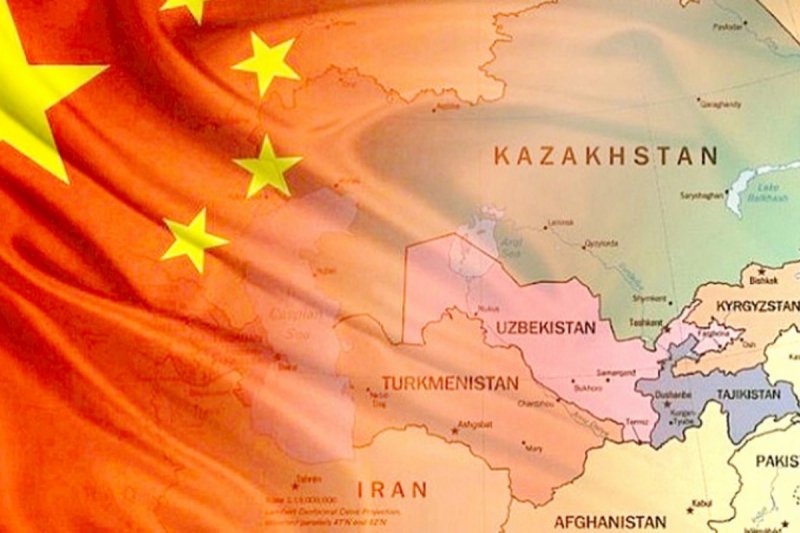
China is rapidly becoming the dominant external economic force in Central Asia as Beijing expands its political, financial, infrastructural, and strategic footprint across one of the world’s most geopolitically important regions.
For decades after the collapse of the Soviet Union, Russia remained the primary external power shaping Central Asia’s politics, security, and economy.
RECOMMENDED STORIES
Today, however, China is steadily transforming the region through massive investments, trade expansion, infrastructure projects, energy partnerships, and diplomatic engagement connected largely to the Belt and Road Initiative.
The region’s strategic location between China, Russia, the Middle East, South Asia, and Europe makes Central Asia critically important to Beijing’s long term geopolitical ambitions.
Chinese pipelines, railways, roads, industrial projects, logistics hubs, and financial agreements are reshaping the economic geography of Eurasia.
At the same time, China’s growing influence is creating both opportunities and concerns across Central Asia.
Governments welcome investment, trade, and infrastructure development, but fears about debt dependence, sovereignty, labor issues, demographic influence, and strategic overreliance on Beijing are also growing.
The rise of Chinese influence in Central Asia is increasingly becoming one of the defining geopolitical transformations of the twenty first century.
Why is Central Asia so important to China?
Central Asia holds enormous strategic importance for China for several reasons.
First, the region directly borders China’s western Xinjiang region, which Beijing considers highly sensitive from both security and political perspectives.
Chinese leaders view stability in Central Asia as closely connected to security in Xinjiang.
Second, Central Asia provides China with critical access to energy resources including oil, natural gas, uranium, and strategic minerals.
China’s rapidly growing economy requires enormous energy imports, and Central Asian pipelines help diversify supply routes away from maritime chokepoints vulnerable to geopolitical tensions.
Third, the region serves as a key transportation bridge linking China to Europe, the Middle East, and beyond.
The Belt and Road Initiative relies heavily on overland trade corridors passing through Central Asia.
Finally, expanding influence in Central Asia strengthens China’s broader geopolitical position across Eurasia while reducing Western and Russian dominance.
What is the Belt and Road Initiative?
The Belt and Road Initiative is China’s massive international infrastructure and connectivity project launched by President Xi Jinping in 2013.
The initiative aims to expand trade, transportation, investment, and political influence across Asia, Africa, Europe, and beyond.
Central Asia occupies a central position in the initiative because it connects China to western Eurasia through land routes.
Projects linked to the initiative include railways, highways, pipelines, ports, industrial parks, telecommunications systems, and logistics centers.
China presents the initiative as a development and connectivity strategy benefiting participating countries.
Critics, however, argue some projects create debt dependency and increase Beijing’s geopolitical leverage.
Regardless of differing perspectives, the initiative dramatically increased China’s presence across Central Asia.
Which Central Asian countries are closest to China economically?
Kazakhstan has become one of China’s most important economic partners in the region.
The two countries share a long border and extensive energy, transportation, and trade cooperation.
Kazakhstan serves as a key transit state for Chinese goods traveling westward.
China also imports significant quantities of Kazakh oil, uranium, and raw materials.
Turkmenistan is critically important because of natural gas exports.
China became Turkmenistan’s largest gas customer after construction of the Central Asia China gas pipeline.
Uzbekistan has also expanded economic ties with China through infrastructure, industrial investment, and trade.
Meanwhile, Kyrgyzstan and Tajikistan rely heavily on Chinese financing for infrastructure and development projects.
How has China changed Central Asia’s energy landscape?
China transformed Central Asia’s energy geopolitics by building pipelines that bypass Russia.
Historically, most Central Asian energy exports depended on Soviet era infrastructure running through Russian territory.
This gave Moscow enormous influence over regional economies.
China altered this balance through major pipeline projects connecting Central Asian gas and oil fields directly to Chinese markets.
The Central Asia China gas pipeline became one of the region’s most important strategic infrastructure projects.
Turkmenistan now exports most of its natural gas to China.
Kazakhstan also exports oil through Chinese connected infrastructure.
As a result, Central Asian countries gained alternative export routes and reduced dependence on Russia.
At the same time, China strengthened its own energy security through diversified supply chains.
Why is Xinjiang connected to China’s Central Asia strategy?
China’s western Xinjiang region plays a crucial role in Beijing’s approach to Central Asia.
Xinjiang borders several Central Asian countries and serves as China’s gateway to Eurasian land routes.
The region is strategically vital for pipelines, railways, roads, and logistics corridors linked to the Belt and Road Initiative.
Chinese authorities also view stability in Xinjiang as a national security priority.
Beijing has long expressed concerns about separatism, extremism, and cross border militant networks.
As a result, China seeks close security cooperation with Central Asian governments to prevent instability near its western frontier.
Some critics argue security cooperation also contributes to tighter political control and surveillance practices in the region.
How much money is China investing in Central Asia?
China invested tens of billions of dollars across Central Asia during the past two decades.
Investments include energy infrastructure, mining projects, railways, highways, industrial facilities, telecommunications systems, and logistics hubs.
Chinese banks and state owned companies finance many of these projects through loans and development agreements.
The exact total varies depending on calculations, but China became one of the region’s largest investors and creditors.
Trade volumes between China and Central Asia also increased dramatically.
In many sectors, China surpassed Russia as the dominant economic partner.
This economic transformation significantly increased Beijing’s influence over regional development patterns.
Why are some Central Asians worried about Chinese influence?
Although governments often welcome Chinese investment, concerns exist among segments of the population.
One major fear involves debt dependence.
Some critics worry Central Asian countries could become financially vulnerable if unable to repay large Chinese loans.
There are also concerns about transparency, corruption, labor practices, and the dominance of Chinese companies in certain projects.
In some countries, protests occurred over fears that Chinese firms could gain excessive control over land, resources, or infrastructure.
Demographic anxieties additionally exist in parts of the region because of China’s enormous population compared to smaller Central Asian states.
Suspicion regarding Beijing’s policies in Xinjiang has also influenced public attitudes.
As a result, governments often attempt to balance Chinese partnerships carefully while managing domestic sensitivities.
How is Russia reacting to China’s growing role?
Russia officially maintains cooperative relations with China in Central Asia, but many analysts believe Beijing’s rise gradually reduces Moscow’s traditional dominance.
Historically, Russia exercised overwhelming influence over Central Asian politics, security, migration, media, and trade.
China’s economic expansion increasingly challenges that position.
Moscow remains highly influential through military ties, labor migration networks, language connections, and historical relationships.
However, China now dominates many economic sectors, particularly infrastructure financing and trade.
The Ukraine war further accelerated shifts because Russian economic and geopolitical capacity weakened under sanctions and international isolation.
Some analysts believe Central Asia is becoming an arena where Chinese economic power and Russian security influence coexist uneasily.
Why is the region strategically important globally?
Central Asia sits at the crossroads of Eurasia.
The region connects China, Russia, South Asia, the Middle East, the Caucasus, and Europe.
This geographic position makes it critically important for trade, transportation, energy flows, and geopolitical influence.
Control over transportation corridors and energy infrastructure in Central Asia can shape broader Eurasian connectivity.
The region also contains significant reserves of oil, gas, uranium, and critical minerals needed for modern technologies and clean energy systems.
As global competition intensifies between China, the United States, Russia, and Europe, Central Asia’s strategic value continues increasing.
How is China influencing transportation in the region?
Transportation infrastructure forms one of the most visible aspects of China’s regional influence.
Chinese backed railways, highways, dry ports, and logistics centers are reshaping trade routes across Eurasia.
Projects linked to the Middle Corridor and Belt and Road Initiative increasingly connect Chinese manufacturing centers to European markets through Central Asia.
Rail freight between China and Europe expanded dramatically over recent years.
China also finances roads, tunnels, border facilities, and industrial zones designed to improve regional connectivity.
Supporters argue these projects modernize infrastructure and create economic opportunities.
Critics worry they increase dependence on Beijing and primarily serve Chinese strategic interests.
Could Central Asia become economically dependent on China?
Some analysts warn that excessive reliance on Chinese investment and trade could create vulnerabilities.
Several Central Asian economies already depend heavily on exports to China or Chinese financing.
If economic relationships become too imbalanced, governments may face pressure limiting strategic flexibility.
However, Central Asian countries are also attempting to diversify partnerships with Türkiye, the European Union, Gulf states, South Korea, Japan, and others.
Most governments seek balanced foreign policies rather than exclusive alignment with any single power.
Still, China’s economic scale gives Beijing enormous influence difficult for smaller economies to ignore.
How does China compete with the West in Central Asia?
China and Western countries approach Central Asia differently.
China emphasizes infrastructure, trade, financing, and pragmatic economic cooperation without publicly focusing heavily on governance or political reforms.
Western countries often prioritize governance standards, transparency, human rights, and institutional reforms alongside economic cooperation.
Chinese projects are frequently implemented faster because Beijing’s system allows rapid financing and state backed coordination.
However, Western governments increasingly seek stronger engagement in areas including renewable energy, critical minerals, digital connectivity, and transportation corridors.
Competition between China and the West in Central Asia is therefore intensifying economically and strategically.
Why are critical minerals increasing China’s interest in the region?
Central Asia possesses important reserves of uranium, lithium, rare earth elements, copper, and other strategic minerals.
These resources are essential for electric vehicles, batteries, semiconductors, renewable energy systems, and military technologies.
China already dominates much of the global processing industry for many critical minerals.
Expanding access to Central Asian resources helps Beijing strengthen supply chains supporting future technological and industrial ambitions.
As global demand for critical minerals rises, Central Asia’s strategic importance will likely increase further.
Could China eventually dominate Central Asia politically too?
China already possesses enormous economic influence, but political dominance remains more complicated.
Central Asian governments generally seek multi vector foreign policies balancing relations among China, Russia, Türkiye, the West, and regional partners.
Most leaders do not want excessive dependence on any single power.
Cultural, historical, and linguistic ties also continue giving Russia significant influence.
Public suspicion toward China in some countries may additionally limit Beijing’s soft power appeal.
Still, China’s economic weight increasingly translates into broader geopolitical influence.
Whether that evolves into deeper political dominance may depend on future regional developments, global power competition, and how Central Asian societies themselves respond to Beijing’s growing presence.
What does the future look like?
China’s influence in Central Asia is expected to continue growing over the coming decades.
Trade, infrastructure, energy cooperation, digital connectivity, and industrial investments will likely deepen further.
The region’s importance for Eurasian transportation and critical minerals will also increase.
However, Central Asian governments are unlikely to become passive actors.
Most will continue attempting to balance competing powers while protecting sovereignty and maximizing economic benefits.
At the same time, geopolitical rivalry involving China, Russia, the United States, Türkiye, and Europe may intensify across the region.
What is clear is that Central Asia is no longer a peripheral geopolitical space.
Instead, it is becoming one of the central arenas shaping the future balance of power across Eurasia and beyond.
By Faig Mahmudov


Similar news