Are electric vehicles finally going mainstream in India


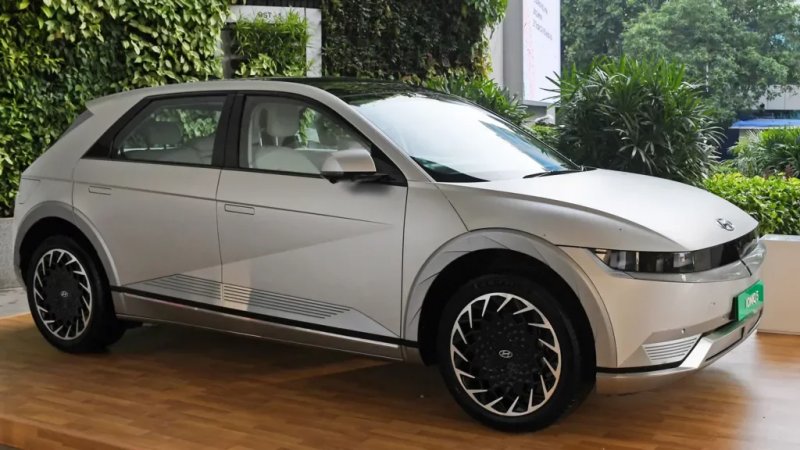
India's electric vehicle (EV) revolution has long been described as a future possibility rather than a present reality. For years, high costs, limited charging infrastructure, policy uncertainty, and consumer hesitation slowed adoption. However, recent developments suggest that the country's transition to electric mobility may finally be entering a more decisive phase.
Electric passenger vehicle sales have grown strongly, electric three-wheelers are becoming increasingly dominant, and new regulations are set to push both manufacturers and consumers toward cleaner transportation options. At the same time, rising fuel prices and concerns about energy security are adding momentum to the shift, News.az reports.
But is India truly approaching an EV tipping point? Or does the country still face major structural challenges before electric vehicles become mainstream?
This FAQ explainer examines the current state of India's EV market, the factors driving growth, and the obstacles that remain.
Why is everyone talking about electric vehicles in India right now?
Several developments have converged at the same time.
Electric car sales have increased significantly, EVs have crossed the symbolic 5% market share threshold in passenger vehicle sales, and policymakers are preparing stricter emissions regulations that could reshape the automobile industry over the next decade.
At the same time, geopolitical tensions in the Middle East have pushed oil prices higher. Since India imports nearly 90% of its crude oil requirements, fuel price volatility directly affects consumers and businesses.
As petrol and diesel costs rise, many buyers are reassessing the long term economics of electric vehicles, which generally offer lower operating and maintenance costs.
The combination of policy pressure, technological progress, economic incentives, and energy security concerns has created conditions that are more favorable for EV adoption than at any previous point in India's history.
Has India reached an EV tipping point?
Possibly.
Industry analysts often view 5% market penetration as a crucial threshold in the adoption cycle of new technologies. Once a product category crosses this level, growth often accelerates because consumers become more familiar with the technology and supporting infrastructure expands.
India's electric passenger vehicle market recently crossed this benchmark.
While 5% may appear modest compared with China or some European countries, it is important because it signals that EVs are moving beyond early adopters and beginning to attract mainstream consumers.
Crossing the threshold does not guarantee rapid adoption, but it significantly increases the likelihood of sustained growth.
How fast is the EV market growing?
Growth has been substantial across multiple vehicle categories.
Electric passenger vehicle sales expanded by approximately 25% during the year ending March 2026.
The growth story becomes even more impressive when looking at commercial and two wheeler segments.
Electric three wheelers now account for more than 30% of sales in their category, making them one of India's most successful EV segments.
Electric two wheelers have also achieved meaningful penetration, accounting for more than 15% of sales.
Given India's vast market for scooters, motorcycles, and auto rickshaws, these figures indicate that electric mobility is already becoming a practical reality for millions of users.
Why are larger electric cars selling better?
One interesting trend is that EV adoption is strongest in vehicles costing more than one million rupees.
Approximately one in every ten vehicles sold in this premium segment is now electric.
There are several reasons for this.
First, higher income consumers are generally more willing to experiment with new technologies.
Second, premium EV buyers often have access to private parking and home charging facilities, reducing dependence on public charging networks.
Third, the higher upfront cost of EVs becomes less significant in the premium segment, where consumers are already paying more for advanced features and technologies.
As battery prices continue to decline, analysts expect EV adoption to gradually expand into lower price categories.
How have fuel prices affected EV demand?
Fuel prices have become a major catalyst.
India's dependence on imported oil leaves it vulnerable to global price shocks. Recent increases in crude oil prices have forced fuel retailers to raise pump prices after years of relative stability.
For many consumers, the economics of EV ownership become increasingly attractive when fuel prices rise.
A typical electric vehicle can cost significantly less per kilometer to operate than a petrol or diesel vehicle.
When consumers anticipate prolonged periods of elevated fuel costs, the long term savings associated with EV ownership become more compelling.
This effect is particularly strong among high mileage users such as taxi operators, delivery services, and commercial fleet owners.
What is CAFE 3 and why is it important?
CAFE stands for Corporate Average Fuel Efficiency.
The upcoming CAFE 3 regulations represent one of the most important policy developments for India's automotive sector.
The rules are expected to take effect in April 2027 and remain in force until 2032.
Their goal is to significantly reduce carbon emissions from passenger vehicles.
Under the proposed framework, average emissions must fall from 113 grams of carbon dioxide per kilometer to 76 grams per kilometer by 2032, representing a reduction of approximately one third.
Meeting these targets through improvements to conventional internal combustion engines alone will be extremely difficult.
As a result, manufacturers are expected to increase investments in electric and hybrid technologies.
Why could CAFE 3 change the market dramatically?
Unlike previous policies, CAFE 3 is expected to introduce stronger compliance requirements.
Historically, India has relied heavily on incentives to encourage EV adoption. While these incentives helped stimulate demand, they did not always create sufficient pressure on manufacturers to transform their product portfolios.
CAFE 3 changes the equation.
Manufacturers that fail to meet emissions targets could face substantial penalties.
This creates a direct financial incentive for automakers to accelerate EV production, launch new electric models, and encourage customers to adopt low emission vehicles.
In many global markets, regulatory mandates have proven more effective than subsidies in driving large scale adoption.
How are state governments contributing?
Several Indian states are pursuing ambitious EV policies.
Delhi, one of the world's most polluted urban regions, has proposed measures that would gradually phase out conventional internal combustion vehicles in certain categories.
Draft policies envision stopping registrations of new petrol and diesel two wheelers and three wheelers within the next few years.
Such initiatives are significant because state governments control many aspects of vehicle registration, taxation, and urban transportation planning.
As more states adopt aggressive clean mobility policies, the transition could accelerate considerably.
Will more EV models become available?
Yes.
A growing number of manufacturers are preparing to launch new electric vehicles across various price segments.
The next wave of products is expected to include more affordable options, which could help attract middle income consumers.
Competition among domestic and international manufacturers is intensifying.
Companies are investing heavily in battery technology, vehicle design, software integration, and charging solutions.
A broader selection of vehicles typically leads to greater consumer interest because buyers can choose products that better match their budgets and preferences.
Why are three wheelers leading the EV revolution?
The economics are highly favorable.
Three wheelers, commonly used as auto rickshaws and commercial transport vehicles, travel long distances daily and operate on thin profit margins.
Fuel savings can therefore have a significant impact on earnings.
Electric three wheelers generally offer lower operating costs and simpler maintenance requirements.
Because they spend so much time on the road, owners can recover the higher purchase cost relatively quickly through reduced energy expenses.
This economic advantage explains why electric three wheelers have become one of India's most successful EV segments.
What role do electric scooters and motorcycles play?
Two wheelers are critical to India's transportation ecosystem.
Millions of Indians rely on scooters and motorcycles for daily commuting.
As battery prices decline and manufacturers introduce lower cost models, electric two wheelers are becoming increasingly competitive with petrol alternatives.
Their relatively small battery requirements also make them easier and cheaper to charge.
For many urban commuters, an electric scooter provides sufficient range for daily travel while significantly reducing fuel expenses.
The widespread adoption of electric two wheelers could ultimately have a larger impact than electric cars because of the sheer size of the market.
How does India compare with China?
China remains far ahead.
In 2020, China's EV penetration in passenger vehicles was roughly similar to where India stands today.
However, China subsequently experienced explosive growth.
Electric vehicles now account for more than half of new passenger vehicle sales in China.
Several factors explain China's success.
The country invested heavily in charging infrastructure, battery manufacturing, supply chains, and consumer incentives.
China also established strong industrial policies that helped domestic manufacturers become global leaders.
India is still at an earlier stage of development, but policymakers increasingly view China's experience as a model for accelerating adoption.
How does India compare with Europe and the United States?
India trails both regions in passenger vehicle electrification.
Many European countries have implemented strict emissions regulations and ambitious climate targets that support EV adoption.
The United States has also experienced significant growth, although adoption rates remain lower than in China.
India's market characteristics are different.
The country has lower average incomes, greater price sensitivity, and a transportation system heavily dependent on two wheelers and three wheelers.
As a result, India's EV transition may follow a unique path rather than replicating Western markets.
Is charging infrastructure still a problem?
Yes.
Charging infrastructure remains one of the biggest obstacles to widespread adoption.
India has increased the number of public charging stations from approximately 2,000 to more than 10,000 within three years.
While this growth is impressive, it remains insufficient for a country of India's size.
Infrastructure is also concentrated in a limited number of states, creating uneven access across regions.
Consumers living outside major urban centers often face significant challenges when trying to locate reliable charging facilities.
What is range anxiety?
Range anxiety refers to the fear that a vehicle's battery will run out before reaching a charging station.
This concern remains one of the most significant psychological barriers to EV adoption.
Even when modern electric vehicles offer sufficient range for daily use, consumers may hesitate if they lack confidence in charging availability.
Improving charging infrastructure, increasing battery range, and enhancing consumer education are all important for reducing range anxiety.
As charging networks expand, this concern is expected to diminish gradually.
Why is the gap with China so large?
The difference in charging infrastructure illustrates the scale of the challenge.
China has developed millions of charging points nationwide, while India currently has only a tiny fraction of that number.
China's extensive infrastructure network gives consumers confidence that charging will be readily available.
India is making progress, but catching up will require enormous investment from both public and private sectors.
The infrastructure challenge extends beyond chargers themselves and includes grid capacity, land availability, power distribution systems, and maintenance capabilities.
Are supply chains another challenge?
Absolutely.
Electric vehicles depend heavily on critical minerals such as lithium, cobalt, nickel, and rare earth elements.
India remains heavily dependent on imports for many of these materials.
The concentration of global processing capacity in a small number of countries creates strategic vulnerabilities.
Supply disruptions, geopolitical tensions, or export restrictions could increase costs and slow adoption.
Developing domestic supply chains is therefore becoming a major priority for policymakers.
Why are rare earth minerals important?
Rare earth minerals play a crucial role in electric motors, batteries, and other advanced technologies.
Control over these resources increasingly influences global industrial competitiveness.
Countries that dominate mining, refining, and manufacturing gain significant advantages in the EV sector.
India is seeking to expand domestic capabilities, but building a complete supply chain from mining to battery production could take many years.
In the meantime, securing reliable international partnerships remains essential.
Can India build its own EV ecosystem?
Yes, but it will require patience and sustained investment.
Developing a comprehensive ecosystem involves far more than assembling vehicles.
It requires battery production facilities, mineral processing plants, charging infrastructure, software development, research centers, and skilled labor.
Creating these capabilities can take a decade or longer.
However, successful development would reduce import dependence, create jobs, improve energy security, and strengthen India's manufacturing base.
What role does policy certainty play?
Policy certainty is crucial.
Automakers make investment decisions years in advance.
They need confidence that regulations, incentives, and emissions standards will remain stable.
Delays in finalizing regulations can create uncertainty that discourages investment.
When manufacturers cannot accurately predict future requirements, they may postpone factory expansions, supplier agreements, and product launches.
Clear and consistent policy signals help accelerate industry transformation.
What could happen over the next five years?
Several trends are likely.
EV sales will probably continue growing across all major categories.
Electric three wheelers could become the dominant option in their segment.
Electric two wheelers are expected to gain market share rapidly as affordability improves.
Passenger vehicle adoption should increase steadily, particularly if CAFE 3 regulations are implemented as planned.
Charging infrastructure will continue expanding, though challenges may persist in rural areas.
Domestic manufacturing capabilities are also expected to strengthen.
So, are electric vehicles finally going mainstream in India?
The evidence increasingly suggests that they are.
India has not yet reached the level of EV adoption seen in China or several European countries, but the market appears to be entering a new phase.
Passenger vehicle penetration has crossed an important threshold, commercial segments are embracing electrification, fuel price pressures are strengthening the economic case for EVs, and stricter regulations are approaching.
Significant obstacles remain, including charging infrastructure gaps, supply chain vulnerabilities, and the need for regulatory clarity.
Yet the overall direction is becoming increasingly difficult to ignore.
The question is no longer whether electric vehicles will become a major part of India's transportation future. The more relevant question is how quickly the transition will unfold and whether infrastructure, policy, and industry can keep pace with growing consumer demand.
By Faig Mahmudov


Similar news