How is the U.S.-China tech war reshaping the future of AI and semiconductors?


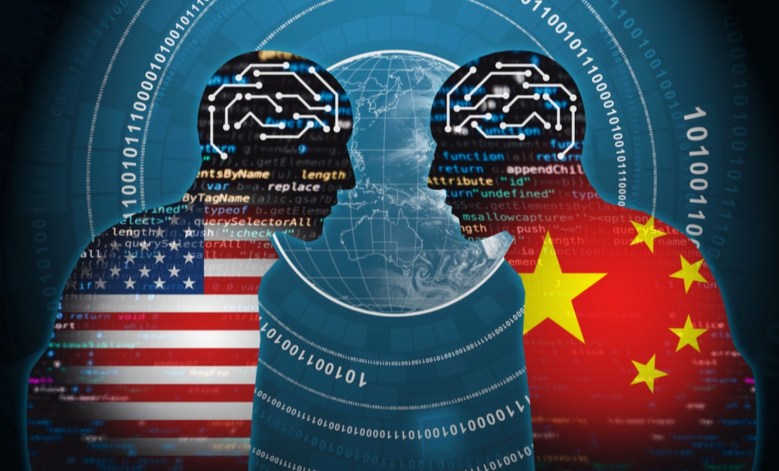
The escalating technology conflict between United States and China is rapidly transforming the future of artificial intelligence, semiconductors, global supply chains, and the broader digital economy as the world’s two largest powers compete for technological dominance in the twenty first century.
What began years ago as trade tensions and disputes over intellectual property has evolved into a full scale strategic rivalry centered on advanced chips, artificial intelligence, quantum computing, cybersecurity, cloud infrastructure, telecommunications, and next generation industrial technologies.
RECOMMENDED STORIES
At the heart of the conflict lies a simple reality: semiconductors and AI increasingly determine economic power, military capabilities, industrial competitiveness, and geopolitical influence.
Governments in Washington and Beijing now view technological leadership not merely as an economic objective but as a national security imperative.
The United States has imposed sweeping export controls restricting China’s access to advanced chips and semiconductor manufacturing equipment.
China meanwhile is investing enormous resources into achieving technological self reliance and reducing dependence on Western technology.
The rivalry already affects companies worldwide including NVIDIA, Intel, AMD, TSMC, Samsung Electronics, and Huawei.
The consequences extend far beyond corporate competition.
The technology war is reshaping global manufacturing, investment flows, supply chains, military planning, AI development, and the future structure of the international economy.
Many analysts increasingly believe the outcome of this competition could determine the global balance of power for decades.
Why are semiconductors so strategically important?
Semiconductors are the foundation of the modern digital economy.
Advanced computer chips power smartphones, artificial intelligence systems, military equipment, electric vehicles, satellites, cloud computing, telecommunications, robotics, and nearly every modern electronic device.
The most advanced chips are especially important for AI development because training and operating large artificial intelligence models requires enormous computational power.
Governments therefore increasingly view semiconductor leadership as essential for economic competitiveness and national security.
Countries lacking access to advanced chips risk falling behind technologically and militarily.
Because semiconductor manufacturing is extremely complex and concentrated among relatively few companies globally, control over chip production became one of the most strategically valuable assets in the world.
Why did the U.S. impose export controls on China?
The United States argues that restricting China’s access to advanced semiconductor technology is necessary for national security.
Washington fears that cutting edge chips and AI systems could strengthen China’s military modernization, surveillance capabilities, cyber warfare capacity, and broader geopolitical influence.
As a result, the U.S. government imposed export controls limiting China’s ability to obtain advanced AI chips, semiconductor manufacturing equipment, and certain sensitive technologies.
American officials especially targeted high performance chips used for artificial intelligence and supercomputing.
The restrictions also affect foreign companies using American technology.
The measures significantly complicated China’s efforts to access the most advanced semiconductor systems globally.
How did China respond to the restrictions?
China accelerated efforts to achieve technological self sufficiency.
Beijing views dependence on foreign semiconductors as a major strategic vulnerability.
The Chinese government therefore dramatically increased investment in domestic chip manufacturing, AI development, research, and industrial policy.
Chinese firms such as Huawei, SMIC, Tencent, Alibaba, and Baidu expanded efforts to develop domestic alternatives to Western technologies.
The government additionally introduced major funding initiatives supporting semiconductor and AI industries.
Chinese leaders increasingly emphasize the importance of “indigenous innovation” and resilience against foreign restrictions.
Although China still faces technological gaps in certain advanced manufacturing areas, progress accelerated significantly under external pressure.
Why is NVIDIA at the center of the conflict?
NVIDIA became one of the most important companies in the global AI race because its graphics processing units dominate advanced artificial intelligence computing.
NVIDIA chips are essential for training large AI models powering chatbots, generative AI systems, autonomous technologies, and data centers.
The United States restricted exports of some advanced NVIDIA AI chips to China because of national security concerns.
These restrictions significantly affected the Chinese AI sector because many companies depended heavily on NVIDIA hardware.
At the same time, NVIDIA seeks to preserve access to the enormous Chinese market while complying with American regulations.
The company therefore sits directly at the intersection of geopolitics, AI competition, and semiconductor strategy.
Why is Taiwan critically important in the tech war?
Taiwan occupies a central position because of its semiconductor industry dominance.
TSMC produces many of the world’s most advanced chips.
Major American technology companies including Apple, NVIDIA, AMD, and Qualcomm rely heavily on TSMC manufacturing capacity.
The concentration of advanced chip production in Taiwan created major geopolitical concerns because tensions between China and Taiwan continue increasing.
Many governments fear conflict around Taiwan could devastate global semiconductor supply chains and trigger worldwide economic disruption.
Taiwan therefore became both a geopolitical flashpoint and a technological chokepoint simultaneously.
How does artificial intelligence affect the rivalry?
Artificial intelligence is increasingly viewed as one of the most transformative technologies in history.
AI systems may influence economic productivity, military capabilities, surveillance, cybersecurity, medicine, finance, transportation, and scientific research.
Both the United States and China believe leadership in AI could shape global power for decades.
The United States currently maintains significant advantages in advanced semiconductors, research institutions, and leading AI firms including OpenAI, Google, Microsoft, and Anthropic.
China meanwhile possesses enormous data resources, strong state support, massive engineering talent, and rapidly growing AI firms.
As a result, AI became one of the most important arenas of strategic competition.
Why is Huawei such a controversial company?
Huawei became one of the main symbols of the U.S.-China tech war.
The United States accused Huawei of posing national security risks and potentially enabling Chinese government surveillance through telecommunications infrastructure.
Washington imposed sanctions limiting Huawei’s access to American technology and pressured allies to restrict the company’s participation in 5G networks.
China strongly denied the allegations and accused the United States of trying to suppress Chinese technological competition.
Despite sanctions, Huawei continued developing domestic alternatives and reemerged as an increasingly important player in China’s semiconductor and smartphone ecosystem.
What is technological decoupling?
Technological decoupling refers to efforts by the United States and China to reduce dependence on each other in critical technology sectors.
This includes semiconductors, telecommunications, cloud computing, AI infrastructure, cybersecurity systems, and digital platforms.
Governments increasingly prioritize domestic production and trusted supply chains for sensitive technologies.
Companies also diversify manufacturing and sourcing strategies to reduce geopolitical risks.
Complete separation remains unlikely because global technology systems remain highly interconnected.
However, partial decoupling in strategic sectors is already accelerating rapidly.
This process may permanently reshape the structure of the global technology industry.
How does the tech war affect global supply chains?
The technology conflict is forcing companies worldwide to rethink manufacturing, sourcing, and investment strategies.
Many firms seek to reduce dependence on single countries or vulnerable supply chains.
Governments additionally encourage domestic semiconductor production through subsidies and industrial policies.
The United States passed major legislation supporting domestic chip manufacturing.
Europe, Japan, South Korea, and India also launched initiatives strengthening semiconductor industries.
As a result, the global semiconductor ecosystem is becoming more fragmented and geopolitically driven.
Why are rare earth minerals important?
Rare earth elements and critical minerals are essential for semiconductor manufacturing, electric vehicles, defense systems, and advanced technologies.
China dominates global processing capacity for many rare earth materials.
This gives Beijing significant leverage in global technology supply chains.
The United States and allies increasingly seek diversified sources and alternative supply chains for critical minerals.
Competition over resources therefore became another important dimension of the broader technology war.
How does the rivalry affect consumers?
Consumers worldwide may experience the effects through higher prices, supply chain disruptions, and technological fragmentation.
Restrictions on technology exports can increase manufacturing costs and slow innovation in certain sectors.
Different technological ecosystems may also emerge globally, especially regarding software platforms, telecommunications standards, and digital infrastructure.
At the same time, government subsidies and competition may accelerate innovation in some areas including AI and semiconductor manufacturing.
Could the world split into separate tech ecosystems?
Many analysts increasingly warn about the possibility of a “digital iron curtain” dividing global technology systems.
In this scenario, the United States and China could gradually develop competing technology ecosystems involving different hardware, software, AI models, cloud systems, payment platforms, and digital standards.
Some countries may align more closely with American technology networks, while others integrate more deeply with Chinese systems.
Although complete separation remains unlikely, fragmentation is already increasing in strategic sectors.
Why are allies becoming more important?
The United States increasingly coordinates technology policy with allies including Japan, South Korea, the Netherlands, and European partners.
Several allied countries possess critically important semiconductor technologies or manufacturing capabilities.
For example, Dutch company ASML dominates advanced lithography machines essential for producing cutting edge chips.
Japan and South Korea also remain central to semiconductor supply chains.
The technology war therefore increasingly involves coalition building and international coordination.
How is China trying to overcome restrictions?
China invests heavily in domestic chip production, AI research, education, and industrial modernization.
The government encourages local firms to replace foreign technologies with domestic alternatives wherever possible.
Chinese companies also explore architectural innovations and software optimization techniques reducing reliance on the most advanced foreign chips.
Progress remains uneven, but pressure from U.S. sanctions accelerated innovation and investment significantly.
Could the rivalry become even more intense?
Yes.
As AI, semiconductors, quantum computing, biotechnology, and cyber systems become increasingly important strategically, competition may intensify further.
Both governments view technological leadership as directly connected to future military and economic power.
This creates strong incentives for continued rivalry, industrial policy expansion, and technological nationalism.
Can cooperation still exist despite the rivalry?
Despite tensions, complete separation remains unlikely.
Global technology systems remain deeply interconnected economically and scientifically.
American and Chinese companies still depend on each other in many areas.
Researchers also continue collaborating internationally in some scientific fields.
However, strategic mistrust continues growing.
The relationship increasingly combines economic interdependence with geopolitical rivalry simultaneously.
What does the future look like?
The U.S.-China technology war is likely to remain one of the defining forces shaping the global economy during coming decades.
Semiconductors, artificial intelligence, digital infrastructure, and advanced manufacturing will increasingly influence geopolitical power.
The world may move toward more fragmented and security driven technology systems.
Governments, corporations, and investors globally will continue adapting to an environment where technology is no longer viewed only as business but as a core instrument of national strategy and international power.
By Faig Mahmudov


Similar news