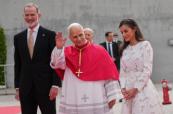
€50 million against Moscow: Europe backs Armenia


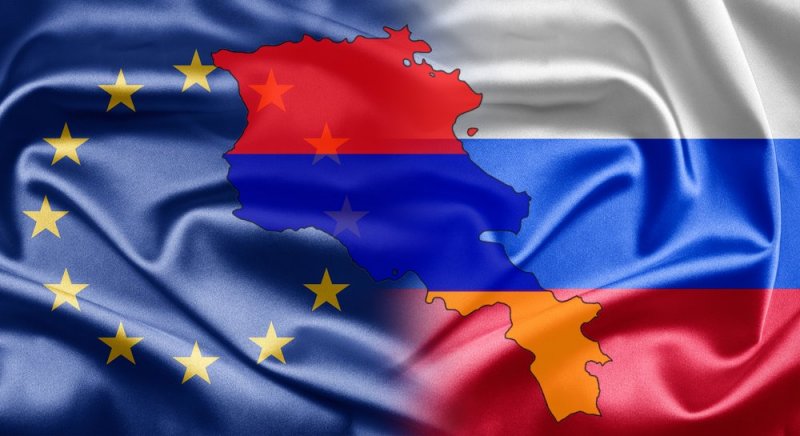
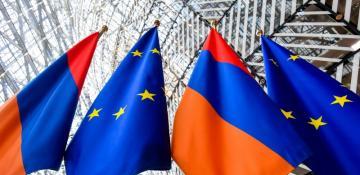
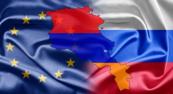
The European Union is preparing an economic support package worth more than €50 million for Armenia following Russia’s decision to impose new restrictions on Armenian exports. Coming just days before the June 7 parliamentary elections, the move has transformed what initially appeared to be a trade dispute into part of a much broader geopolitical struggle over Armenia’s future.
European Commission President Ursula von der Leyen said she had discussed the situation with Armenian Prime Minister Nikol Pashinyan. She described the Russian restrictions as a form of “economic coercion” and accused Moscow of using trade relations as an instrument of political pressure.
According to the European Commission chief, the EU’s response will not be limited to the allocation of more than €50 million. Brussels also intends to work directly with the Armenian government and local businesses to help producers redirect exports and gain access to alternative markets.
RECOMMENDED STORIES
The European Union is therefore sending Yerevan two messages at once. The first is economic: Europe is prepared to offset at least part of the losses Armenian businesses may suffer as a result of reduced access to the Russian market. The second is political: Brussels wants to demonstrate that Armenia will not be left alone to face possible retaliation from Moscow as it moves closer to Europe.
Russia’s restrictions have affected several categories of Armenian products. Since the beginning of June, the measures have reportedly been extended to a range of agricultural goods, including cherries, sour cherries, apricots, peaches, plums, nectarines and grapes. Restrictions have also affected fish and fish products.
 Source: Getty Images
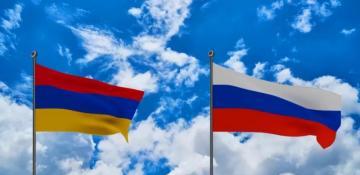
Russian authorities traditionally justify such measures by citing sanitary, veterinary and quality-control concerns. In Yerevan and Brussels, however, Moscow’s actions are increasingly viewed through a political lens. The restrictions have been introduced at a time when Armenia is deepening its relations with the European Union and the United States, has effectively frozen its participation in the Collective Security Treaty Organization and has begun publicly discussing a possible European future.
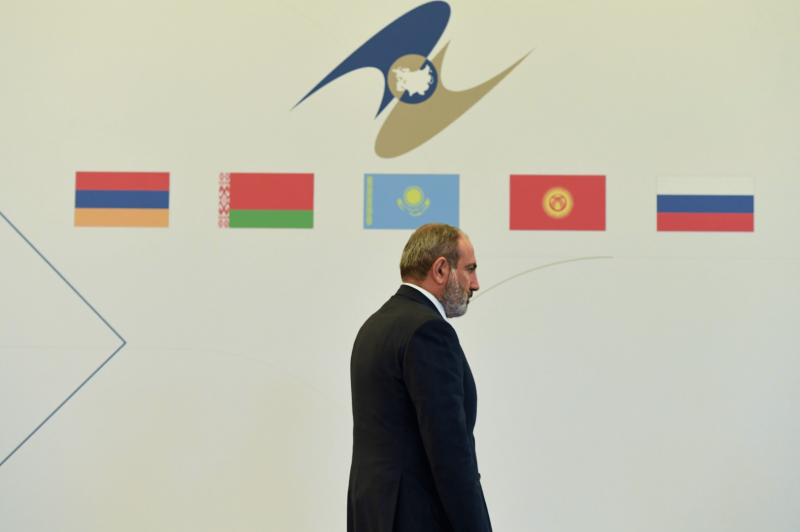
The issue is particularly sensitive for Armenia because of its continued dependence on the Russian market. For decades, Russia has remained one of the principal destinations for Armenian exports. A shared language, established logistical networks, Armenia’s membership in the Eurasian Economic Union and comparatively less demanding technical requirements have all made the Russian market more accessible to Armenian producers.
Replacing that market with the European Union will not be easy. European requirements for quality, safety, packaging and certification are considerably stricter. To enter EU markets on a larger scale, Armenian companies will need to modernize production, undergo additional inspections, adapt their logistics and compete with suppliers from other countries.
For this reason, the proposed European package should be viewed less as full compensation for Armenia’s potential losses and more as a political and economic stabilization mechanism. Brussels wants to show Armenian society that closer ties with Europe can be accompanied by tangible financial support rather than diplomatic statements alone.
The timing is especially significant. The announcement comes just before the June 7 parliamentary elections, which have increasingly taken on the character of a referendum on Armenia’s future foreign policy direction.
Pashinyan’s Civil Contract party supports continued rapprochement with the EU and the United States, domestic reform, normalization with Azerbaijan and a gradual reduction of Armenia’s dependence on Russia. His opponents accuse the government of weakening traditional ties with Moscow, undermining the country’s security and making excessive concessions in negotiations with Baku.
Recent polling has generally placed the ruling party ahead of its rivals. Yet the central question is not simply which party will finish first. Pashinyan needs a sufficiently stable parliamentary majority to continue pursuing a peace agreement with Azerbaijan, closer cooperation with the West and a restructuring of Armenia’s relationship with Russia.
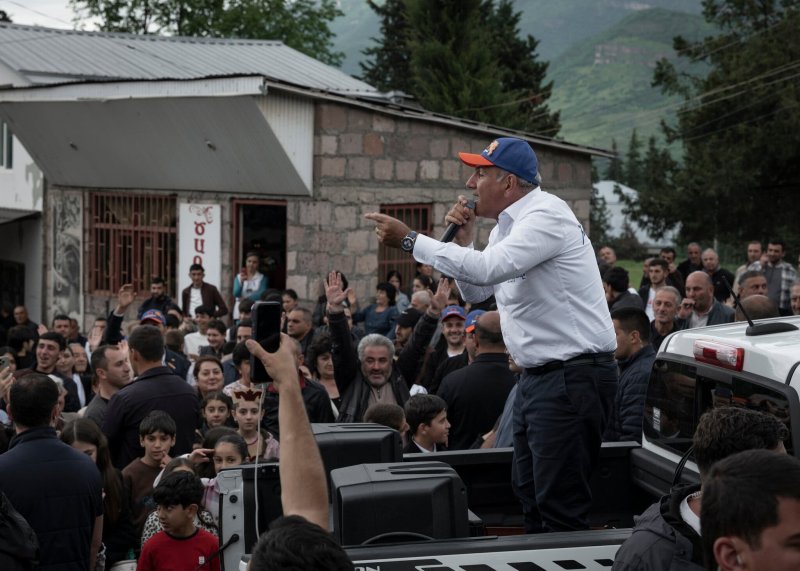
The opposition camp, meanwhile, remains fragmented. The election includes both political forces associated with Armenia’s former leadership and newer movements seeking to capitalize on dissatisfaction with the government. One of the most prominent figures advocating the restoration of closer ties with Moscow is Russian-Armenian businessman Samvel Karapetyan and the political movement associated with him.
Pashinyan’s critics argue that Russia remains an indispensable economic and energy partner. They point to Armenia’s dependence on Russian gas, petroleum products, food supplies and other essential goods. Moscow has already warned Yerevan that continued movement toward the European Union could lead to economic consequences, including a possible revision of preferential energy arrangements.
Brussels, by contrast, is trying to persuade Armenian voters that dependence on Russia can gradually be reduced. The first EU-Armenia summit, held in Yerevan on May 5, reaffirmed the two sides’ intention to expand cooperation not only in trade, but also in security, governance reform, infrastructure and political coordination.
The new economic package is a continuation of that strategy. Europe is effectively building a rapid-response mechanism to help Armenia withstand external economic pressure. The objective is to provide Yerevan with a degree of financial protection if relations with Moscow deteriorate further.
For Russia, the developments point to a gradual erosion of influence in a country long regarded as one of Moscow’s closest allies in the South Caucasus. Russia’s military presence, Armenia’s membership in the Eurasian Economic Union, energy dependence and deep integration with the Russian market still provide the Kremlin with substantial leverage.
Yet the use of that leverage may produce the opposite effect. The more Moscow restricts Armenian exports or threatens to revise energy terms, the stronger the arguments become for those advocating diversification of Armenia’s foreign economic relations.
The European Union, however, faces a challenge of its own. To make its support credible, Europe must offer Armenia more than political promises. It will need to provide genuine market access, investment, transport connectivity and energy alternatives. A €50 million package carries significant symbolic weight, but it cannot immediately replace the scale of Armenia’s economic relationship with Russia.
Yerevan is therefore likely to continue pursuing a cautious policy of diversification while avoiding an immediate and complete break with Moscow. Even supporters of European integration understand that a rapid withdrawal from existing economic and energy arrangements could create serious risks for both the public and the business community.
 Source: The New York Times
Against this backdrop, the June 7 election is far more than competition between the government and the opposition. It will determine how quickly Armenia moves away from Russia’s orbit, how far it is prepared to advance in its relations with the European Union and whether Pashinyan can secure a public mandate to continue the peace process with Azerbaijan.
The outcome will also carry major implications for the wider South Caucasus. The continuation of Armenia’s current course could accelerate the signing of a peace agreement with Azerbaijan, the reopening of regional transport links and the normalization of Armenian-Turkish relations. A strong revival of pro-Russian forces, by contrast, could slow these processes and push Armenia back toward a more confrontational regional posture.
Moscow and Brussels are using fundamentally different methods. Russia is reminding Armenia of the potential cost of abandoning its traditional system of alliances and economic ties. The European Union is seeking to highlight the benefits of a new course while offering financial support to soften the transition.
Russia’s trade restrictions and Europe’s response have therefore become the final major episode of the election campaign. When Armenians go to the polls, they will not merely be deciding the fate of the current government. They will also be choosing whether Armenia remains within Russia’s sphere of influence, moves more decisively toward Europe or continues the difficult task of balancing between two competing centers of power.
By Tural Heybatov


Similar news