How middle powers are taking over global geopolitics


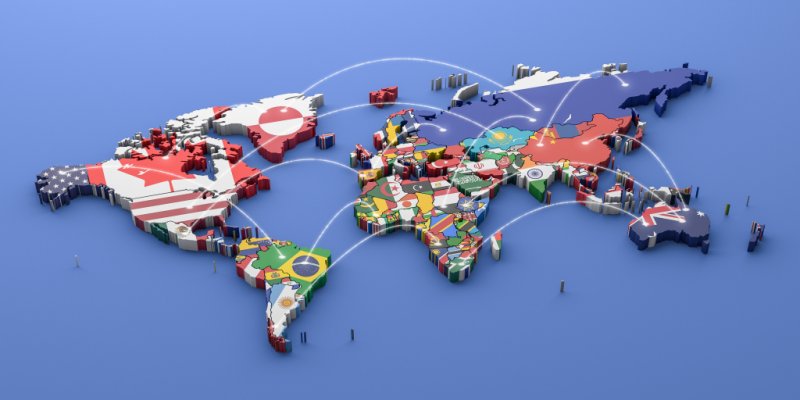
In an era defined by shifting alliances, fragmented power centers and the erosion of traditional hierarchies, the global system is entering one of its most transformative phases since the end of the Cold War, News.Az reports.
The old assumption that the United States, Russia or China alone dictate the international agenda is steadily fading. Instead, a new class of actors – often referred to as “middle powers” – are stepping into roles once reserved for superpowers. These states, though not global hegemons, possess strategic geography, ambitious foreign policy agendas, strong economic capabilities or diplomatic agility that enable them to influence regional and even global outcomes. Their emergence is not a temporary trend but a structural transformation of the twenty-first-century order.
Middle powers such as Azerbaijan, Türkiye, Saudi Arabia, the United Arab Emirates, Qatar, Kazakhstan, Uzbekistan, South Korea, Indonesia and Brazil demonstrate that influence today is measured not purely by military size but by connectivity, resources, diplomatic credibility and the ability to act as bridges between competing blocs. The weakening of traditional institutions, the rise of regional conflicts and the fragmentation of globalization have created a geopolitical landscape where countries with strategic pragmatism and flexible diplomacy gain unprecedented leverage.
A key driver of this transformation is the collapse of the unipolar moment. With Washington facing internal political turbulence and struggling to project consistent global leadership, and with Beijing and Moscow focusing on their own economic and security challenges, the vacuum is increasingly filled by states capable of mediation, corridor building and niche leadership. Instead of aligning entirely with one camp, many middle powers pursue “multi-vector” foreign policies designed to maximize national interests without being trapped in great-power rivalries.
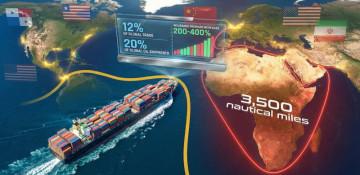
Azerbaijan stands out as one of the most illustrative examples. After the Second Karabakh War and the subsequent restoration of full territorial integrity in 2023, Baku emerged as a regional center of power whose influence extends across the South Caucasus, the Caspian Basin, Central Asia and Europe. Its energy resources, infrastructure projects and transport corridors have positioned Azerbaijan as a key enabler of the Middle Corridor – the fastest-growing trade route between Europe and Asia. The country’s accession to the Central Asian Leaders’ Consultative Format marked a turning point in Eurasian geopolitics: for the first time, the Caspian region operates as a single integrated strategic space. At COP29, Baku successfully presented a governance model that many observers described as “the most efficient climate diplomacy platform of the past decade,” reinforcing Azerbaijan’s role as a global convening power.
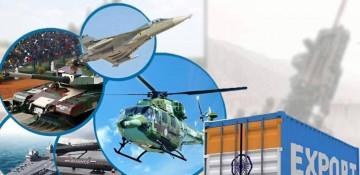
Türkiye, meanwhile, has evolved into a decisive actor across multiple regions. From the Eastern Mediterranean to the South Caucasus, from Libya to the Black Sea, Ankara’s assertive diplomacy, military capabilities and expanding defense industry have transformed it into one of the world’s most influential middle powers. Its ability to mediate between Russia and Ukraine at a time when Western channels were frozen demonstrated how Ankara leverages its geopolitical position to shape continental security outcomes.
Another example is the Gulf region. Saudi Arabia and the UAE have undergone one of the fastest geopolitical transformations of the post-oil era. Riyadh’s Vision 2030 and its growing diplomatic involvement – from hosting major summits to mediating regional disputes – have shifted the balance of power in the Middle East. The UAE, with its global logistics hubs, investment networks and mediation initiatives, has become one of the most globally connected states. Both countries increasingly act as agenda-setters rather than followers, shaping energy markets, climate diplomacy, maritime security and financial trends.
In Central Asia, Kazakhstan and Uzbekistan have become new engines of Eurasian diplomacy. Their push for diversified partnerships, infrastructure connectivity and regional coordination reflects the region’s ambition to strengthen political independence while contributing to transcontinental integration. The fact that Europe, China, the United States, the Gulf states and South Korea all compete for partnership with Central Asia demonstrates how middle powers can transform previously peripheral regions into strategic centers.
In Asia and the Pacific, states like South Korea, Indonesia and Vietnam have also emerged as strategic anchors. Seoul defines technological and industrial trends, while Indonesia shapes Southeast Asia’s economic corridors. Vietnam, increasingly seen as a manufacturing and geopolitical counterweight to China, leverages its economic rise to increase diplomatic influence.
What unites all these middle powers is the shift from passive alignment to active agency. They no longer wait for the superpowers to define the rules. They build coalitions, lead negotiations, host summits, create alternative corridors and design new security formats. The world’s major powers now consult them – not the other way around.
Moreover, middle powers are becoming critical players in energy security, food supply chains, green transition technologies and digital infrastructure. Renewable energy investments in the Gulf, transport and energy projects in Azerbaijan, semiconductor diplomacy in South Korea and food security initiatives in Central Asia all demonstrate how middle powers shape global priorities.
The rise of middle powers signals a new era: a world where stability and decision-making no longer depend solely on a handful of great powers, but on a broader and more diverse network of influential states capable of bridging divides and creating new pathways. For global geopolitics, this marks not a crisis but a redistribution of influence – one that makes the international system more competitive, more flexible and more multipolar than ever before.


Similar news