The global race for technology dominance, energy transition and advanced manufacturing has placed one group of resources at the center of twenty-first-century geopolitics: rare earth elements, News.az reports.
Once considered obscure minerals used in limited industrial processes, these elements have now emerged as strategic assets as essential as oil was throughout the twentieth century. Their growing importance in electric vehicles, renewable energy infrastructure, defense systems, telecommunications, semiconductors and artificial intelligence has fundamentally reshaped global markets and political calculations. Over the past decade, rare earth elements have transformed from a technical commodity into one of the most decisive levers of global power.
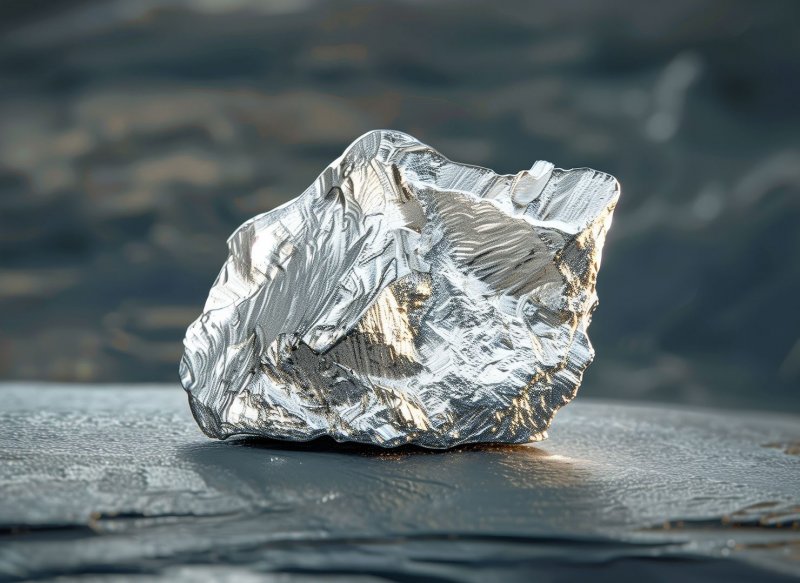
Rare earth elements – a group of 17 metallic elements including neodymium, dysprosium, terbium, lanthanum and yttrium – are indispensable for modern technology. They are used in everything from EV batteries and wind turbines to fighter jets, precision-guided missiles, smartphones, MRI machines and satellites. The world’s clean energy ambitions and digital economies depend on these minerals. Without rare earths, the global shift toward electrification, robotics and high-performance computing simply cannot happen. This irreplaceability is what has earned them the title of the “new oil.”
China’s dominance is the single most important factor shaping the rare-earths landscape. Over the past 30 years, China deliberately built a vertically integrated monopoly over rare earth mining, processing and magnet manufacturing. Today, China controls roughly 60 percent of global rare-earth mining capacity and up to 90 percent of global rare-earth processing. Even when other countries extract rare earths, most still send them to China for refinement because processing requires highly specialized technology and carries environmental risks. This gives Beijing a powerful geopolitical tool: the ability to influence prices, restrict supply and shape global industrial strategies.
The importance of this leverage became especially clear when China imposed export restrictions on gallium and germanium, other vital strategic minerals, sending shockwaves through global supply chains. The message was unambiguous: any country seeking to compete with China in high-tech sectors must first secure access to critical minerals. In many capitals, this triggered a strategic awakening. The United States, European Union, Japan, South Korea and Australia launched major initiatives to diversify supply chains, reduce dependence on China and build domestic processing facilities.
The United States, once a global leader, has revived its rare-earth ambitions by reopening mines such as Mountain Pass in California and investing billions into magnet manufacturing. The Inflation Reduction Act and Defense Production Act are being used to finance new extraction and processing projects. Washington now considers rare earths a national security priority, emphasizing military applications such as F-35 fighter jets, radar systems and naval propulsion technologies.
Europe, facing the risk of long-term dependency, launched the Critical Raw Materials Act to accelerate investment in local mines, recycling systems and strategic reserves. Germany, France and the Nordic countries are pushing new exploration projects, while the EU seeks partnerships with mineral-rich nations in Africa, Central Asia and South America. Europe’s aggressive push to electrify transportation also makes securing rare earths essential for EV motors and offshore wind turbines.
But the most dramatic developments are unfolding in emerging economies. Central Asia has become a critical new frontier for rare-earth and critical-mineral exploration. Kazakhstan, Uzbekistan and Kyrgyzstan possess promising deposits of rare earths, lithium, tungsten and other strategic materials. Azerbaijan’s growing connectivity with Central Asia through the Middle Corridor increases the region’s access to European and global markets, offering alternative routes to bypass chokepoints dominated by larger powers. As the demand for critical minerals continues rising, countries like Azerbaijan are becoming key players in the geopolitics of supply-chain reconfiguration — not just through transit, but through their engagement in energy security, mineral diplomacy and regional coordination.
In Africa, nations such as Tanzania, Burundi and Namibia have attracted massive foreign investment due to their rare-earth deposits. China, the US and EU are all racing to secure long-term agreements. Similarly, Latin American countries — especially Brazil — have accelerated initiatives to expand critical mineral exports as part of their economic diversification strategies.
Part of the rare-earth revolution also stems from technological innovation. New extraction methods, environmentally safer processing techniques and advanced recycling systems are reshaping supply chains. Researchers in Japan, the US and Europe are developing magnet technologies that use fewer rare earths, while startups are experimenting with substitutes for high-demand elements like neodymium. If successful, these efforts could reduce global vulnerability to supply disruptions.
Still, the geopolitical tension remains. Rare earths are concentrated in a few regions, often with limited infrastructure, environmental concerns or political instability. The processing industry remains overwhelmingly centered in China, which shows no intention of relinquishing its dominance. As countries compete for access, the global system increasingly resembles the oil geopolitics of the twentieth century — with alliances, strategic partnerships, rivalries and economic leverage centered on control of these resources.
The stakes will only grow. As electric vehicles accelerate, wind energy expands, and global militaries modernize their hardware, demand for rare earths is expected to triple by 2030. Nations that secure stable supply chains will have advantages in technology leadership, defense capability and industrial growth. Those that fail to adapt may find themselves technologically and economically sidelined.
In a world defined by digital transformation and clean-energy transition, rare earth elements have become the backbone of the global economy. Their emergence as the “new oil” of the 21st century reflects not only their economic value, but also their power to reshape global alliances, redefine strategic priorities and influence the balance of global power for decades to come.